Science Advances (journal) Archive — Page 2 of 2

ekg results
March 12, 2018

Long QT syndrome – revealed

Vanderbilt investigators have used sophisticated cell biological and structural techniques to “classify” mutations in potassium channels, studies that could lead to personalized treatment of heart rhythm disorders.

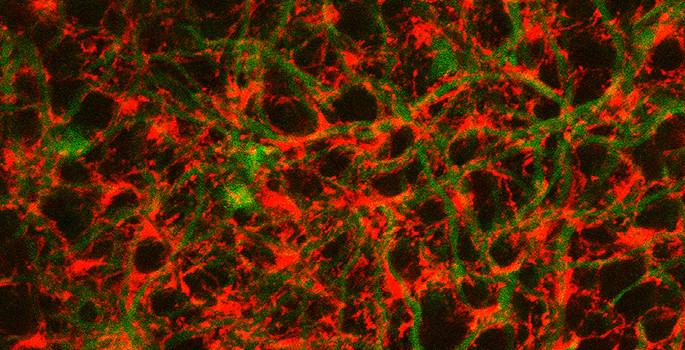
colored representation of cells and glia
August 17, 2017

Discovery sheds light on protein key to nerve cells’ myelin sheath

Genetic mutations in PMP22 (peripheral myelin protein 22) cause a variety of peripheral neuropathies, underscoring the importance of the protein to a healthy peripheral nervous system. But the precise function of PMP22, a major component of the myelin sheath that surrounds and insulates peripheral nerve cell axons, has been unclear.

elderly Asian mother and adult daughter
April 27, 2017

Protein structure may aid in treating Alzheimer’s disease

A new protein structure may guide the development of Alzheimer’s therapeutics.

Five week old sleeping boy and girl fraternal twin newborn babies. They are wearing crocheted pink and blue striped hats.
September 15, 2016

Study reveals new clues to cystic fibrosis ‘gender gap’

A research team led by structural biologists from Vanderbilt University has come up with the first detailed molecular explanation for a factor that may contribute to the so-called cystic fibrosis (CF) “gender gap.”