


Department of Cell and Developmental Biology Archive — Page 11 of 13




-
August 3, 2016
Kleberg Foundation grant bolsters cancer drug discovery efforts
The Robert J. Kleberg Jr. and Helen C. Kleberg Foundation has awarded a $3 million grant to Vanderbilt-Ingram Cancer Center (VICC) investigators in support of VICC’s drug discovery program. The gift awarded over the next three years from the private, San Antonio, Texas-based foundation will enable VICC researchers to pursue the development of new compounds to block the activity of cancer-causing genes and proteins that had previously been considered “undruggable.” -
July 20, 2016
Breast cancer: finding the smoking gun
A new method developed at Vanderbilt may help “inventory” all tumor-promoting genes. -
April 28, 2016
An Argonaute’s voyage to cancer
A genetic mutation that promotes cancer development blocks the normal sorting of a protein called “Argonaute 2.” -
February 18, 2016
Study explores less invasive way to monitor colorectal cancer
Investigators at Vanderbilt University Medical Center have published research regarding an important feature of colorectal cancer (CRC) that could eventually lead to the development of non-invasive means of monitoring cancer progression. After lung cancer, CRC is the second-most lethal cancer in the United States. -
February 8, 2016
Building intestinal brush borders
Studies of the molecular complex that helps build specialized cellular surfaces could shed light on the mechanisms underlying a genetic deaf-blindness syndrome accompanied by intestinal disease. -
January 28, 2016
Findings offer new insight on how cell division proteins work
A family of proteins with critical roles in cell division, synaptic transmission and cell migration don’t all function the way scientists thought they did, according to two new studies led by Vanderbilt researchers. -
December 14, 2015
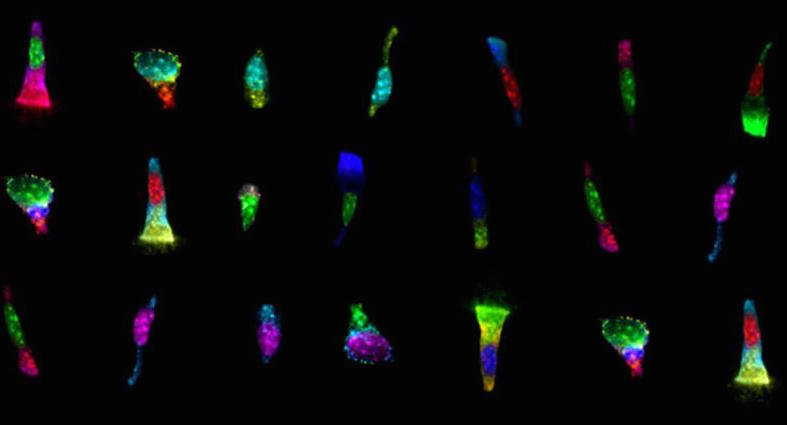
DISSECTing cell signaling networks
Vanderbilt researchers have developed a new method to study cell signaling networks at single-cell resolution.