Michelle Ankele-Yamashita poses for a portrait in The Vanderbilt Clinic on Wednesday, May 21, 2025 at Vanderbilt University Medical Center in Nashville, Tennessee. Ankele-Yamashita, a patient from Hawaii, underwent a lung transplant at VUMC in February after being on ECMO for months.




Michelle Ankele-Yamashita said she rarely got sick, much less caught the flu. But it was a simple case of influenza, then pneumonia and acute respiratory distress syndrome (ARDS) that took her from good health to end-stage lung failure in October 2024, resulting in a 4,000-mile transport from Hawaii to the Vanderbilt Transplant Center for a lifesaving lung transplant in February.
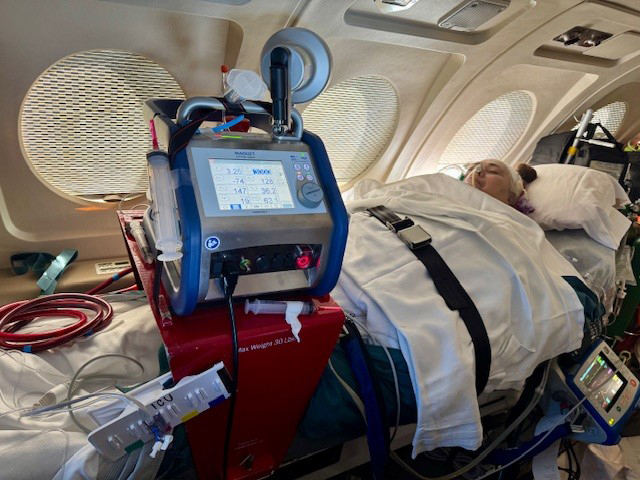
Ankele-Yamashita spent about four months in a Hawaii hospital on ECMO, a life-sustaining mechanical system that temporarily takes over for the heart and lungs of critically ill patients, allowing them to rest and recover. She was turned down by multiple transplant centers between Honolulu and Nashville, deemed too sick, before the Vanderbilt Lung Transplant Program accepted her as a patient, and she underwent an 11-hour air ambulance flight on ECMO to get here. The case was recently featured in the journal JTCVS Techniques.
Ankele-Yamashita, Vanderbilt Health’s first lung transplant patient from Hawaii, is now sharing her medical journey from the Aloha State to the Volunteer State.
Started with a high fever
Prior to her brush with death, Ankele-Yamashita said she had always been very active and healthy, living on the island Maui, working full time for the governor’s office in Hawaii, with no lung symptoms. She caught the flu at the end of September 2024 and spent days in bed with a high fever that wouldn’t break. “And that’s when I knew something was different,” she said.
Before a week passed, her husband, Dean, insisted she go to her local emergency room, and she did. She was surprised when the hospital immediately admitted her as a patient. “That’s when we were learning how bad my lungs were,” she said.
She was intubated and sent to a hospital in Honolulu, where she became very acquainted with her ECMO machine. “It was shocking when they first brought up transplant,” she said. But “getting a transplant was my only option.”
She needed a lung transplant, but center after center turned her down. “When Vanderbilt accepted me to come (as a patient), there was still no guarantee that I would be a transplant candidate,” she said.
Konrad Hoetzenecker, MD, PhD, surgical director of the Vanderbilt Lung Transplant Program, explained what made her condition extraordinary.
“A lung transplantation for ARDS is rarely performed and is considered more complex than lung transplantation for other indications,” he said. “The combination of the long travel distance from Hawaii to Nashville and the fact that the patient was presensitized (already developing resistance to the potential donor organ before transplant), further highlights how remarkable this case is. Notably, the referral center was in contact with 30 transplant centers, which all turned down the patient for being too high risk, before they contacted Vanderbilt.”
She would have to get her strength up, and that would mean walking around the hospital — still tethered to the ECMO machine. “It was hard,” she said. “I started walking more, taking more and more steps, and then they (Vanderbilt) officially accepted me.”
4,000-mile journey
It was a long, long flight to Nashville, on ECMO, in January, continuing to be hooked up to the machine.
“There are several technical challenges in long-range ECMO transport,” said Matthew Bacchetta, MD, MBA, director of the ECMO program, “which include ensuring adequate oxygen supply for both the ECMO device and ventilator as well as medical supplies.
“The transport team also needs to be skilled in critical care management since this essentially becomes a flying ICU,” said Bacchetta, who is also H. William Scott Jr. Professor of Surgery and professor of Cardiac Surgery, Thoracic Surgery and Biomedical Engineering.
She continued on ECMO in her hospital bed on the eighth floor of Vanderbilt University Hospital, the medical intensive care unit.
Wren Adkisson, MSN, RN, associate in Medicine, was part of the ECMO team that cared for Ankele-Yamashita throughout her pretransplant hospitalization, also including Whitney Gannon, MSN, associate in Medicine, and John Stokes, MD, clinical fellow.
“What stood out most was the extraordinary collaboration — from ECMO and transplant to critical care, rehab and beyond,” Adkisson said. “These cases are incredibly complex, and I think we were all holding our breath hoping we could pull it off.”
In all, Ankele-Yamashita was on ECMO from October to the day she received her transplant in February, about 150 days. “This length of time on ECMO can increase the frequency of complications related to transplant,” said Alexandra Toporek, MD, a pulmonologist on Ankele-Yamashita’s care team and assistant professor of Medicine.
After such an agonizing wait for a center to accept her, once she arrived at Vanderbilt, events progressed quickly. On Feb. 14, Valentine’s Day, Ankele-Yamashita’s husband and adult children, Krista and Adam, visited her and enjoyed a nice family day. Shortly after they left, Ankele-Yamashita learned a matching pair of donor lungs were hers. Soon, her family learned the great news.
“We were just elated, like we couldn’t believe it,” Ankele-Yamashita said. “We’re like, wow, this is just incredible that they would find them so fast, but I’ve had so many people praying for me all over the country, literally. It was just unbelievable how quickly it moved along.”
New lungs, new life
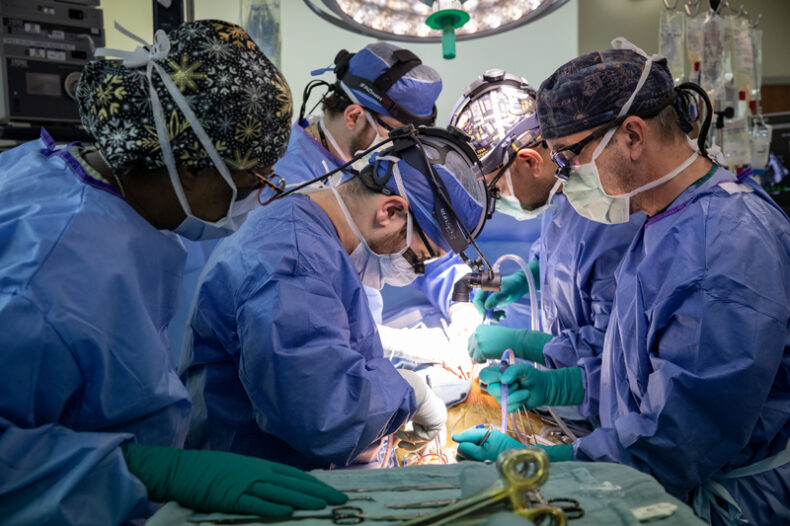
The next day, Hoetzenecker performed Ankele-Yamashita’s lifesaving double lung transplant. Her anesthesiologist was Mias Pretorius, MBChB, MSCI, professor of Anesthesia and Medicine.
Ankele-Yamashita remembers waking up with her new lungs. “When I looked to my right and looked to my left and there was no (ECMO) machine, I just wanted to jump out of the bed, just jump up and down with excitement,” she said. “It was very exciting and just beyond unbelievable to think that I had someone else’s lungs that saved my life.”
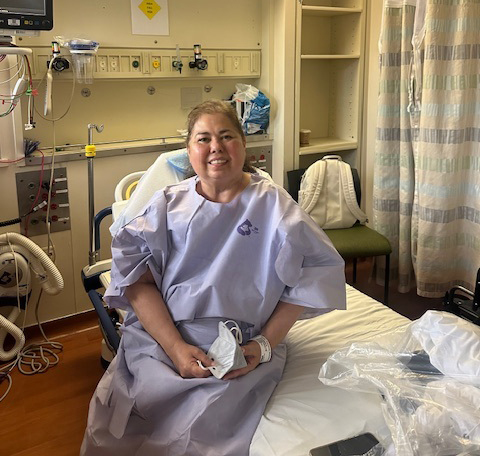
Ankele-Yamashita said her recovery has been smooth. She’s breathing without medical oxygen, walking on her own and going to physical therapy at the Vanderbilt Dayani Center two to three days a week. She’s enjoyed living in Nashville, but she longs to return to her home in Hawaii, perhaps sometime later this year.
“I’m still building my endurance and still healing, but I feel great,” she said. “And I don’t have pain. I mean, that’s one thing that I’ve been shocked at. I’ve had very little pain through this entire process.”
“I’m so thankful to the VUMC doctors, nurses and staff for the excellent treatment I have received,” she said. “People ask me how I’ve been able to persevere and endure all that I’ve been through, but for me, quitting or giving up was never an option.”
Anil Trindade, MD, associate medical director of the Vanderbilt Lung Transplant Program and associate professor of Medicine, said VUMC is utilizing its dynamic team to help more patients around the country and the world.
“Our doors are open to anyone,” he said. “The story of Ms. Ankele-Yamashita nicely highlights the incredible growth that’s occurred in the advanced lung disease space within VUMC in the past five years. We’re able to harness world-class expertise in ECMO, lung transplantation, pulmonary hypertension and interstitial lung disease, and use that to help patients beyond our region when other centers cannot.”