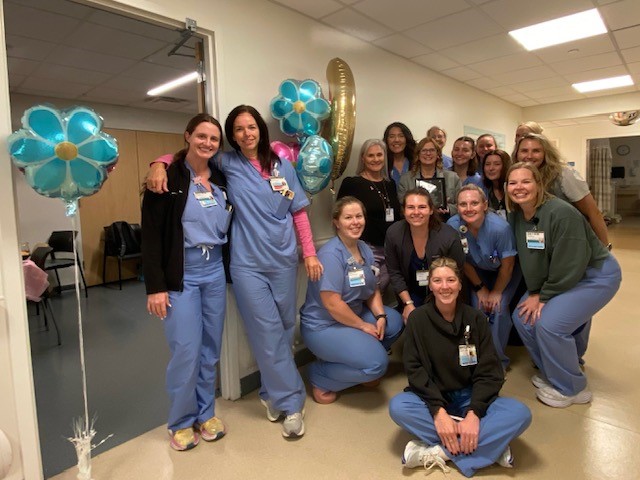
 The VUMC Labor and Delivery staff celebrate a six-year birth tissue donation partnership between VUMC and Tennessee Donor Services.




Vanderbilt University Medical Center and Tennessee Donor Services (TDS) have worked together to promote organ, eye and tissue donation in Tennessee since the 1970s, resulting in many lives saved through organ donation and transplantation.
In 2019, when TDS expanded their services to include birth tissue donation, VUMC was eager to collaborate.
When healthy expectant mothers deliver via cesarean section — which has less risk of bacteria exposure than vaginal birth — the placenta with its attached umbilical cord is usually discarded. With the birth tissue collaboration, mothers delivering via scheduled C-section, are offered the choice of donation.
When donated, membranes and cellular components of the umbilical cord and placenta are used across many medical disciplines, including being used to treat leg and foot wounds from diabetic neuropathy, promote healing of pressure ulcers and restore ocular tissue.
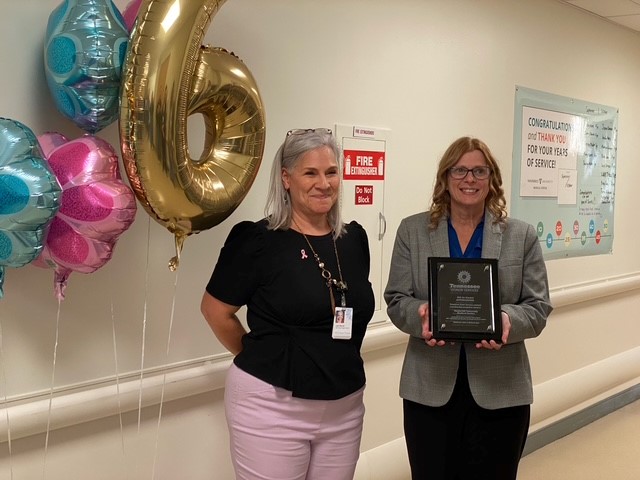
“Giving the gift of life through placenta donation is a beautiful way for mothers to further celebrate their baby’s birth,” said Leah Morrell, CTBS, Birth Tissue Program director for DCI Donor Services, TDS’ parent company. “The program is voluntary, but 9 out of 10 mothers say yes to placenta donation. With the amazing medical staff at Vanderbilt Labor and Delivery, TDS has been able to provide thousands of life-enhancing tissue grafts to patients with a medical need.”
Here’s how it works: Birth tissue coordinators (BTC) from TDS speak with VUMC patients delivering via a scheduled C-section. Patients are advised of their choice to donate, which is free and safe, and educated about how the tissue can be used to help others. Bedside RNs collect a blood sample for TDS when collecting lab work for hospital admission, so only one lab draw is needed.
If the patient agrees to donation, the BTC documents the patient’s consent and conducts a short medical interview. The circulating RN and OR technician on the case work closely with the BTC to transfer the birth tissue using sterile techniques to ensure proper packaging and transport to the TDS offices. There, it’s prepared for processing into as many as 200 transplantable medical grafts.
“It’s wonderful to see the generosity of mothers who donate placental tissue to impact the lives of others in need,” said Ronald Alvarez, MD, MBA, the Betty and Lonnie S. Burnett Professor of Obstetrics and Gynecology and chair of the department.