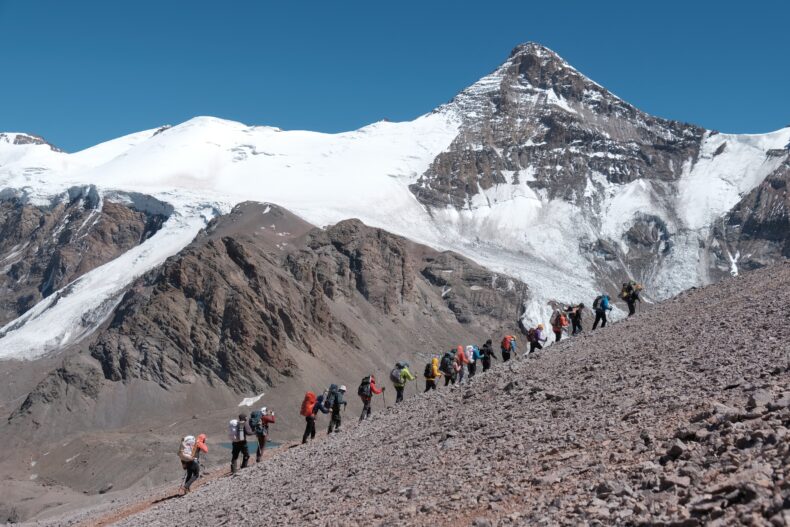
 Lung transplant patients climbed Aconcagua in Argentina to demonstrate the physical capabilities of transplant patients. (photo submitted by Konrad Hoetzenecker)




Vanderbilt Health was part of an international expedition of eight lung transplant patients, along with doctors and staff, who recently climbed Aconcagua, a mountain in Argentina that is the highest in the Southern Hemisphere.
Aconcagua, elevation 22,837 feet, is one of the Seven Summits, the highest peaks in each continent.
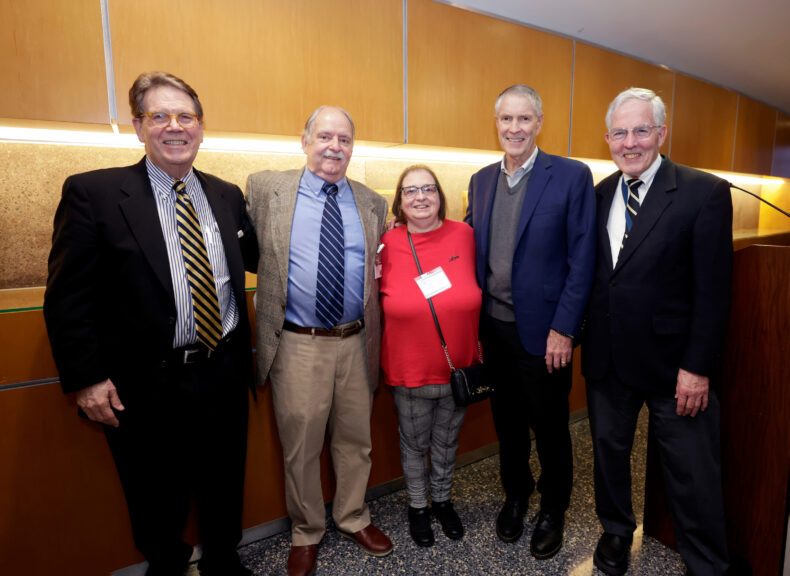
The Vanderbilt Transplant Center was represented by two lung transplant patients along with Konrad Hoetzenecker, MD, PhD, professor of Thoracic Surgery and surgical director of the Vanderbilt Lung Transplant Program; and Christina Jelly, MD, MS associate professor of Cardiothoracic Anesthesiology and Critical Care.
Participants for the January trip came from Austria, Croatia, Denmark, Switzerland, Germany and the United States. One of the eight lung transplant patients was able to reach the summit; others reached different camps along the way, Hoetzenecker said.
Most of the 27 participants were able to reach altitudes of more than 18,000 feet —exclusively personal bests. All participants were under close medical supervision. Supplemental oxygen was available but most of the participants did not need it, Hoetzenecker said.
The expedition, organized by the Medical University of Vienna, aimed to demonstrate the physical capabilities of transplant patients. Hoetzenecker said the expedition proved that lung transplant patients can live a normal life and participate in strenuous activities just as people who never had transplants.
“Our trip showed the resilience of lung transplant patients, that they can achieve remarkable things,” Jelly said. “It’s a pretty unique experience up there. The oxygen content is very low and the likelihood you get altitude sickness is high. We spent two weeks on the mountain to acclimatize before we pushed for the summit. The fact that even one patient reached the summit is a major achievement. To the best of our knowledge, this is the highest a lung transplant patient has ever climbed.”
While lung transplant patients demonstrated their endurance, scientists carried out comprehensive examinations, including blood gas analysis to determine oxygen supply; collection of immunological markers, stool and saliva samples; AI-supported analytical models to evaluate lung function; and digital monitoring of vital signs, such as heart rate and oxygen.
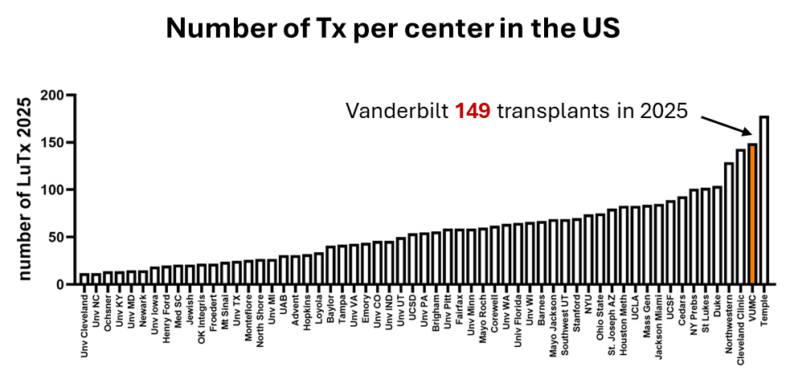
The Vanderbilt Transplant Center has a world-class lung transplant program that is the second largest in the United States. Vanderbilt Health’s transplant teams performed 149 lung transplants in 2025, setting a local record.
The Vanderbilt Lung Transplant Program leads the nation in organ preservation and regeneration and is among the best in long-term outcomes, demonstrating the success of the interdisciplinary team in caring for these complex patients. The lung transplant program recently celebrated a milestone — 1,000 lung transplants since the program began in 1990.