 Daryl Granner, MD

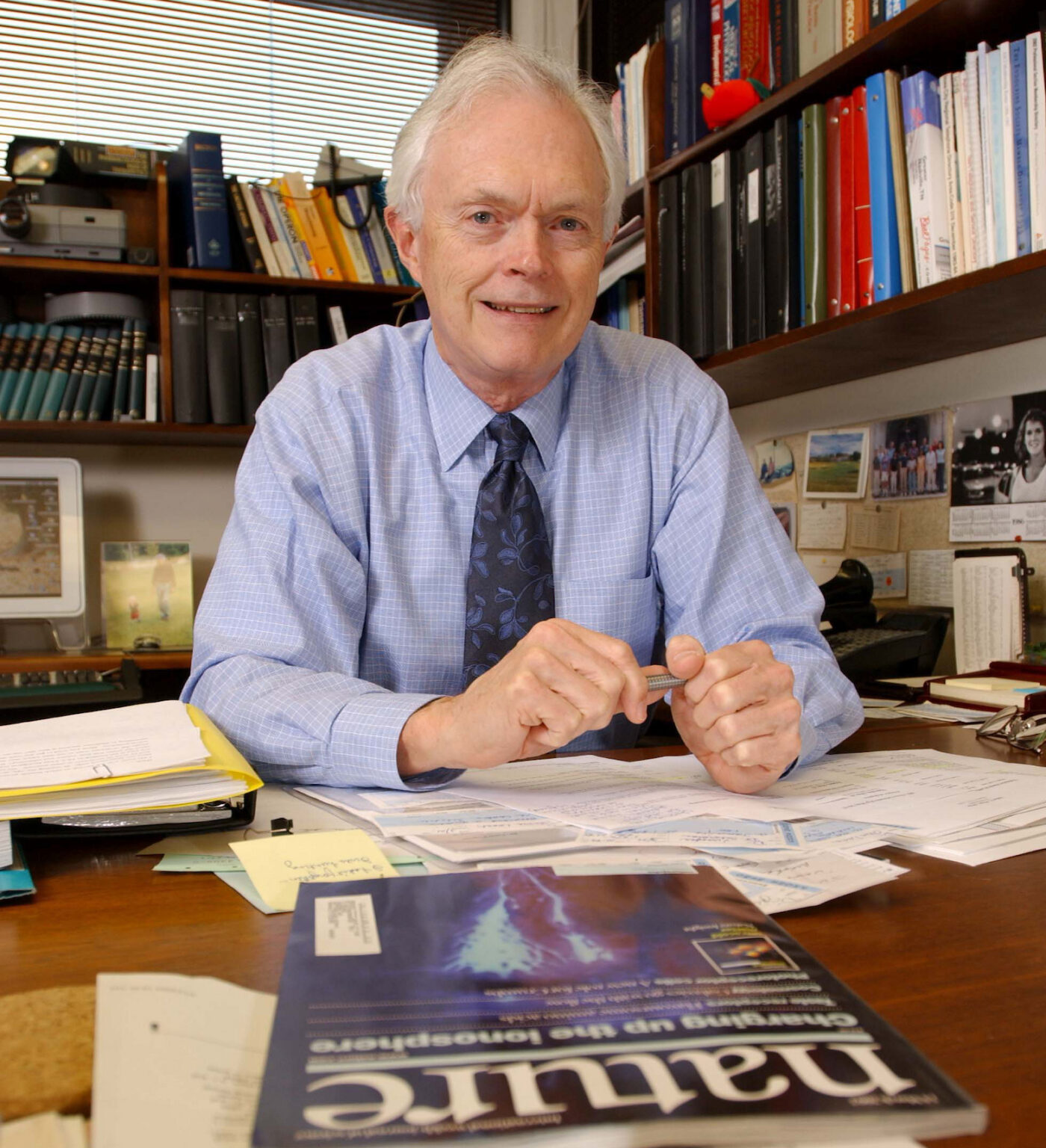
Daryl K. Granner, MD, former chair of the Department of Molecular Physiology and Biophysics in the Vanderbilt University School of Medicine and former director of the Vanderbilt Diabetes Center, died Friday, April 17, in Iowa City, Iowa. He was 89.
A world-renowned physician-scientist, Dr. Granner and his colleagues made major contributions to understanding how insulin and glucocorticoids regulate genes that are important for glucose metabolism by the liver, and the role that altered metabolism plays in insulin resistance and Type 2 diabetes.
Recruited in 1984 to the Vanderbilt University School of Medicine to chair its Physiology Department, he helped bring to national prominence the department, renamed the Department of Molecular Physiology and Biophysics, as well as diabetes research at Vanderbilt and the school’s Medical Scientist Training Program.
“Dr. Granner plays an iconic role in our history,” said Jeff Balser, MD, PhD, President and Chief Executive Officer of Vanderbilt Health and Dean of Vanderbilt University School of Medicine. “In addition to his enormous contributions to the field of diabetes research and treatment, his leadership with the Medical Scientist Training Program allowed the program to triple its size, giving all dual-degree students far more visibility and resources.
“While his contributions were many, he advanced a vision that fundamentally changed our thinking about what Vanderbilt University Medical Center could be — a vision that captured our imaginations and has propelled us over the years. At this time, my thoughts are with his wife, Nancy, and the other members of Dr. Granner’s family,” Balser said.
“Daryl Granner’s passion and vision for excellence in science and how to translate that to better health were a huge part of the reputational transformation Vanderbilt Health has undergone in the last two to three decades,” added Dan Roden, MD, Senior Vice President for Personalized Medicine.
“He not only drove excellence in his department and in the Diabetes Center but was one of the leaders in developing a 21st century strategic plan (for the Medical Center),” Roden said. “He was a giant.”
Born in Algona, Iowa, Dr. Granner earned his bachelor’s, master’s and medical degrees from the University of Iowa in Iowa City.
After completing his residency in internal medicine at the University of California, San Francisco, he completed a research fellowship in molecular biology at the National Institutes of Health (NIH) and received further training in clinical endocrinology at the University of Wisconsin.
In 1970, Dr. Granner returned to the University of Iowa, this time as a faculty member and director of the Division of Endocrinology and Metabolism. He later founded the Molecular Endocrinology Training Program and served as the first director of the university’s NIH-funded Diabetes and Endocrinology Research Center.
At Vanderbilt, Dr. Granner introduced molecular technology and novel biophysical methods to the Department of Physiology and oversaw the creation of several research cores — facilities with expert-managed technologies in specialized techniques like genomics and microscopy.
“By doing so, he made a good department great,” said longtime colleague Alan Cherrington, PhD, who succeeded Dr. Granner as chair of the Department of Molecular Physiology and Biophysics in 1998. That year, the department ranked first in the country in NIH research funding.
In 1993, Dr. Granner was appointed director of the NIH-funded Vanderbilt Diabetes Research and Training Center (DRTC), which was founded in 1973 under the leadership of Oscar Crofford, MD. Today it is a key part of the NIH Diabetes Research Center network.
He also led the development of the Eskind Diabetes Clinic, which opened in 2005. Dr. Granner stepped down as center director in 2007 and retired from the faculty the following year.
During a research career that spanned five decades, Dr. Granner co-authored more than 250 scientific publications. His extensive research funding included two NIH MERIT (Method to Extend Research in Time) grants, awarded for investigations judged most likely to improve human health.
Among his many honors were the University of Iowa’s Distinguished Alumnus for Achievement Award and, in 2017, the American Diabetes Association Albert Renold Award, for distinguished service in mentorship and training diabetes researchers.
“Fifty years ago, as a freshman medical student, I worked over a summer in his laboratory,” recalled Mark Magnuson, MD, senior associate dean for Research, School of Medicine Basic Sciences. “Nearly a decade later he recruited me from the NIH to Vanderbilt and I’ve been here since.
“He became a long-standing friend and colleague, and Vanderbilt owes him a large debt of gratitude for his leadership at a critical time in our growth,” Magnuson said.
Dr. Granner is survived by his wife of 67 years, Nancy (Lynch) Granner; his brother, Steven Granner (Bonnie) of Indianapolis; his son, Mark Granner (Stacy) of Coralville, Iowa; his daughter, Nikki Johnson (Kevin) of Belvedere, California; and his grandchildren, Alex Granner of Chicago and his fiancée, Jillian Cordes, Katie Granner of Boston, Adeline Johnson of Belvedere, California, and Nathaniel Johnson, also of Belvedere, who currently is a first-year undergraduate at Vanderbilt. He was preceded in death by his parents, Harold and Genevieve (Kitley) Granner, and his brother, Douglas Granner.
In lieu of flowers, memorial donations may be made to the Michael J. Fox Foundation for Parkinson’s Research or the American Diabetes Association. A celebration of life event will be held in Iowa on May 11. Details at www.lensingfuneral.com.