Bruce Carter Archive — Page 1 of 1

Hooded person holding a glowing blue, wand-like object in a dark, underwater-looking setting.
March 10, 2020

Loss of ‘Jedi’ alters neuron activity

This is not the Jedi you’re thinking of. This Jedi is a receptor that helps clear away dead neurons during development, and its loss changes the activity of dorsal root ganglia neurons, which could have implications for treating chronic pain.

Illustration of interconnected nerve cells with branching fibers and glowing central cell bodies against a dark blue background.
August 22, 2019

How nerves may lose their insulation

Vanderbilt’s Bruce Carter and colleagues have discovered how genetic changes in the protein PMP22 may contribute to a disease of peripheral nerves.

Portrait of a smiling bald man wearing a striped collared shirt against a mottled brown background.
August 23, 2018

Enzyme helps build motor that drives neuron death

Vanderbilt scientists have discovered a signaling mechanism that tells neurons to die, findings that could lead to new treatments for neurodegenerative diseases.

August 12, 2015

Origins of neuroblastoma

Vanderbilt researchers are exploring how neuroblastoma tumors begin and progress, knowledge that could provide new treatments for this pediatric cancer.

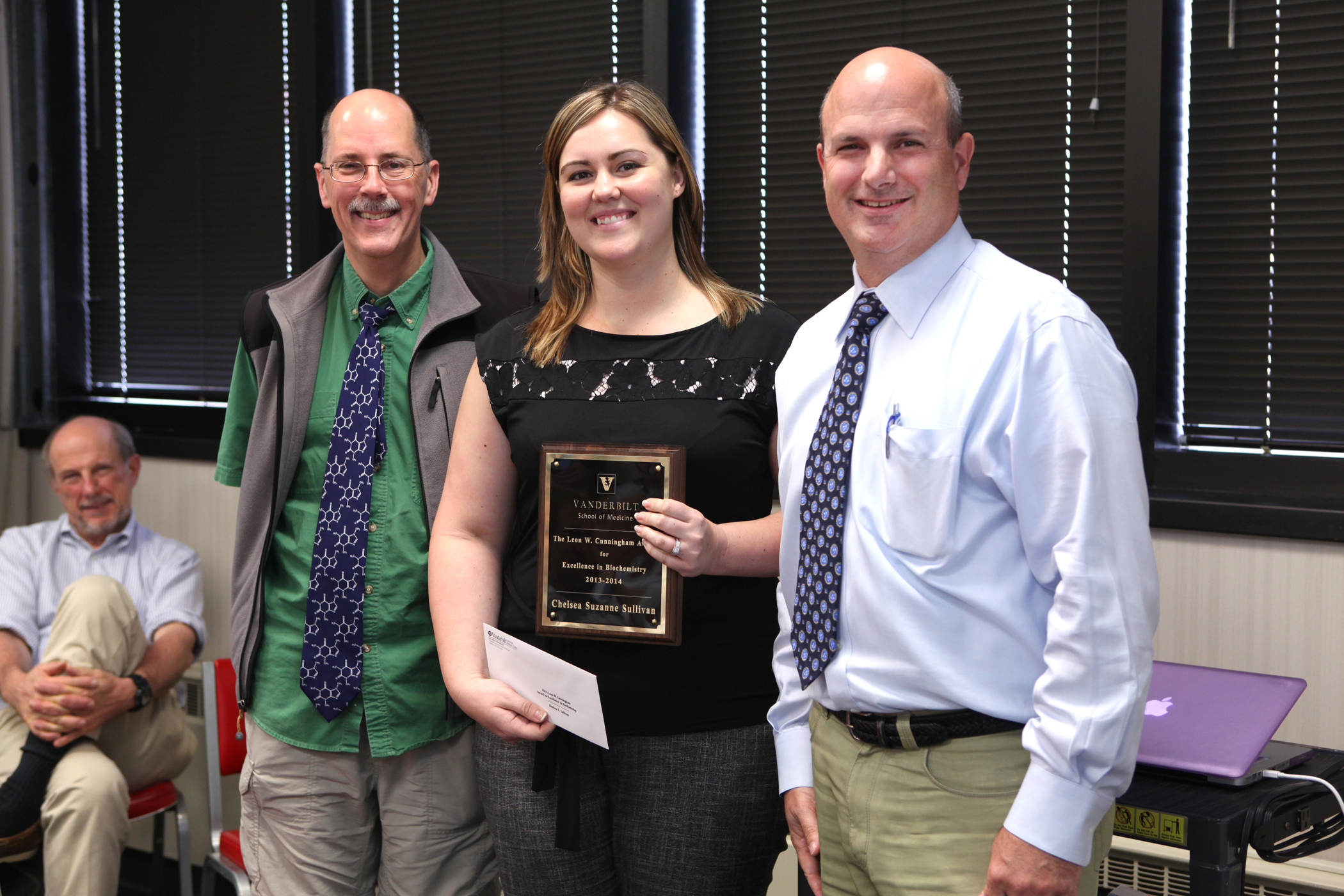
Three people pose indoors; the woman in the center holds a Vanderbilt School of Medicine award plaque and certificate, flanked by two men, with another man seated in the background.
June 19, 2014

Photo: Cunningham Award for Excellence in Biochemistry

September 19, 2012

How ‘Jedi’ disposes of dead neurons

The protein Syk is essential for clearing away neuron “corpses” in the developing peripheral nervous system.