yeast Archive — Page 1 of 1

Mud-covered hands scoop wet sediment from shallow, murky water beside clumps of mud.
February 25, 2020

Looking through MudPIT for protein interactions

The identification of novel protein interactions and sites of modification in proteins involved in mRNA translation adds to understanding of a process that is an important therapeutic target.

Stylized microscopic illustration of a red cell dividing into two rounded daughter cells against a dark red background.
November 18, 2019

Understanding cell division

Vanderbilt researchers have uncovered another piece in the puzzle of how cells divide — a process that goes awry in cancer cells.

Colorized illustration of a eukaryotic cell showing a central nucleus, surrounding organelles, and layered membranes against a blurred cellular background.
March 28, 2019

Unraveling endocytosis

New discoveries by Jason MacGurn and colleagues further understanding of the complex machinery that cells use take up substances from outside the cell.

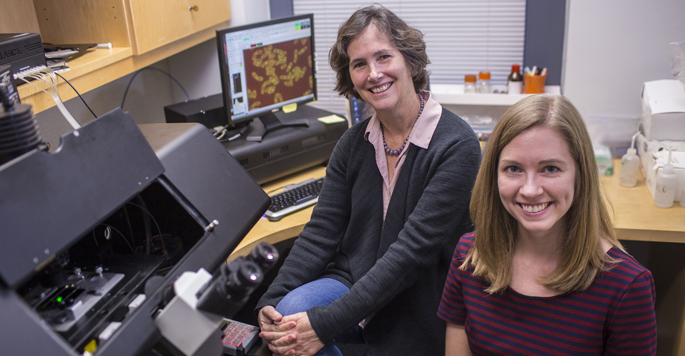
Kathy Gould and graduate student Chloe Snider pose beside laboratory equipment and a computer displaying a microscopy image.
November 9, 2017

Advanced imaging tools reveal architecture of cell division machinery

Using super-resolution microscopy tools in the Nikon Center of Excellence, Vanderbilt investigators have determined the molecular architecture of the contractile ring machinery that functions during cell division — a process that is essential for life.

Close-up of a petri dish containing blue and turquoise bacterial colonies growing in streaked lines across a dark culture medium.
April 3, 2017

Fighting fungal infections

A detailed structural and functional analysis of the yeast protein that is the main target of antifungal drugs will help direct efforts to develop better treatments.

A caregiver gently holds an older adult’s wrinkled hand; both hands wear rings, and the caregiver wears a wristwatch.
March 31, 2017

A molecular clue to longevity

In budding yeast, accumulation of a certain type of RNA in the nucleus increased life span, offering a new clue to longevity.