Brain (journal) Archive — Page 1 of 1

Stylized green tree shaped like a human head, with leaves blowing away to the right, standing on grass against a white background.
September 9, 2025

Cheating Alzheimer’s

Most people whose brains exhibit Alzheimer’s pathology don’t have the disease; they reach the end of their lives never having exhibited cognitive impairment. A new study examines the genetics of this resilience.

Stylized side-profile illustration of a human head with the skull rendered translucent to reveal a network resembling brain blood vessels, dissolving into particles against a peach background.
November 17, 2022

Study examines impulsiveness in Parkinson’s disease

Vanderbilt researchers are studying aspects of dopamine release and its regulation in Parkinson’s patients with and without impulsive-compulsive behaviors.

Portrait of Jing-Qiong Kang, MD, wearing a white coat and pearl necklace.
June 23, 2021

Common mechanism found for diverse brain disorders: study

Researchers at Vanderbilt University Medical Center have identified a common mechanism underlying a spectrum of epilepsy syndromes and neurodevelopmental disorders, including autism, that are caused by variations in a gene encoding a vital transporter protein in the brain.

Abstract silhouette of a human head filled with a glowing tunnel of blue-white dots, surrounded by scattered white and blue jigsaw puzzle pieces.
October 3, 2019

Team discovers one more piece to the autism puzzle

Vanderbilt investigators have linked genetic mutations in a single receptor to epilepsy, autism and intellectual disability.

Figure comparing brain-imaging results. Four columns labeled MRI, PET, SPECT, and Combined show axial brain slices. A. ALE Meta-Analysis displays sparse red regions; B. Network Localization displays broader red-to-yellow network regions, with scales indicating statistical values and connectivity percentages.
December 14, 2018

Using a mapping technique to reassess prior Alzheimer’s studies finds ‘powerful,’ improved reproducibility

A neurologist is using a mapping analysis in a new study to rethink where symptoms or cognitive processes should show up in the brain. The results are ‘powerful.’

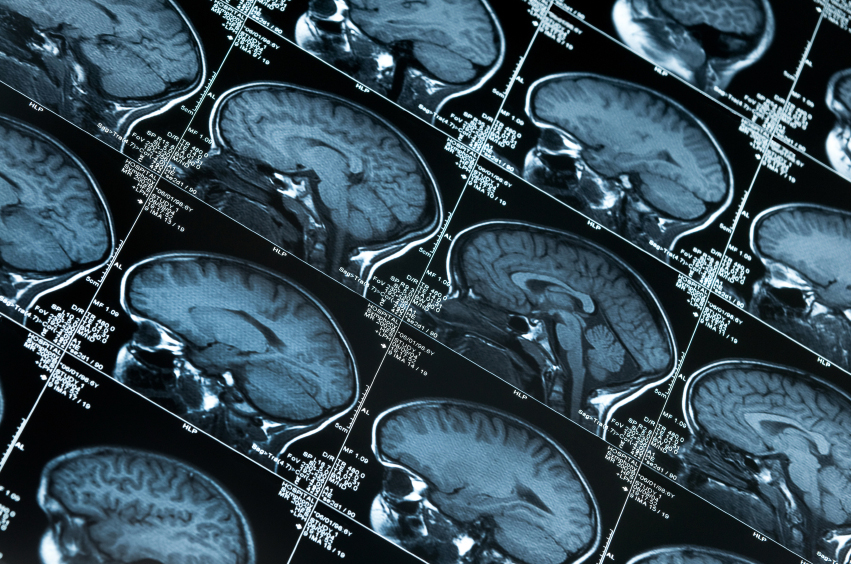
Multiple sagittal brain MRI scans arranged in a radiology film layout, with small technical labels throughout.
April 19, 2018

MRI technique detects spinal cord changes in MS patients: study

A Vanderbilt University Medical Center-led research team has shown that magnetic resonance imaging (MRI) can detect changes in resting-state spinal cord function in patients with multiple sclerosis (MS).