histoplasmosis

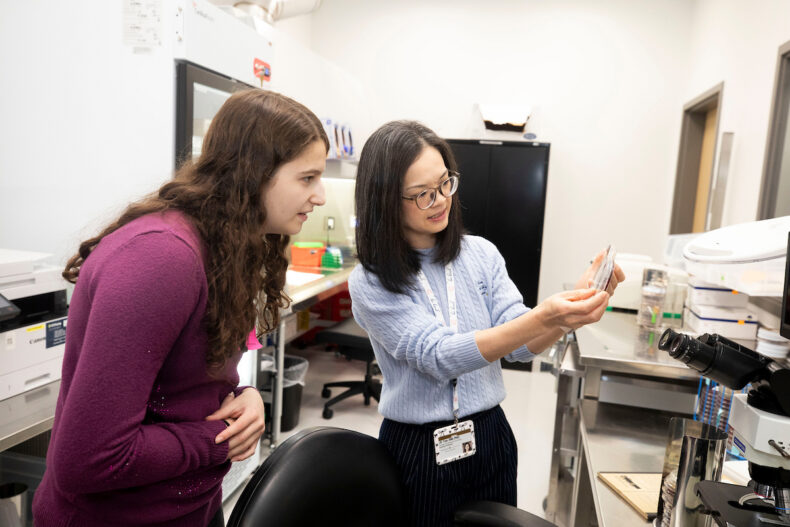
Lili Tao, MD, PhD, medical director of Mycology and Immunoserology, shows Maggie Weiss a culture plate on which the fungus that causes histoplasmosis is growing. (photo by Susan Urmy)

A grateful patient says ‘thank you’ to Vanderbilt Medical Laboratories

The infection can result from inhaling spores of the fungus Histoplasma capsulatum, which grows in soil throughout Middle Tennessee, especially in soil contaminated with bird or bat droppings. Previously, blood samples had to be sent to a reference lab in Utah.

Improving lung nodule diagnosis

Adding blood and imaging biomarkers to a clinical prediction model could improve diagnostic accuracy for the 1.6 million lung nodules detected each year, many through expanded lung cancer screening programs.

The Vanderbilt team studying histoplasmosis includes (front row, from left, Heidi Chen, PhD, Melinda Aldrich, PhD, MPH, (back row, from left) Stephen Deppen, PhD, Eric Grogan, MD, MPH, and Jeffrey Blume, PhD.

Team explores fungal infection quandary in lung cancer screenings

Serving a region that lies within the tobacco belt, clinicians at Vanderbilt Health face challenges distinguishing lung cancer from histoplasmosis, a fungal infection that creates cancer-mimicking lesions in the lungs.

New histoplasmosis risk map

The new mapping approach, called suitability score mapping, should improve public health assessments and interventions for geographic-specific infections.