Ivelin Georgiev

(Adobe Stock)
January 16, 2026

Vanderbilt Health team finds potent antibody that neutralizes two dangerous viruses

The single administration of an antibody that provides cross-protection against both RSV and hMPV infection could provide logistical and economic advantages over the need to develop and administer multiple virus-specific monoclonal antibodies.

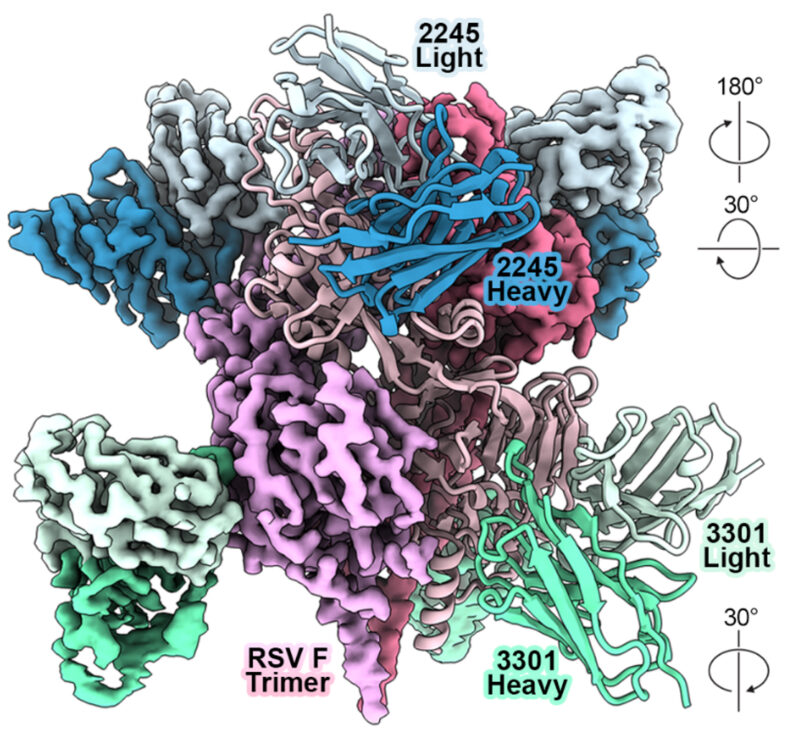
Cryogenic electron microscopy (cryo-EM) resolution of the structure of a respiratory syncytial virus fusion protein (shades of pink) bound to fragments of two antibodies (dark/light and blue/green) designed by the researchers’ protein language model, MAGE.
November 4, 2025

AI can speed antibody design to thwart novel viruses: study

While the study focused on development of antibody therapeutics against existing and emerging viral threats, the implications of the research are much broader.

March 10, 2025

VUMC to develop AI technology for therapeutic antibody discovery

The approach will address “bottlenecks” that slow the traditional antibody discovery process, and it aims to make it possible to generate monoclonal antibody therapies against any target of interest.

September 20, 2024

VUMC method tracks down rare, broadly reacting antibodies: study

The discovery, reported in the journal PLOS Pathogens, could help open the door to the development of effective vaccines and antibody therapies with an “exceptional breadth of pathogen coverage.”

March 28, 2024

VUMC team discovers antibodies that may prevent severe respiratory illness

Using a technique developed at Vanderbilt University Medical Center, researchers identified antibodies that are excellent leads as potential therapies for human parainfluenza virus 3, a leading cause of acute and potentially fatal respiratory illness.

November 6, 2023

Children’s antibodies highly potent against COVID-19: study

Reporting Nov. 6 in Cell Reports Medicine, Ivelin Georgiev, PhD, and colleagues demonstrated that antibodies isolated from children’s blood samples displayed high levels of neutralization and potency against variants of the COVID-19 virus, SARS-CoV-2, even when the children had not previously been exposed to or vaccinated against those variants.