


kidney disease Archive — Page 5 of 6


-
November 3, 2015
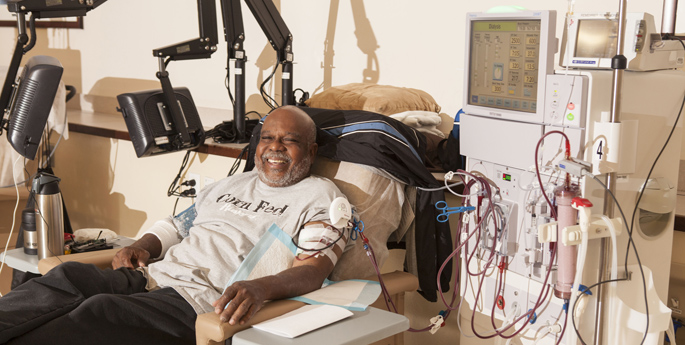
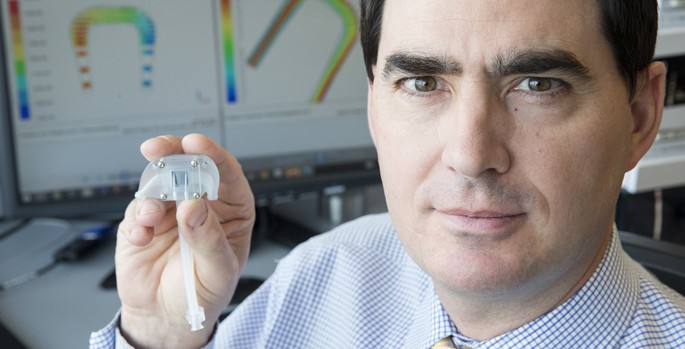
VUMC receives NIH grant to develop artificial kidney
The National Institutes of Health has awarded a four-year, $6 million grant to investigators at Vanderbilt University Medical Center (VUMC) and the University of California at San Francisco (UCSF) to develop an implantable artificial kidney. -
September 9, 2015
How to build a basement
Understanding the action of a certain enzyme will shed light on basement membrane function, and on disorders ranging from diabetic kidney disease to cancer. -
June 11, 2015
Study: Why one kidney can work as well as two
Vanderbilt University researchers have come closer to solving a mystery that has puzzled scientists for more than a century: after the loss of one kidney, what causes the growth of the remaining kidney to take up the slack? -
April 16, 2015
Surprising finding in the kidney
TGF-beta signaling in the kidney was thought to be a target for reducing renal fibrosis, but Vanderbilt researchers report that fibrosis still occurs in the absence of TGF-beta signaling. -
February 11, 2015
Kidney disease impacts HDL function
Chronic kidney disease impairs the protective functions of HDL, Vanderbilt researchers report this month. -
October 30, 2014
NIH grant spurs diabetic nephropathy research
Diabetic nephropathy, or kidney disease caused by diabetes, is a major source of morbidity and mortality. In the United States, more than 30 percent of patients receiving either dialytic therapy or renal transplantation have end stage renal disease as a result of diabetic nephropathy. -
August 21, 2014
Major grant spurs deeper look into ‘good cholesterol’
In some cases, HDL, the "good cholesterol," may not function properly and may actually accelerate atherosclerosis.