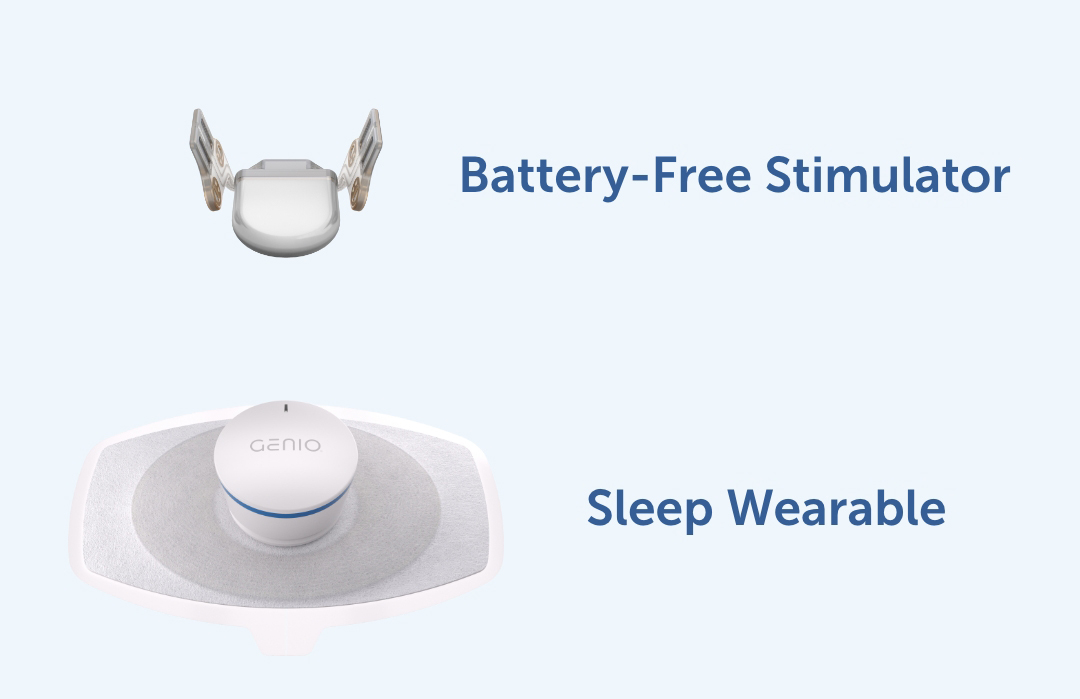
 The device, which is surgically implanted but does not contain an internal battery, allows patients to control it externally without having to undergo subsequent procedures to replace a power source.

Patients suffering from obstructive sleep apnea (OSA) have benefited from numerous treatment options as sleep medicine has evolved in recent years.
From the introduction of continuous positive airway pressure (CPAP) machines 40 years ago to more recent developments including surgically implanted devices that assist in overnight breathing, many patients can find hope for restful nights with whichever treatment is right for them.
The latest development is now coming to patients at Vanderbilt Health. David Kent, MD, associate professor and director of Sleep Surgery in the Department of Otolaryngology-Head and Neck Surgery, now offers bilateral hypoglossal nerve stimulation (HNS) to qualified patients who have not been able to benefit from CPAP. Kent was an investigator for the clinical trial of the device leading to its Food and Drug Administration approval.
The treatment, known by the brand name Genio, is different from other currently available neurostimulation implants for OSA. Genio is surgically implanted through only one incision. It is controlled externally without the use of an internal battery, making the device safe for MRI studies. The external controller is placed under the chin using a disposable adhesive patch each night before sleep.

“Crucially, not having an implanted battery means the device will not require power source replacement surgeries down the road,” said Kent. “It uses well-established technology from other implants to energize the tongue muscles, which helps to open up the patient’s airway for better sleep.”
Kent underscored that treatment of OSA is highly dependent on the anatomy and preferences of the patient, meaning that individuals may opt for one type of treatment over another. Traditional CPAP may still be the best option for some, while bilateral HNS could be a breakthrough treatment for those who haven’t had success with other options.
“We plan to offer both technologies to our patients here, as patients may have different preferences regarding available form factors,” said Kent. “That, along with being a hub for the Mid-South region for this new technology, is a unique and important advantage of our program.”
Currently, bilateral HNS treatment is FDA-approved for patients with moderate to severe OSA who meet qualifying clinical criteria.