


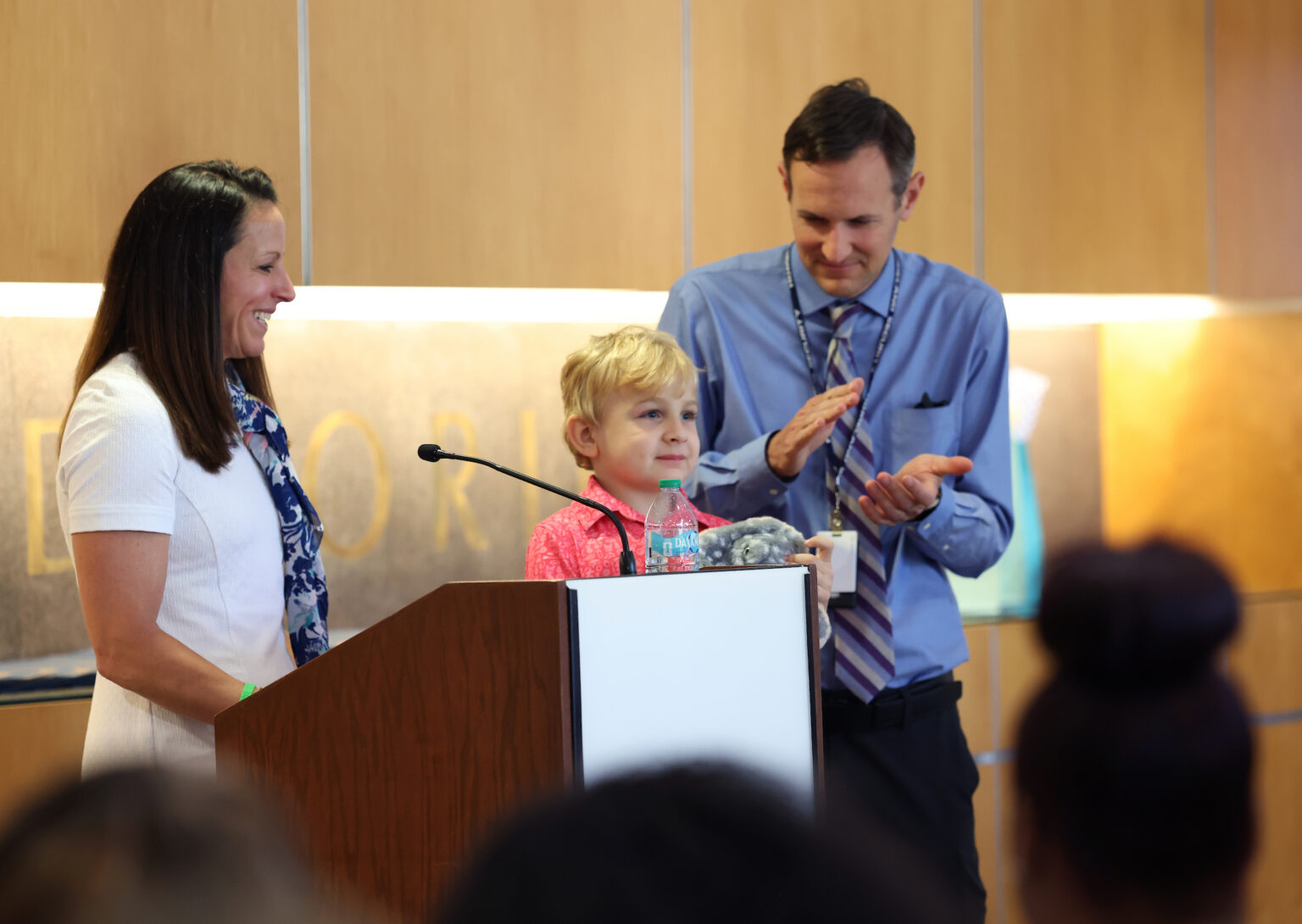
 Margaret Drewes speaks at the April 22 Donate Life Ceremony with her son, Everett, and husband, Matthew. (photo by Donn Jones)

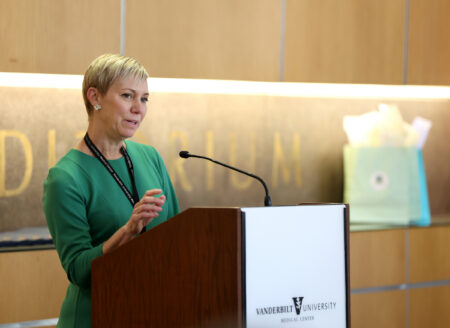
Sixty-nine individuals donated their organs at Vanderbilt Health in 2025, saving 228 lives. They and their families were honored April 22 at the annual Donate Life Ceremony.
“We celebrate the incredible families who, even in the depths of their grief, chose courage and compassion, bringing hope and healing to those in need,” said Heather O’Dell, MSN, ANP-BC, MMHC, executive director and associate operating officer for the Vanderbilt Transplant Center. “This ceremony reminds us of the impact that one act of generosity can have on countless lives.”
The ceremony, held in the lobby of Langford Auditorium, was part of a national effort to raise awareness about the need for organ and tissue donors. In addition to honoring organ donors and their families, the ceremony salutes hospital staff who care for donors and transplant recipients. The event is a partnership between Vanderbilt Health and Tennessee Donor Services, the federally designated donor network that facilitates organ and tissue donation in the region.
There are two types of organ donation: living donation, in which a living person donates a kidney or a partial liver, and deceased donation, when someone gives the gift of their organs after death. Many people state their preference by choosing to be listed as organ donors on their driver’s licenses.
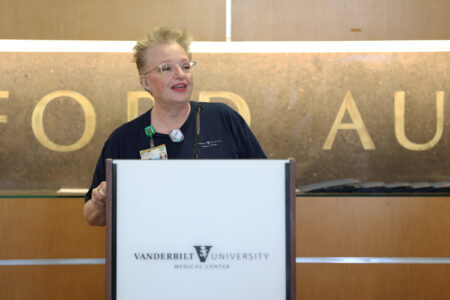
Heidi Schaefer, MD, professor of Medicine and medical director of the Adult Solid Organ Transplant Center at Vanderbilt Health, underscored the critical importance of organ donation.
More than 100,000 people are on the organ transplant waiting list, she said, and every day, about 17 people die waiting for a transplant that doesn’t come in time. In Tennessee alone, there are over 2,500 individuals waiting for organ transplants.
“These numbers remind us that the need is great, but they also inspire us to act, Schaefer said. “Today, we celebrate not only the lives saved, but also the legacy of those who made it possible. Their stories remind us of the power of kindness, compassion, and love.”
Those stories included a Vanderbilt nurse who is the mother of a deceased donor and a mother who donated a kidney in a paired donation that resulted in her young son receiving a kidney transplant.
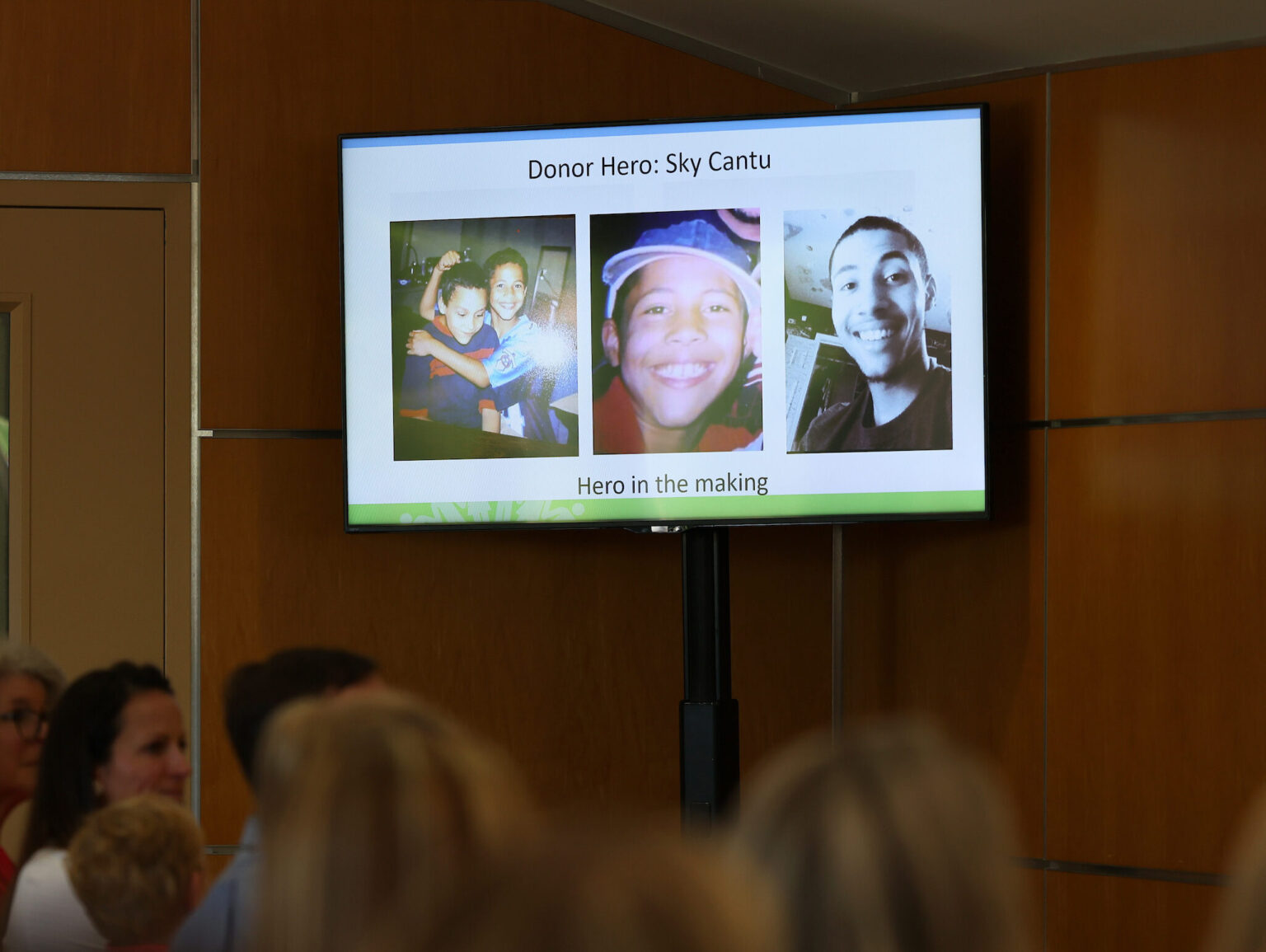
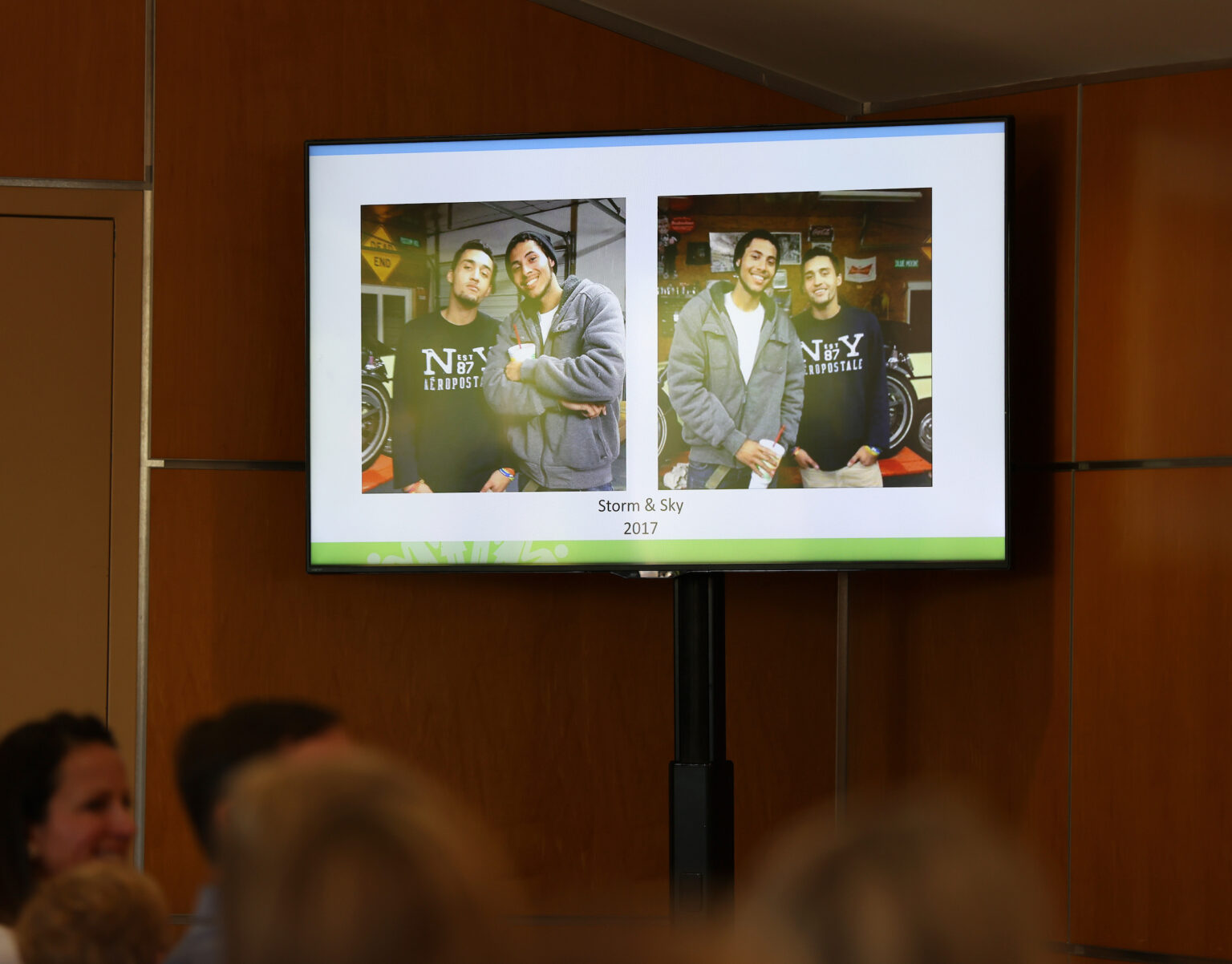
Kim Cantu, RN, a charge nurse in the Emergency Department at Vanderbilt University Hospital, shared the story of her son, Sky, who died in 2017 at 23 years old after suffering a traumatic brain injury following an accident.
Kim adopted Sky and his biological brother Storm in 2002, when the two were 7 and 6 years old, respectively. They had a traumatic childhood, having already gone through 13 homes in the foster care system before adoption. Instantly, Kim was thrust into a new world of parent-teacher conferences and youth football games.
Kim recalled bringing Sky with her to vote and recognizing one of the poll workers as a transplant recipient. Sky, then a young boy, asked the man about his visible surgical scar, and it started a conversation about organ donation that continued around the dinner table.
That planted a seed, because when Kim was summoned to a local hospital because Sky had been transported there in critical condition, she learned that he was registered as an organ donor. Though she was suffering in grief as her son was about to die, she experienced relief that he had chosen the path of organ donation. “That was the best news I could have ever gotten,” she said.
Sky donated his heart, liver and both kidneys, saving four lives in the process. Kim befriended one of the recipients, who lived eight more years with Sky’s heart.
By donating, “you give somebody a baseball game with their grandson,” Kim said. “You give somebody the opportunity to watch a child get married. You give somebody an opportunity to go back to school and get a degree.”
Margaret Drewes attended the ceremony with her husband Matthew and son Everett and shared her family’s story. Everett was born with a rare condition called Eagle-Barrett Syndrome, in which underdeveloped abdominal muscles and abnormalities in the urinary tract system led to kidney problems. She knew even before her son was born that he would likely need a kidney transplant as a child.
By 3 years old, he needed that kidney. Both parents were found to be matches, but Matthew’s kidney was deemed the better match. So, Matthew donated his kidney to his son and Everett was transplanted. But within days, Everett’s body rejected the kidney, and he had to go on dialysis.
Margaret stepped up to donate her kidney, but shortly before the transplant was to take place, testing showed that she was no longer a match due to antibodies Everett had developed.
Margaret then learned she could donate in a process called paired donation; she would donate her incompatible kidney to an anonymous recipient, and an anonymous donor would donate a kidney to Everett that was a match. Finding a match for Everett kicked off a chain that eventually involved six people. Just one year ago, he had his second kidney transplant, which has been wildly successful. Everett, now five years old, is a bundle of energy befitting his age.
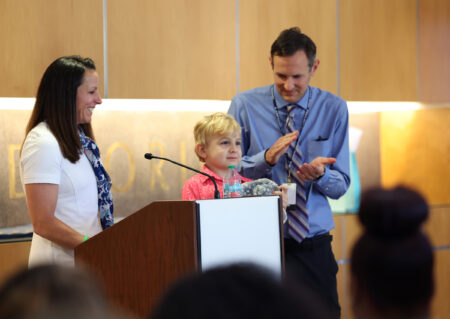
“It’s been completely transformative for him,” she said. “He’s doing just all the fun things that a five-year-old kid can do that he was really limited on before. So, we’re so grateful. And we just want to take a moment to thank all the team members who’ve helped us throughout our entire journey.”
Teresa Hobt-Bingham, MSN, RN, associate nursing officer for Surgery and executive sponsor of the Vanderbilt Health Organ Donation Advisory Committee, thanked the donor families and credited the care teams that make donation possible.
“Across our health system, we are united in providing care with dignity and respect, both in life and in death,” she said. “This vital work would not be possible without the dedication of our teams, our EDs, our ICUs, our perioperative teams. They all work together collaboratively to ensure exceptional care for both our donors and our recipients.”


