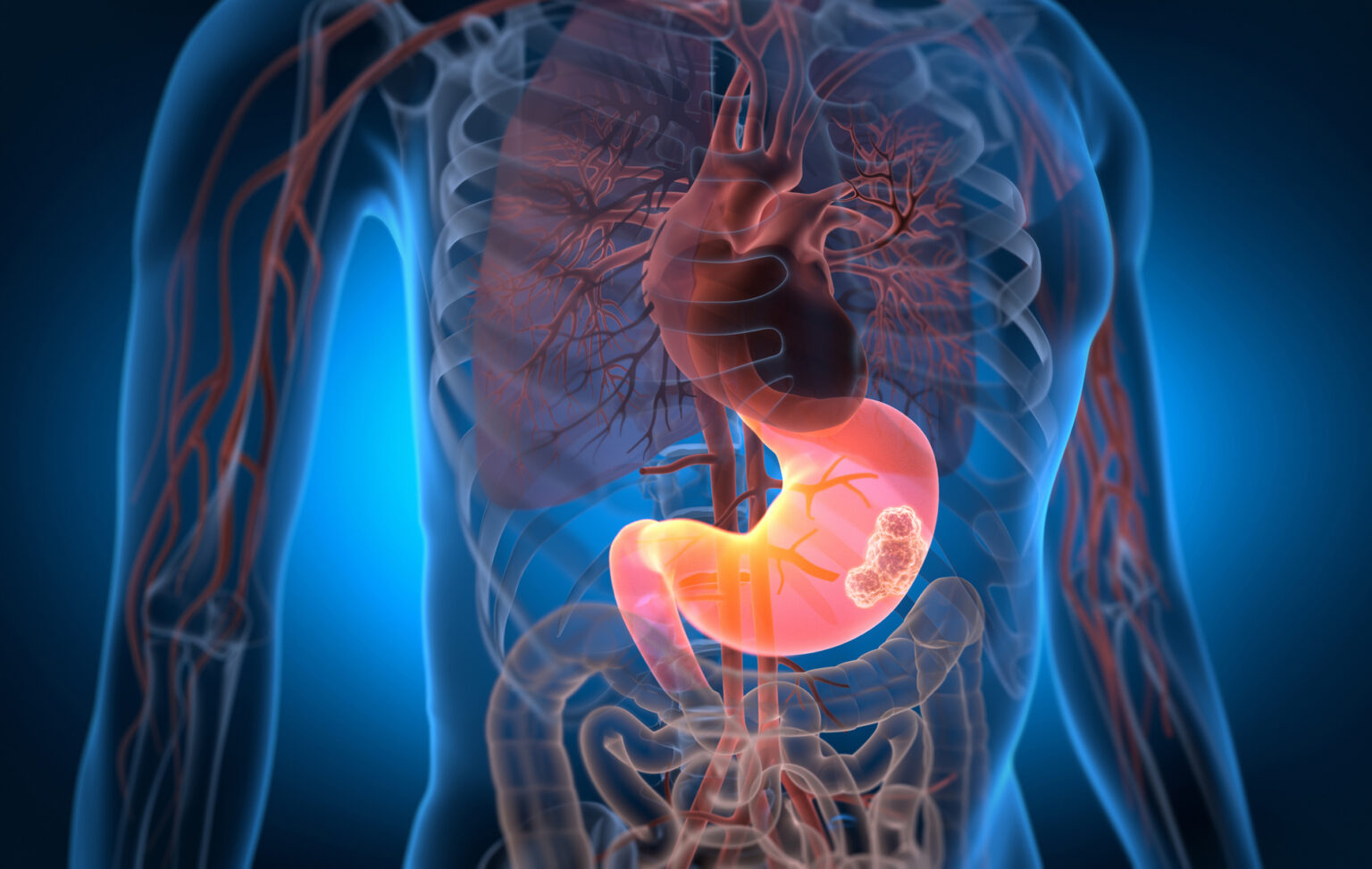
 Illustration by Adobe Stock

Drug shows safety, efficacy for precancerous stomach lesions
An early-stage clinical trial, supported by the Department of Defense, has demonstrated that the targeted cancer drug trametinib shows potential as an interventional therapy to reprogram precancerous gastric lesions, potentially preventing them from becoming malignant, and that it can be administered safely. The results of the Phase 1 trial involving 15 patients, which were published recently in Gastroenterology, were pleasantly surprising, said James Goldenring, MD, PhD, the Paul W. Sanger Professor of Experimental Surgery and professor of Cell and Developmental Biology. The primary goal of this trial was to evaluate whether a low-dose, limited duration treatment of two weeks with trametinib would be safe for patients at risk for developing a second cancer after having undergone resection of a Stage 1 gastric cancer. The drug also showed promise that it could be the first therapeutic intervention against precancerous lesions in the stomach.
Fluorescence imaging can improve outcomes in head and neck cancer surgery
A study published June 18 in the journal JAMA Surgery demonstrated the benefits of using fluorescence-guided imaging to assess margins in head and neck cancer. Researchers found that leveraging data collected both during surgery (in vivo) and after the tumor’s removal (ex vivo) can help guide surgeons in achieving a negative margin in cancer resection. To assist in ensuring a negative margin in a deep resection, surgeons can use fluorescence imaging techniques. Mapping tumors after resection can provide data on how close the margins are to the surface of the deep resection, and intraoperative in vivo fluorescence imaging can reveal areas of residual disease in the tumor bed. In combination, the information provided by both methods of fluorescence imaging can guide further examination and sampling to help achieve fuller resection of the deep margin.
Lower health literacy increases mortality risk for cancer patients
Cancer patients who scored lower on health literacy screening experienced higher all-cause mortality, according to a study published March 15 in the journal Cancer. The study followed Vanderbilt-Ingram Cancer Center patients for a median of 3.1 years who had taken the Brief Health Literacy Screen. Patients who had high health literacy on the screening lived 9.4 months longer compared to those with low health literacy (score of nine or lower). The 9,603 patients in the retrospective cohort study were diagnosed with either prostate, lung, breast, renal, colorectal, brain, head and neck, bladder, pancreatic, liver, sarcoma or gastric cancer.
Low blood cell counts drive cancer in explosive blood disorder
One person in 10 over the age of 70 will experience an explosive, clonal growth of abnormal blood cells, called clonal hematopoiesis of indeterminate potential, or CHIP, that increases the risk of blood cancer and death from cardiovascular, lung and liver disease. The risk of blood cancer differs significantly, however, depending upon whether patients with CHIP also develop cytopenia (low blood cell count). An analysis of genetic sequencing data from more than 34,000 people over a 17-year period by researchers at Vanderbilt University Medical Center has found that persistent cytopenia appears to be a critical step in the progression of CHIP to blood cancer. For patients with CHIP who developed cytopenia, the risk of progression to blood cancer was 10 times higher than it was for patients without cytopenia — a 1-in-200 chance per year versus 1 in 2,000, the researchers report in the June 2025 issue of The Lancet journal, eClinicalMedicine.
Presurgery consults using 3D models improve shared decision-making and reduce anxiety
A study published June 3 in JAMA Network Open determined that presurgery consults with 3D models made patients feel they played a bigger role in decision-making and that their anxiety levels decreased. The patients were scheduled for partial or complete colon and/or rectal resections for colorectal cancer, diverticulitis or inflammatory disease. Fifty-one patients participated in the study, with 28 receiving consultations using the 3D models and 23 receiving conventional consultations. The patients in the 3D arm of the study reported a significantly higher involvement in shared decision-making and significantly reduced anxiety levels compared to the other patients.