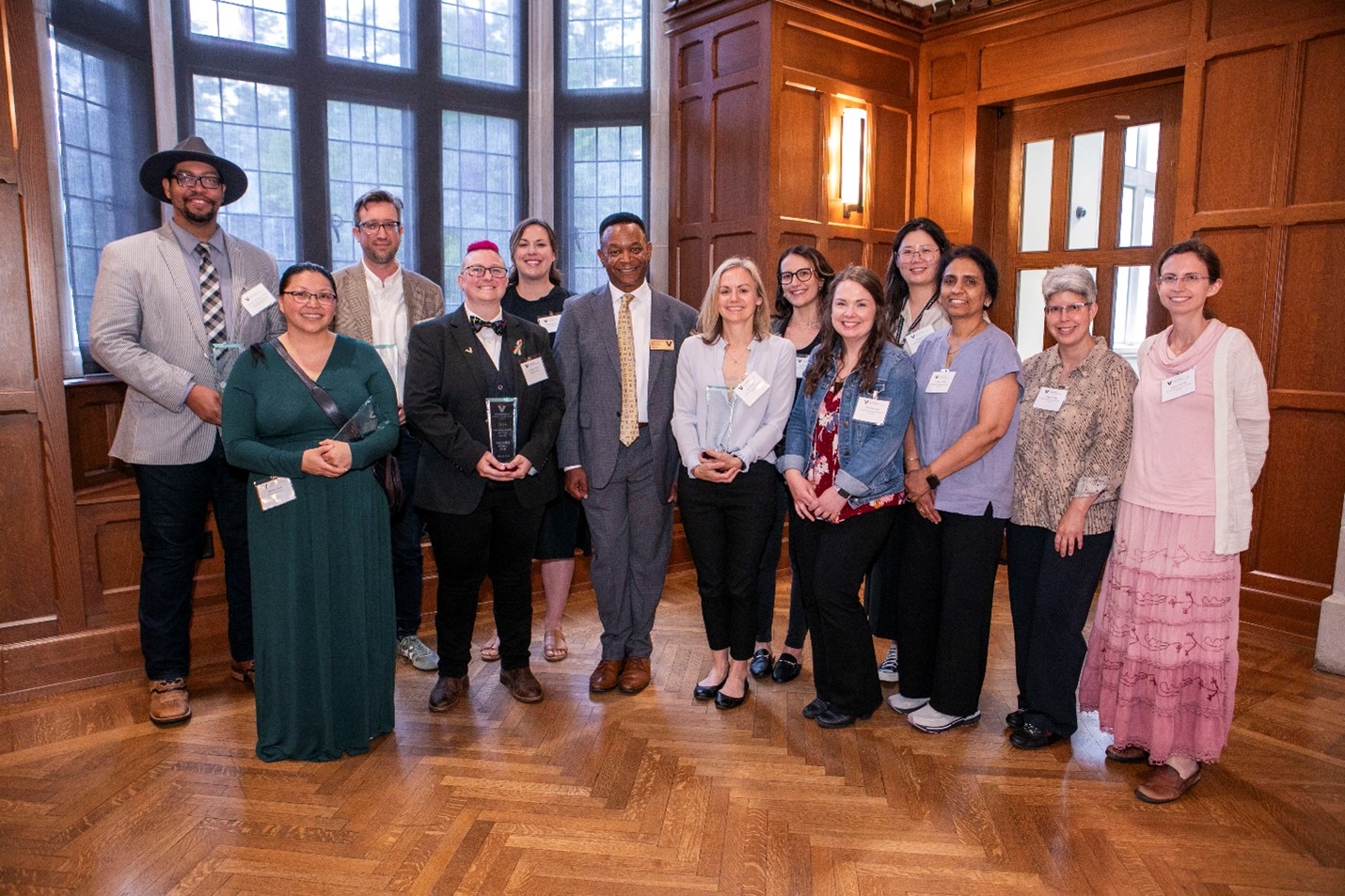
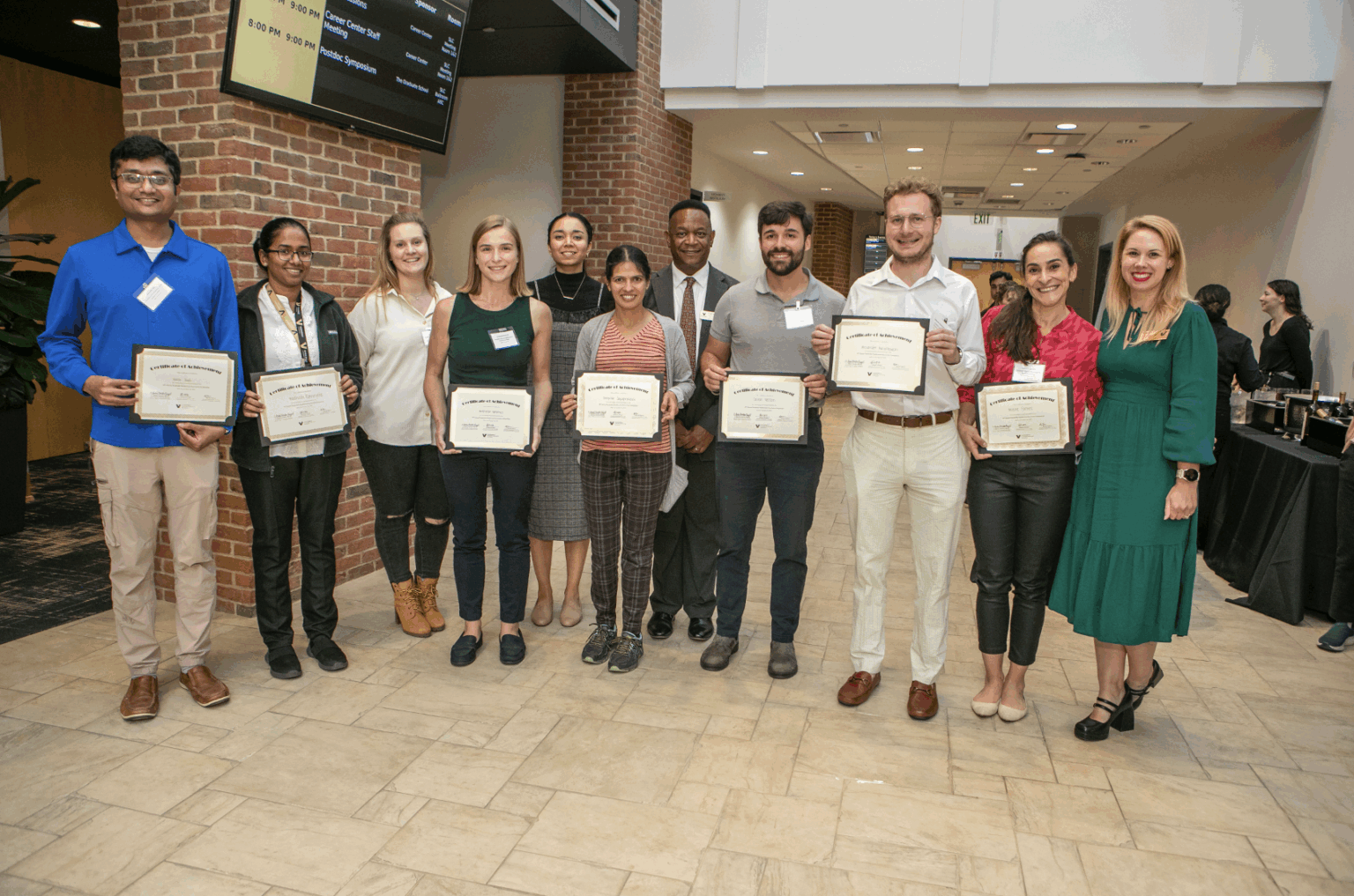
 Award winners at the 19th Annual Vanderbilt Postdoctoral Association Symposium.

The 19th Annual Vanderbilt Postdoctoral Association (VPA) Symposium, was held on Oct. 14, at the Student Life Center. This event brought together postdoctoral scholars from across Vanderbilt University and Vanderbilt University Medical Center for a day of research, professional development, and community building. The symposium featured a resources fair as well as an engaging mix of scientific presentations, career and leadership workshops, and networking opportunities.
C. André Christie-Mizell, PhD, Vice Provost for Graduate Education, Dean of the Graduate School, and Director of the Office of Postdoctoral Affairs, opened the day by highlighting the critical role postdocs play in advancing Vanderbilt’s research mission. He encouraged attendees to connect with other postdocs during the day and get involved in the numerous opportunities on campus to build community.
The morning session featured a presentation by Charreau Bell, PhD, Senior Data Scientist at Vanderbilt’s Data Science Institute. In her talk, “Reimagining Academic Inquiry: Emerging AI for the Research Toolkit,” Bell explored how artificial intelligence is reshaping research methodologies, offering postdocs a fresh perspective on integrating new technologies into their work.
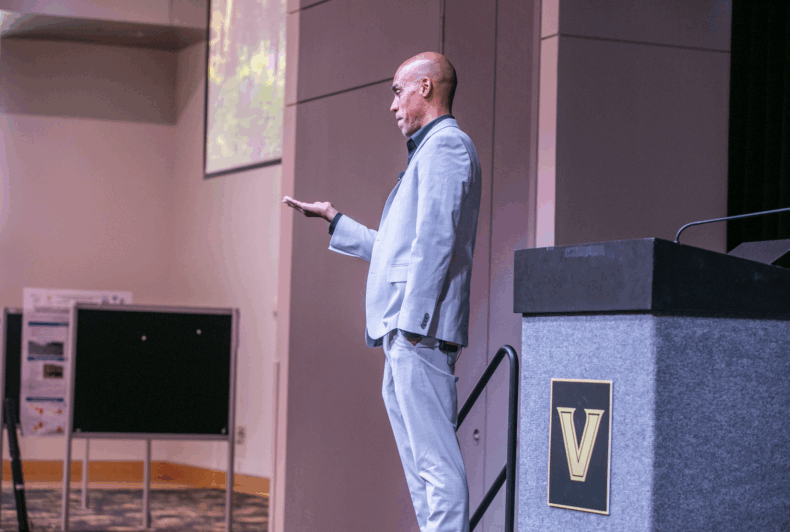
The keynote address was delivered by Matthew Johnson-Roberson, PhD, Dean of the College of Connected Computing. His address, “Artificial Intelligence: History, Future, and the Role of Vanderbilt’s College of Connected Computing in Shaping It,” provided a sweeping overview of AI’s evolution and outlined Vanderbilt’s vision for driving AI research. Johnson-Roberson also demonstrated, through his own personal experience, the need for perseverance and adaptability in the development of a scientific career. His emphasis on resilience resonated with attendees.
Afternoon career development offerings included concurrent sessions. The first session was led by Heather Bloemhard, PhD, Vanderbilt University Office of Federal Relations. This session was titled, “The Policy Pipeline, a conversation about past insights, present challenges, and future advocates,” and focused on science policy and civic engagement. A second session was facilitated by Christine Quinn Trank, PhD, and Susan Douglas, PhD, who are both affiliated with Department of Leadership, Policy, and Organizations. Titled, “Lessons from the Science of Motivation: A Simple, Leverageable Framework for Leaders,” this session centered on leadership and management skills in the workplace.
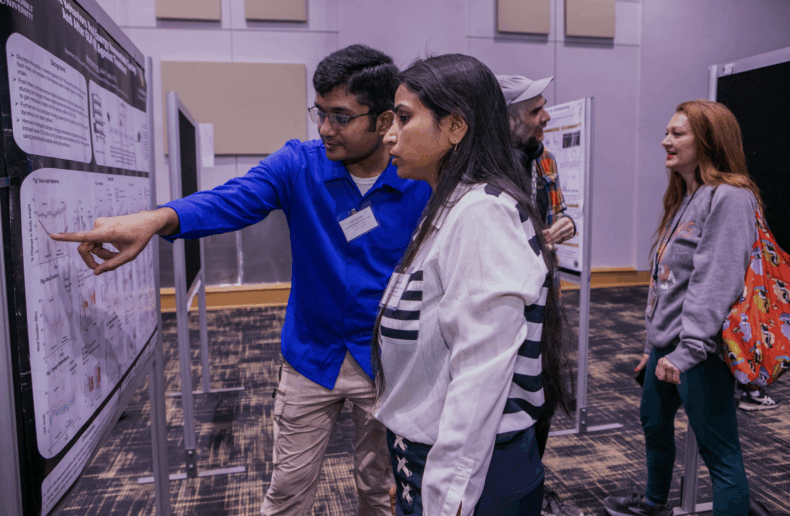
The symposium also included two poster sessions, which showcased 35 presentations. Additionally, six postdoctoral fellows were selected for lighting round talks on a broad range of topics.
Poster Presentation Winners:
- Session A: Milene Fontes, Alexander Kwiatkowski, and Anastasia Varanko
- Session B: Dalton Nelson and Madhushi Ratnayake
- Session A People’s Choice Award: Harsh Shah
- Session B People’s Choice Award: Madhushi Ratnayake
- Lightning Talk Winners:
- 1st Place: Deepika Jayaprakash
- 2nd Place: Milene Fontes
Ashima Chopra, PhD, VPA Scholarly Advancement Co-Chair, reflected on the symposium’s ability to provide a “great platform for postdocs from all disciplines to engage with each other. We hope to continue these interactions in the future, to foster the growth of an interdisciplinary postdoc community.”
About Vanderbilt’s Postdoctoral Scholars
Vanderbilt postdoctoral scholars, or postdocs, are professionals who have earned doctoral degrees and are pursuing additional scholarly training. Postdocs play a critical role in Vanderbilt’s research enterprise, with over 500 postdocs working across Vanderbilt University and Vanderbilt University Medical Center. To learn more, visit the Office of Postdoctoral Affairs.