 Scott Smith

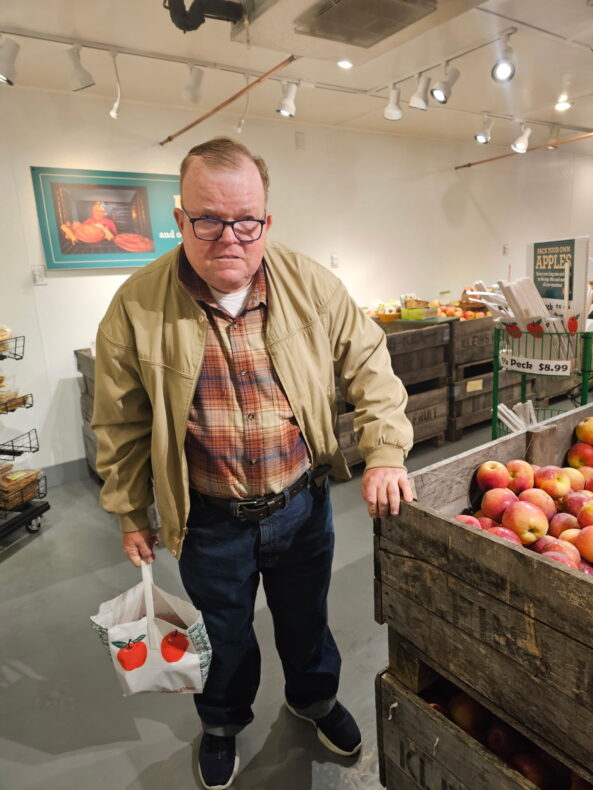
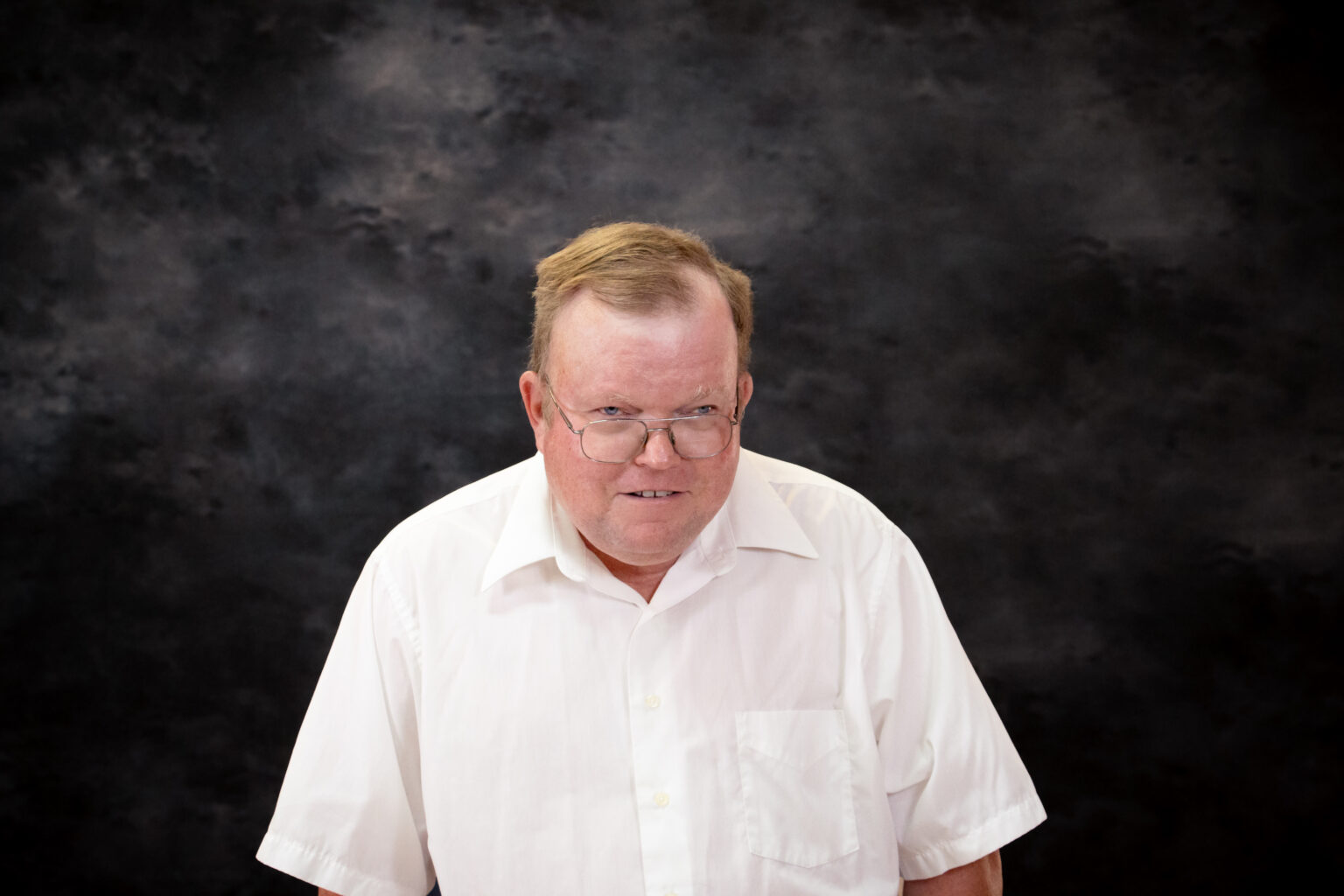
Scott Smith turned 60 this year.
But if you’d asked anyone in 1965 if a child born with hydrocephalus would survive to be a sexagenarian, they likely would’ve had a rather pessimistic outlook. Nevertheless, Smith continues to thrive despite undergoing 17 neurological surgeries, the majority of which came during childhood, and all but one of which was performed at Vanderbilt Health.
Hydrocephalus, a neurological condition in which a patient has an excess of cerebrospinal fluid (CSF) in the brain, poses plenty of disadvantages for those born with it, including painful headaches and intense cranial pressure.
But hydrocephalus hasn’t kept Smith from living a fulfilling life. Most recently, his 60th birthday was a moment of celebration for his entire family in Tullahoma, Tennessee, when NewsChannel 5 visited for a baseball-themed surprise party.
Smith is something of a veteran at Vanderbilt Health, having undergone numerous surgeries and been treated by doctors from multiple generations of the Department of Neurological Surgery.
“I’ve got a chart at Vanderbilt about that big,” Smith can be heard saying in the NewsChannel 5 story, motioning his hands apart to express that the breadth of his treatment is no small thing.
Smith recalled that he came home from Vanderbilt Health when he was 6 weeks old, and then went on to have shunt surgeries, in which a tube sends excess CSF into the abdomen, every year from then until he was 12. He remembers some landmark events in his adolescence, like missing his sister’s wedding when he was 7 and being absent for some two months of sixth grade.
The support of community
What’s perhaps most memorable, though, is what it’s actually like to live with hydrocephalus.
“I tell people to think of the worst headache you’ve ever had and multiply it by 100 million,” said Smith. “And your head just feels like it’s going to explode.”
Dario Englot, MD, PhD, associate professor of Neurological Surgery, who performed Smith’s most recent shunt procedure, said people born with congenital hydrocephalus are much better off now than they were when Smith was born in 1965.
“With proper care, these patients can live a normal lifespan,” said Englot. “When Scott was born, doctors were still learning more about shunts and hydrocephalus, but today, lifespans are much better, and these individuals can often live normal lives.”
Hydrocephalus can present differently depending on the patient and whether the condition is congenital or develops later in life. One common thread in each case, though, is severe headaches, as Smith knows too well. But despite the pain, especially in his adolescence when he had surgeries about once a year, he pressed on and lived a full life as his community supported him.
“I had a lot of teachers who helped me get through school,” said Smith. “Of course my mother helped me, my siblings helped me. … It was kind of like, ‘Well, Scott, you don’t have what it takes to go to Harvard, but you’re no dummy either.’”
The legend of William Meacham
At Vanderbilt Health, Smith was treated by the late William F. Meacham, MD, whom he learned was heralded as a hero among the halls of the Medical Center.
“I mentioned Dr. Meacham, and one of the nurses said, ‘You had the legend!’” said Smith. “I joke and go, ‘OK, it’s not Elvis, or Joe Namath, or Hank Aaron, but I know a legend.’”
A legend indeed, Meacham was a pioneer in the field of neurosurgery and one of Vanderbilt Health’s own for more than four decades, serving as professor and chair of the department of Neurological Surgery for 30 years. An [ML1] endowed chair is named in his honor; Reid Thompson, MD, professor and chair of Neurological Surgery, holds the William F. Meacham Chair in Neurological Surgery.
“Stories like Scott’s show the lasting effects of Dr. Meacham’s legacy,” said Thompson. “He was an incredible leader in our field and helped shape our department in so many ways. But to kids like Scott, he was simply the doctor who cared, and the doctor who made living with hydrocephalus just a little bit easier.”
Smith recalled a time when he was visiting the late Ray Hester, MD, who treated him after Meacham’s retirement: While he and his mother were in the examination room, he heard a familiar voice. Meacham, visiting for the day as he often did, was happy to drop in and visit his former patient — emblematic of the lifelong connections Vanderbilt Health doctors strive to forge with their patients.
That connection also spanned between hospitals. Smith said that when he would visit his local doctor in Tullahoma, that doctor knew to call Meacham, easing the process of getting to the hospital in a hurry.
“We’d go to his office, and he’d call Vanderbilt,” said Smith. “And then after he called Dr. Meacham, Mama would call Daddy … and we’d make it home, grab a suitcase and take off. The suitcase was packed and ready to go.”
Living life to the fullest
The Smith family had the process down pat throughout the years when Scott needed regular surgeries. Fortunately, he was able to go longer and longer between them once he reached his teenage years, even going 15 years between procedures when he was in his 20s and 30s.
His most recent surgery came in 2021, which, unfortunately, was under emergent circumstances: While walking down the road near his home in Tullahoma, Smith felt unwell, collapsed and fell into a ditch. A neighbor helped him home; his brother Stanley came to check on him; and soon enough, he was on his way to Vanderbilt University Hospital.
Englot said congenital hydrocephalus is unique in that it can lead to dangerous symptoms very quickly.
“The type of hydrocephalus that Scott has can lead to a neurosurgical emergency,” Englot said. “If the shunt fails, patients can get very sleepy with a depressed level of consciousness, severe headaches or visual problems.”
Englot said the CT scan of Smith’s head showed that the ventricles, or spinal fluid pockets inside the brain, had expanded dramatically.
“That made it clear that the shunt was not functioning,” said Englot. “Shunts, just like any mechanical system, are prone to failure. We had to emergently get him to the operating room.”
Part of Smith’s recollection of the ordeal was the experience of getting to ride in a LifeFlight (ground) vehicle for a change.
“That was the first time I’d ever been in an ambulance,” said Smith. “The rest of the time, they’d just put me in the back seat and take off!”
The surgery was a success, and Smith hasn’t had to go back into the operating room since 2021. Now, as he lives his life to the fullest, he’s surrounded by friends and family and continues to follow sports religiously, as the many pennants and helmets at his birthday party suggested. In addition to following his beloved St. Louis Cardinals in baseball, he roots for the Vanderbilt Commodores in football — and is proud to have stuck with them through the down years.
“Back when they were having their bad years in football, [people would say,] ‘You cheer for Vanderbilt?’” said Smith.
But Smith always replied with a vote of confidence for the institution that had done so much for him: “Yeah, but they’ve put me back together so many times.”