


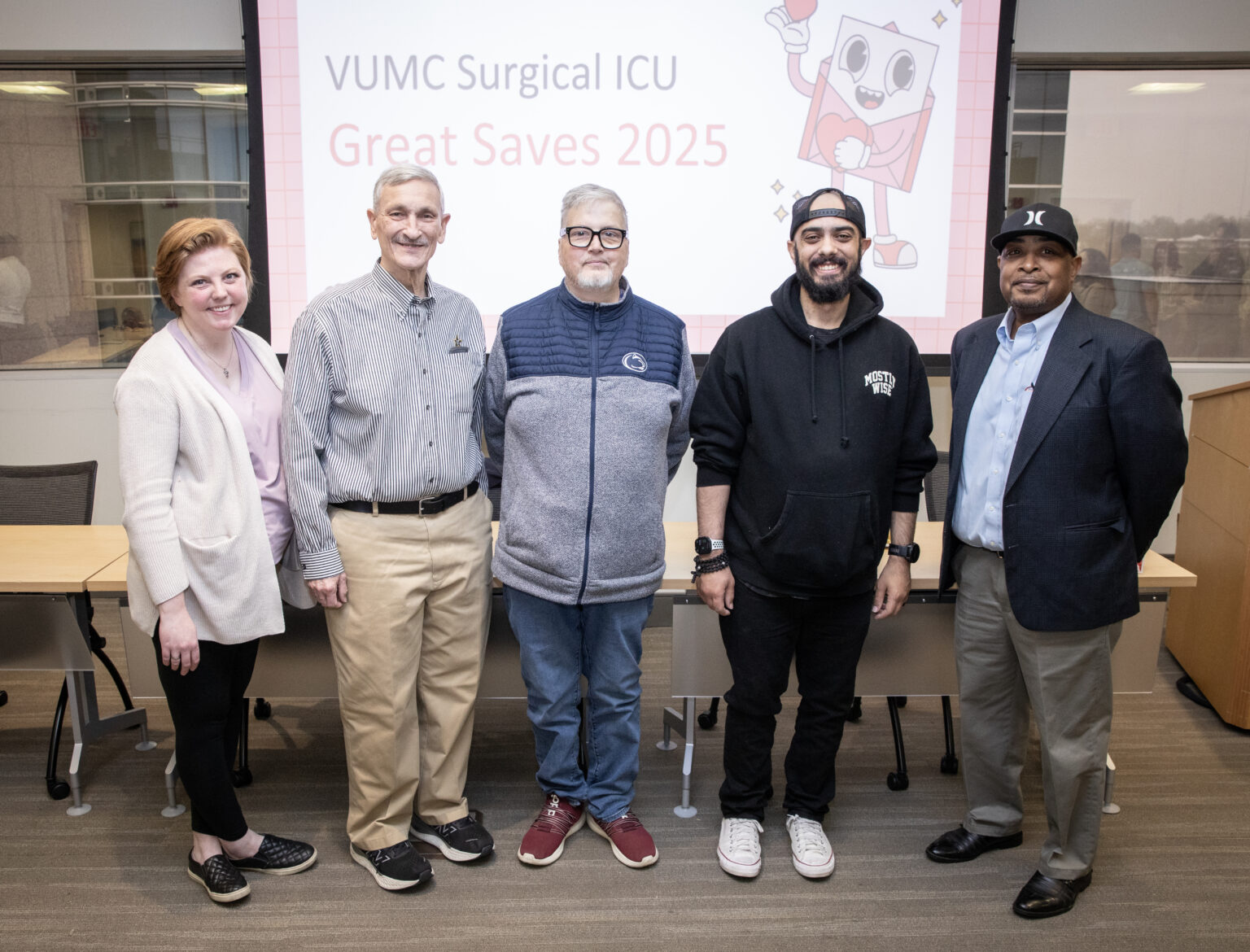
 Former patients Kaytlin Esson, Will Gordon, Robert Theberge, David Guirguis, and Michael Hussey pose for a photo during the Great Saves event on the Vanderbilt Health Main Campus. Former patients from the Surgical ICU came back to talk with their care teams and share their stories of recovery. (photo by Erin O. Smith)

Playing baseball with your son and grandson. Riding a tractor. Walking up 16 steps to sleep in your own bed. Enjoying family gatherings.
These seem like such simple activities, but for six former patients of Vanderbilt University Hospital’s surgical intensive care unit (SICU), they are signs of a grateful return to a new normal after recovering from critical illness.
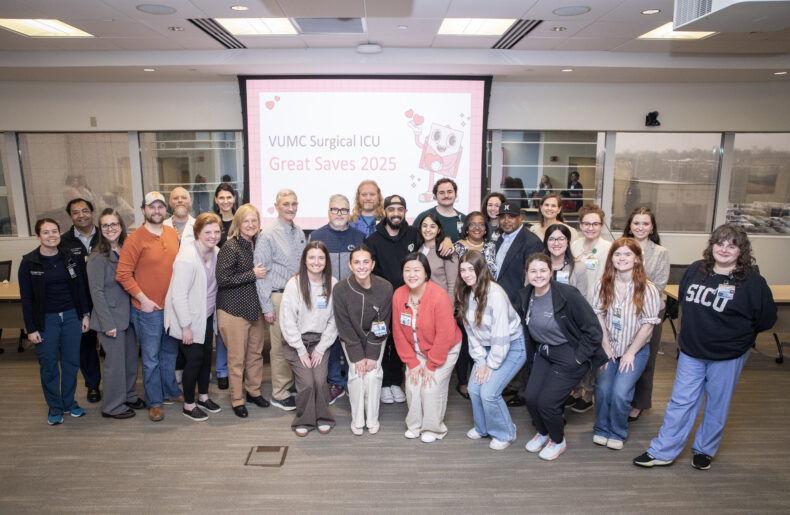
There were many angels present in the room when the former patients recently met with members of the medical teams who helped save their lives. They and their families shared their journeys back to health, from initial illness followed by weeks to months in the SICU, to their ongoing rehabilitation and recovery.
The SICU’s Nicole Murphy, RN, opened the event by reading brief summaries of each patient’s time at VUH before inviting them to share what went well during their hospitalizations, what could be opportunities for change, and what they’d like the SICU team to know.
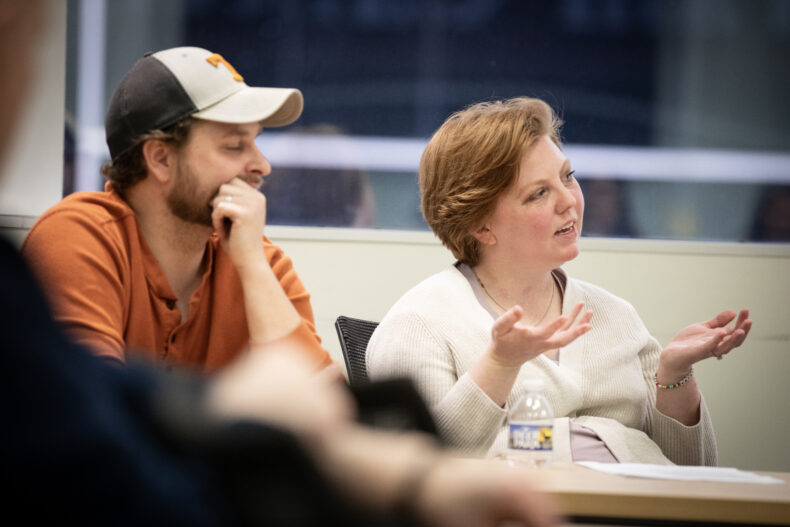
Kaytlin Esson was joined on the panel by her husband, Thomas. They were expecting their first child when she began feeling ill in January 2025. She knew it was something far beyond morning sickness. A hospital emergency visit led to a diagnosis of dehydration. Over the next few weeks, Esson continued to worsen and became a frequent emergency room visitor.
Ultimately, a partial colonoscopy led to the diagnosis of ulcerative colitis, an inflammatory bowel disease. She had also developed toxic megacolon, a rare and life-threatening complication when the large intestine becomes severely inflamed and enlarged. It can lead to bowel rupture and the release of toxins into the body.
Esson was transferred to VUH where her colon was removed in emergency surgery, and she was given an ileostomy. Her hospitalization was complicated by respiratory failure that required her to be placed on ECMO (extracorporeal membrane oxygenation) and an intra-abdominal bleed that required a second open surgery. Her medical crisis led to the miscarriage of the couple’s child.
Now home and continuing to heal, Esson credited her Vanderbilt Health medical team with saving her life.
“Thank you for answering questions and keeping my loved ones informed every step of the way. A huge thank you to Dr. [Roberta] Muldoon for saving my life more than once. Without her willingness to take my case, I wouldn’t be here today, even though I definitely kept her on her toes.
“I also want to thank my family for being by my side and fighting for me, never giving up on me. My biggest thank you is to my husband. He had to make incredibly difficult decisions when being my voice, when I literally couldn’t speak … Because of this team and this hospital, I stand here as a living prayer and am willing to fight and keep going.”
She added that getting accustomed to an ileostomy was a challenging part of her recovery but something she was willing to share if it could help others.
“It’s a part of my story, and I hope that by sharing it, I can help someone feel less alone,” she said. “Whether you’ve been on this journey for six months or 50 years, you’re not alone.”
Former SICU patient Deborah Irvin joined the event by video call. She had a liver transplant that was complicated by acute respiratory distress syndrome with hypoxia (low blood oxygen) and hypercarbia (excessive carbon dioxide in the blood) that required paralysis so she could successfully be put on a ventilator. She underwent multiple procedures including a tracheostomy and required vasopressors (medications to increase blood pressure).
Irvin shared the moment she was finally able to return home after more than four months at VUH followed by rehabilitation.
“I got home on Christmas morning, and our 19-year-old son was home from college and standing in the garage doorway with open arms and tears streaming,” she shared. “And he continues to hold me still, and say, ‘My mom is still here.’
“I don’t remember a lot of what happened, but I want to thank the doctors. My husband told me they were absolutely phenomenal. And the nurses that came in were just amazing … God saved my life through you — through Vanderbilt — and I’m so thankful for it.”
Robert Theberge received a liver transplant which was then complicated by graft failure; he then had to have a second transplant. He developed a large hemothorax (blood between the chest wall and lung), and a chest tube was placed. Theberge also required blood transfusions and medications to stabilize his blood pressure. He was eventually transferred to the step-down unit but had to return to the ICU after going into atrial fibrillation with rapid ventricular response. He was finally discharged to continue his recovery at a rehabilitation facility.
Theberge thanked his transplant surgeon, Martin Montenovo, MD, MMHC, chief of the Division of Hepatobiliary Surgery and Liver Transplantation, for saving his life. He also shared that during his hospitalization he missed a much-anticipated concert.
“I explained that to one of my nurses,” he said. “She came in the next day, and she’d made a playlist of all the songs played at the concert the night before so I could hear the music while we had lunch. That was a very nice, personal thing that she took the time to do.”
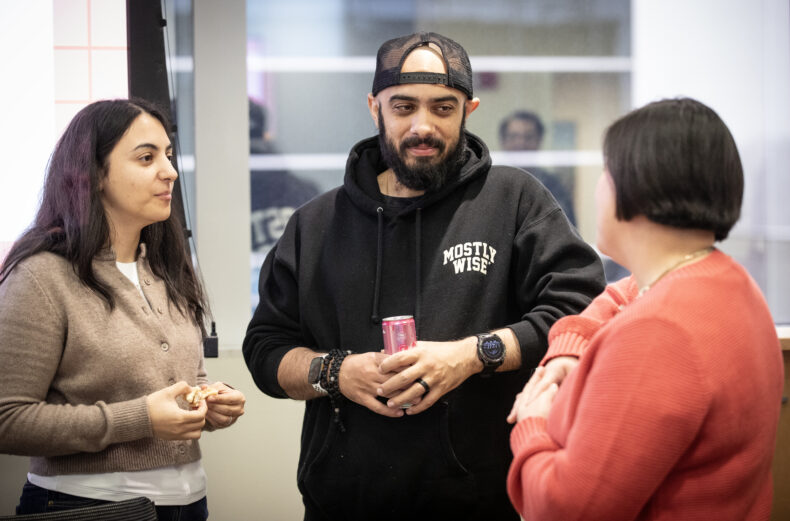
Former patient David Guirguis also received two liver transplants at Vanderbilt Health due to complications following his initial transplant. He was hospitalized for almost two months. He spent time on a ventilator and on continuous renal replacement therapy (CRRT), a 24-hour, slow-acting dialysis to remove toxins from the blood. He thanked his care team for their compassion.
“By the second or third week, I would have multiple nurses and doctors who had taken care of me previously come by to just check up on me,” he said. “I never felt like I was just a number or that I was ‘your patient for today only.’ It felt like a relationship; they genuinely care about how you are doing.”
He added that he had a favorite nurse, named Frank (Frank Perry, RN).
“Frank became my best friend — maybe not to him, but to me,” he laughed. “He took care of me a lot. Whenever I was in a bad mood or upset about something, they would just have Frank walk by. When I would see him, I would just get super happy.”
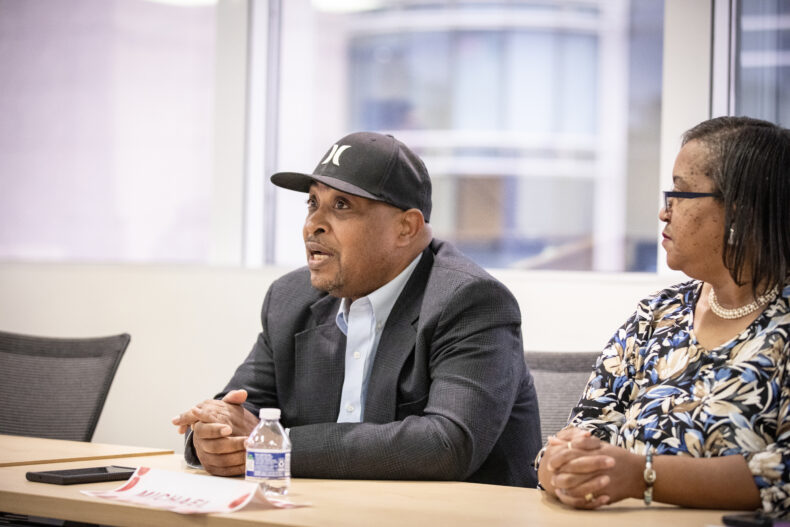
Former patient Michael Hussey was transferred to VUH from a small, West Tennessee hospital. He was told he needed emergency surgery for obstructive kidney stones.
“They were going to airlift me, but because of a storm they put me in an ambulance,” Hussey recalled. “I thought I was heading to Jackson (Tennessee). They gave me something for my pain before we left, and I didn’t wake up again until six days later. I didn’t know what had happened.”
He had developed sepsis, a medical emergency where the body has an extreme, dysfunctional response to infection, which can lead to organ failure and death. Hussey was in critical condition, was on a ventilator and spent time on CRRT. He lost more than 100 pounds.
Today, Hussey still receives dialysis to support his kidneys, but he is again able to play basketball with his son and grandson. He laughed when sharing that he does sit to take a break more often.
“I am grateful to Dr. Spencer Moreland (then a Critical Care Medicine fellow) and all the other angels at Vanderbilt who had a part in my care,” he said. “I thank God for my wife, Deborah, staying by my side every step of the way, praying for me, singing to me even when I didn’t know it and being a voice for me during my ordeal. Also, the support from my entire family, church family and friends that prayed for me helped get me to where I am today. Most importantly I thank God for bringing me through this storm of my life.”
Many panelists commended Vanderbilt Health clinicians who invited their family members to listen in on morning rounds, a care team huddle held by the patient’s room to develop the coming day’s care plan. Family members were even asked to share their thoughts.
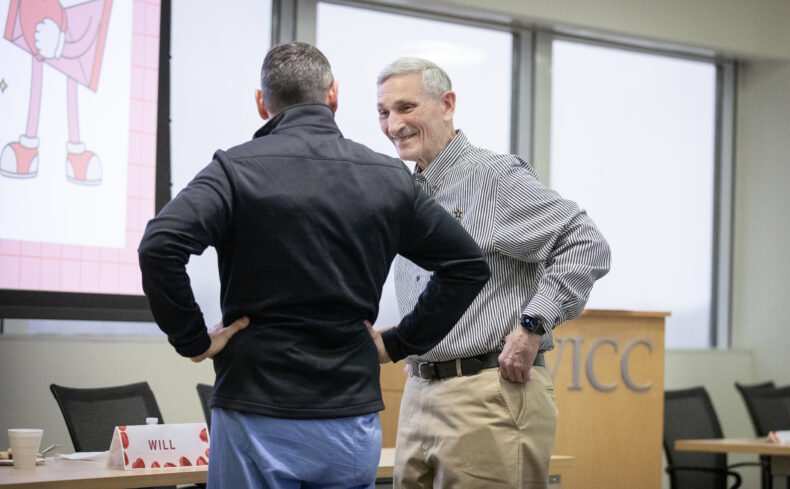
Will Gordon, 71, underwent two liver transplants at VUH and had multiple procedures for complications. He has attended a few SICU Great Saves events, and his former care team has watched him progress from being in a wheelchair to using a walker or cane. This year, he walked in with no assistance. He told the audience he’d recovered enough to have a needed hip replacement, and he was back to bush-hogging (clearing) fields and working on his farm.
His wife, Karen, praised the actions of a nurse she saw in the audience, Savannah Parsons, BSN, RN. As a former nurse, she remembered recognizing that her husband was experiencing a crisis late one night. Parsons, an SICU clinical staff leader, moved quickly to save his life.
“There’s so much you do well,” added Will Gordon. “It’s the personal touches that each individual gives. You may not realize it, but you’re cherished by your patients.”
“We have a lot of hard days and a lot of really hard shifts, but moments like these where you’re able to see and hear about the impact you make really fill your cup,” Parsons said. “You are making that difference for someone else, which is just amazing. It’s just indescribable how days like this make me feel.”
The Great Saves event was organized by Murphy, Erin Palmer, MSN, RN, SICU nurse manager, and other members of the SICU team.


