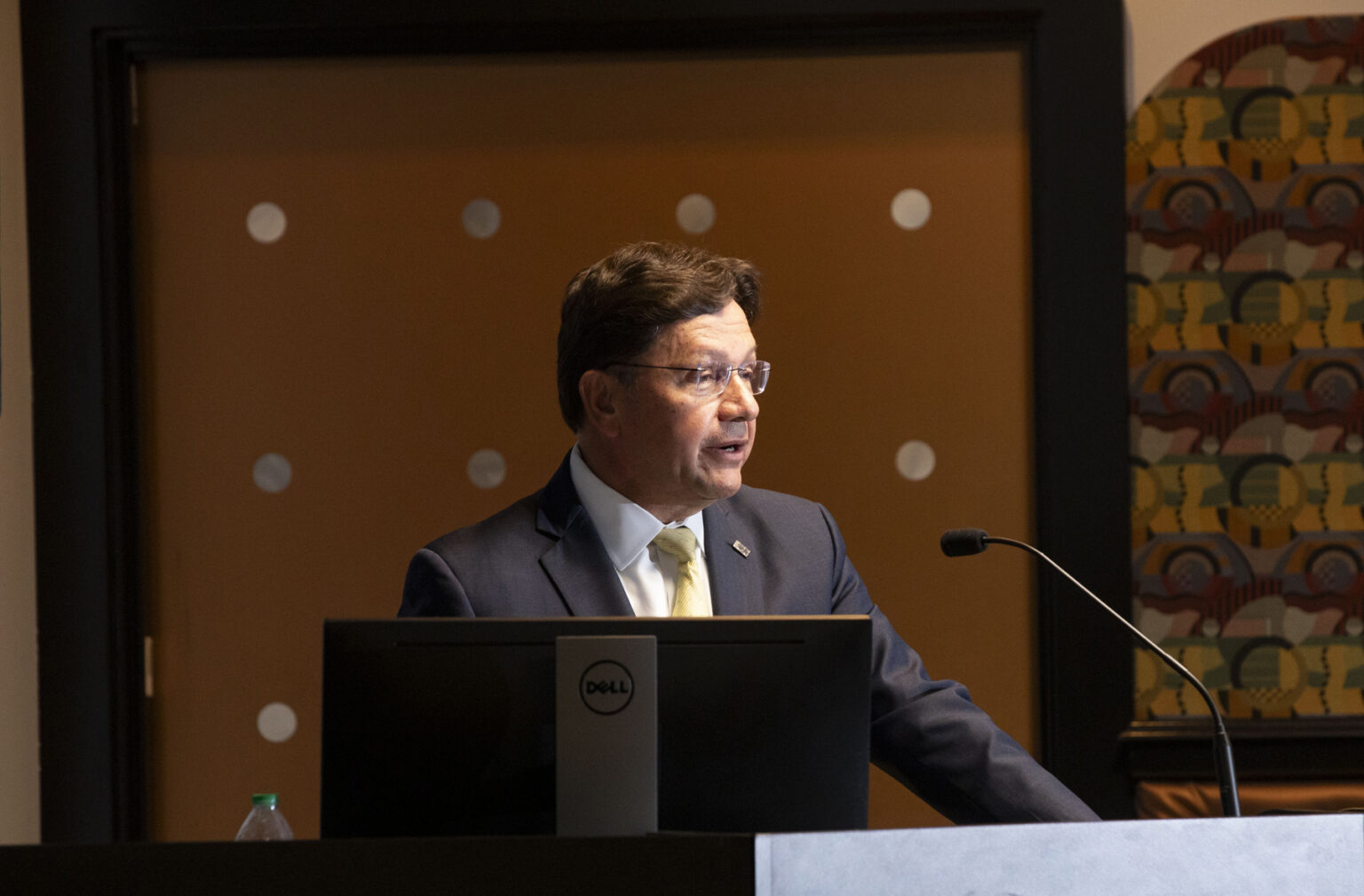
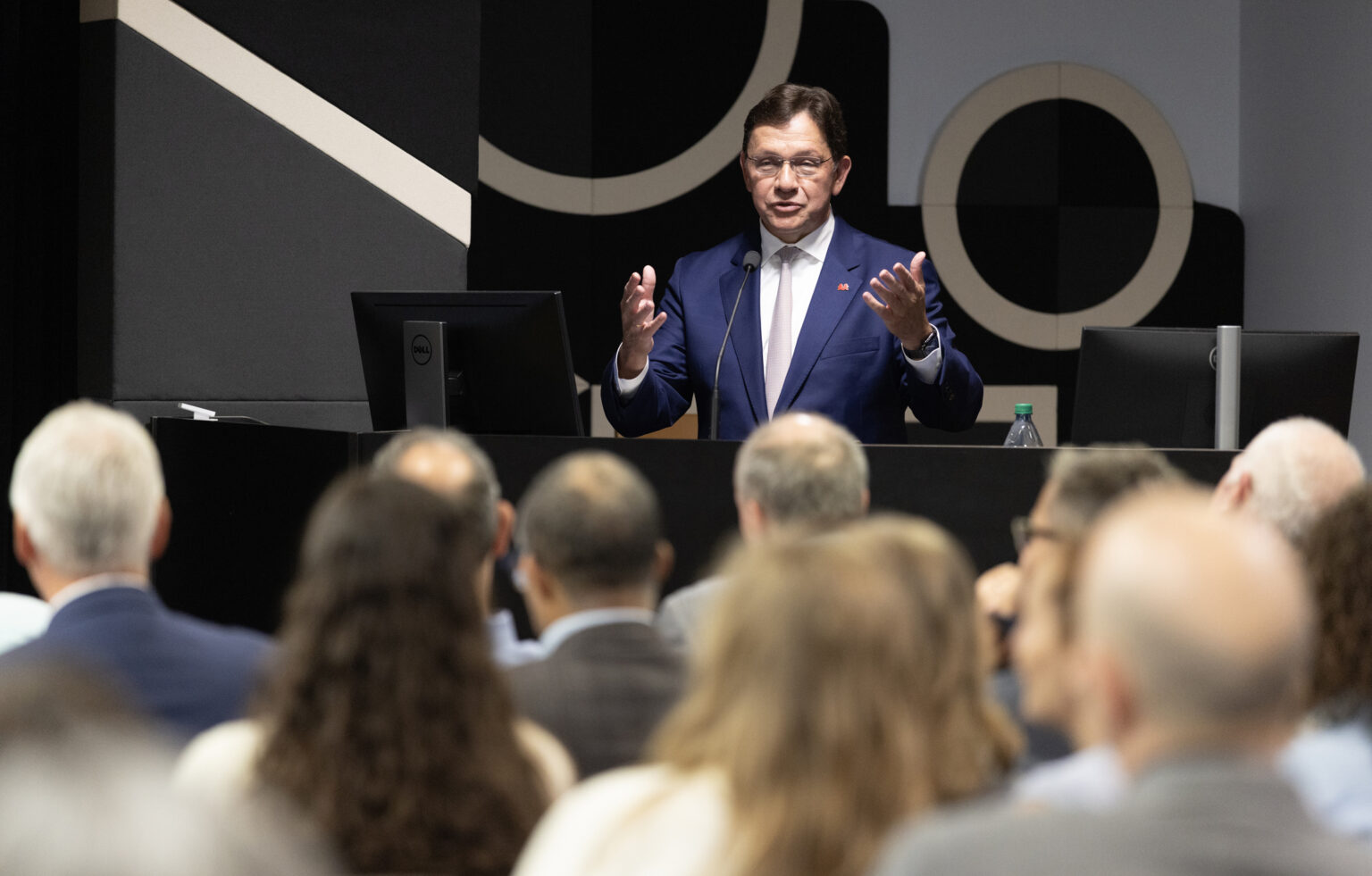
 Juan C. Salazar, MD, MPH (photo by Donn Jones)

Seven months into his role as chair of Vanderbilt Health’s Department of Pediatrics and system pediatrician-in-chief for Monroe Carell Jr. Children’s Hospital at Vanderbilt, Juan C. Salazar, MD, MPH, is looking ahead with a passionate vision for strengthening and elevating Vanderbilt Health’s position as a national leader in pediatric health care.
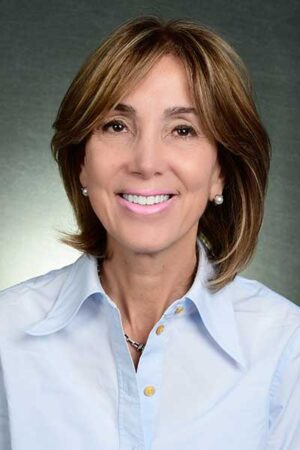
An internationally recognized pediatric infectious diseases specialist and investigator, Salazar brings decades of leadership and experience to Vanderbilt Health. Previously, he served as professor and chair of the Department of Pediatrics at the University of Connecticut School of Medicine and as Executive Vice President and physician-in-chief at Connecticut Children’s. His wife, Olga Toro-Salazar, MD, MBA — a renowned pediatric cardiologist — also joined Vanderbilt Health, where she now leads Pediatric Cardiac Dimensional Imaging (MRI and CT) and is a founding member of the Pediatric Cardio-Oncology Program at Monroe Carell.
Since arriving, Salazar, who holds the James C. Overall Chair in Pediatrics, has immersed himself in understanding the people and programs he now leads. He is passionate about building relationships, engaging with the community, and shaping a forward-looking strategy to further advance pediatric health care at Vanderbilt Health. His vision emphasizes collaboration, innovation and a commitment to excellence for all children and families.
In a recent Q&A interview, Salazar discussed growing up in Colombia and in Washington, D.C.; why he chose to specialize in pediatric infectious diseases — focusing on HIV, Lyme disease, and later syphilis; his early vision for the Department of Pediatrics; and his deep commitment to family. He also offers a glimpse into his life outside medicine — including his love of tropical music and that time he went dancing at a honky-tonk.
Q: Share about your upbringing and your family.
A: I grew up in southern Colombia in a town called Popayán. I have three sisters — twins that follow me and a younger sister. My dad was a physician who left Colombia in the 1950s after seeing an ad for an internship at the Sisters of Mercy Hospital in Buffalo, New York — when he arrived, he didn’t speak English, but said, ‘I’m going to do this.’ He learned English in less than three months, completed his internship, and ultimately went on to train at Bellevue Hospital in New York City, completing a residency in internal medicine and a fellowship in cardiology.
Though he planned to stay in the U.S., a mentor told him, ‘If you stay in the U.S., you will be happy, but if you go back to live and practice in the Colombian Andes, you’ll find pure gold,’ and he always said his gold was my mom. He followed his mentor’s advice, and in 1961, he returned to Colombia to teach at the Universidad del Cauca’s medical school and to practice cardiology. In 1965, the president of Colombia appointed him governor of his home state, and he became its longest-serving leader after leaving his cardiology practice. In 1971, he was named Minister of Health and helped establish Colombia’s first national health system. In 1974, he joined the Pan American Health Organization in Washington, D.C., which is when our family moved to the U.S. — I was 12 years old. My dad has passed, but my mom still lives there.
Q: When did you decide to pursue medicine as a career?
A: It was a natural calling. In high school, I loved the public health aspects of my dad’s work. Seeing the impact he made in that field, it became clear that this was what I wanted to do. After graduating from high school in the U.S., I was accepted to the University of Maryland for premed, but my dad encouraged me to consider his former medical school in Bogotá, Colombia. That’s where I met Olga, to whom I’ve been happily married for 36 years. Later, when I did a medical rotation in pediatrics, I knew I had found my path. I loved taking care of children.
Q: What sparked your passion for pediatric infectious diseases?
A: One of my continuity clinic patients — the first one I had — was a young girl named Jessica. She was about 9 months old. She had been hospitalized for severe bacterial pneumonia at about 4 months old. This was 1988 in Hartford, Connecticut, which was the epicenter of HIV infections in children. She was treated for the severe infection but diagnosed with HIV. Jessica did not benefit from all the HIV medications that we currently have. We were able to enroll her in a clinical drug trial with AZT, but she died in the spring of 1992, due to complications from AIDS. She was a beautiful girl, and I still see her smiling face. She was very strong throughout her life despite everything she went through. That’s the single event that made me realize what I wanted to do — pediatric infectious diseases. I wanted to devote my career to infectious diseases in children, with a lot of emphasis on pediatric AIDS.
Q: You began your career researching HIV — what other areas have you explored in your work?
A: So, the good news is that with the prevention of mother-to-infant transmission of HIV, plus the benefit of antiretroviral medications, fewer kids became infected with HIV, and pediatric AIDS clinical trials were no longer needed in Connecticut. We continued caring for children infected with HIV in my clinic, but I changed my research focus to Lyme disease. I went back into the lab and worked with a phenomenal mentor, Dr. Justin Radolf, an infectious diseases expert who is world-renowned for his work with spirochetal infections like Lyme disease. I received NIH funding — first through the K23 mentored research program and later through an R01 grant.
We showed for the first time how the immune system spots the bacteria that causes Lyme disease. Two sensors in our immune cells — Toll-like receptors 2 and 8 — recognize the bacteria inside tiny compartments in those cells.
Then, my public health background inspired me to focus on syphilis, a major global disease that affects millions, including pregnant women and their babies. It’s caused by a bacterium related to the one that causes Lyme disease, even though the two illnesses look very different. I shifted my research to better understand how syphilis works — especially congenital syphilis — with the hope of helping move vaccine research forward.
Q: What drew you to Vanderbilt Health, and what excites you most about leading the Department of Pediatrics here?
A: In late summer 2024, an executive recruitment firm called and said, ‘Your name has been suggested to potentially become the chair of Pediatrics at Vanderbilt.’ I knew of Vanderbilt because of Dr. Kathy Edwards (infectious diseases expert), who is one of my heroes, and, of course, the university has tremendous name recognition, nationally and internationally. Then, every door I opened in the process made me more excited to be here … The people here are mission-driven, from the volunteers to the nurses, to the floor teams and residents. Everyone really likes being here, and I’m so appreciative of that. I consider myself a very lucky man to have been given this opportunity. My job now is to make sure we use resources smartly and efficiently for the benefit of children.
Q: Share some of your vision for Vanderbilt Health Pediatrics. What are some early goals, and how do you plan to elevate the department’s clinical programs, research and community outreach?
A: I have been busy over the last six months, meeting with key leaders, researchers and stakeholders to brainstorm and choose the areas we will focus on. We must define our central mission with focus and purpose.
One of my dreams is to convene all the excellent resources that are currently available and present within Vanderbilt Health Pediatrics and Monroe Carell to create a research institute. Initially, it’s going to be what I call a virtual institute — we don’t need brick and mortar tomorrow. The physician-scientists and their teams are already in place, and the research is well underway in labs and with the help of the people in our community.
We need to continue to strengthen and expand our signature clinical programs. There’s no reason we can’t become a top 10 children’s hospital — and eventually even a top five institution. To achieve that, we must look beyond what happens inside these walls. We must look inside out — how does Vanderbilt Health Pediatrics contribute to the children of greater Tennessee and the southeastern United States?
Q: What do you do for fun outside of work?
A: I’m a family man. I’ve been married for 36 years to my beautiful wife, Olga. We have two spectacular children who are now older — a daughter, Catalina, 31, who is a digital communications director and works on Capitol Hill, and a son, Juan Esteban, 27, who works in sustainable architecture at a national firm in Providence, Rhode Island. Connectivity to my immediate and extended family is really important — my sisters, my mom, my friends, and extended family in Colombia, where I have about 150 cousins. My wife, Olga, and I still dance to tropical tunes in our kitchen. We love salsa dancing and having fun together. Soon after arriving in Nashville, we went with my son and daughter to Roberts Western World, a famous honky-tonk venue on Broadway. My wife and I started dancing. And everyone cheered us on, and the band kept playing knowing that we were having fun. It was a memorable night.