




On Tuesday, June 23, Susan G. Komen, the internationally known nonprofit breast cancer organization, announced $15.4 million in grants to 35 leading breast cancer researchers across the United States. Three of the 35 grantees are Vanderbilt-Ingram Cancer Center members:
- Tuya Pal, MD, Associate Director of Clinical Genomics and Ingram Professor of Cancer Research
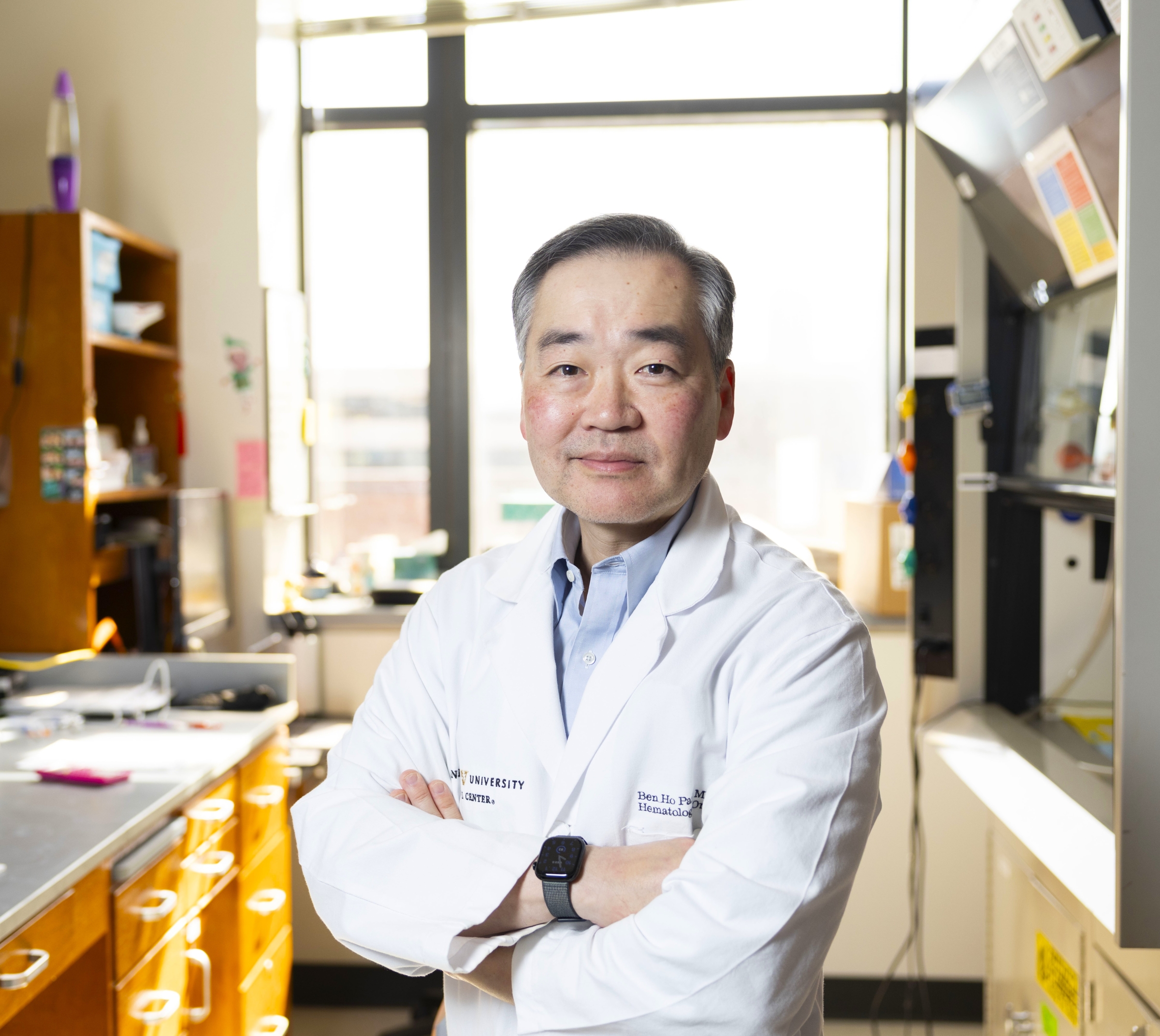
- Ben Ho Park, MD, PhD, Director of Vanderbilt-Ingram Cancer Center and Benjamin F. Byrd Jr. Professor of Oncology
- Jennifer Pietenpol, PhD, Chief Scientific and Strategy Officer at Vanderbilt Health, Ingram Professor of Cancer Research, and former director of Vanderbilt-Ingram Cancer Center
“On behalf of Vanderbilt Health, we are deeply grateful to Susan G. Komen for its long-standing partnership and extraordinary commitment to advancing breast cancer research. Komen’s sustained investment in science and in researchers enables institutions like ours to pursue bold, collaborative work that ultimately improves outcomes for patients everywhere,” said Pietenpol, who holds the Brock Family Directorship in Career Development.
“I’m honored to receive a grant from Susan G. Komen alongside my Vanderbilt Health colleagues and fellow grantees advancing breast cancer discoveries,” she said.
According to Komen, the funded projects span some of the most promising areas of research and include support for long-term, well-established researchers who have made a profound impact in the field.

Pietenpol and her team’s Komen-funded research focuses on understanding the molecular drivers of triple-negative breast cancers, with the goal of identifying new vulnerabilities that can be targeted therapeutically. Her work integrates genomic and functional approaches to uncover mechanisms that influence tumor behavior and treatment response, helping to inform more precise and effective strategies for patients with high-risk disease.
Park’s work centers around how to expose new therapeutic “vulnerabilities” in breast cancers that have gene mutations that lead to alterations in RNA, or “missplicing.”
In simpler terms, Park is developing new therapies based on a specific type of gene mutation that “rewires” cancer cells. This rewiring is what gives the cells the ability to become cancerous. His work has uncovered an Achilles’ heel: These rewired circuits are found only in cancer cells, not in normal cells.
Park explained, “This creates a strong rationale for developing cancer-specific drugs, and in our study, we focus on antibodies that selectively kill cells with ‘rewired’ components.”
Pal’s research is focused on the intersection of tumor and germline genomics, including studies of inherited breast cancers. Pal said, “Our overall goals are to better understand the development and trajectory of breast cancers due to inherited genes across populations.”
Her work examines breast cancer tumor genomics among broad populations of women with hereditary breast cancer due to BRCA1, BRCA2, PALB2, ATM and CHEK2 mutations. These efforts encompass the evaluation of aggressive breast cancers among young Black women, who face higher risks of being diagnosed with and dying from breast cancer, yet are also less likely to receive genetic testing.
Komen is the largest nonprofit funder of breast cancer research outside of the U.S. government, having invested more than $1.1 billion in research since its founding.


