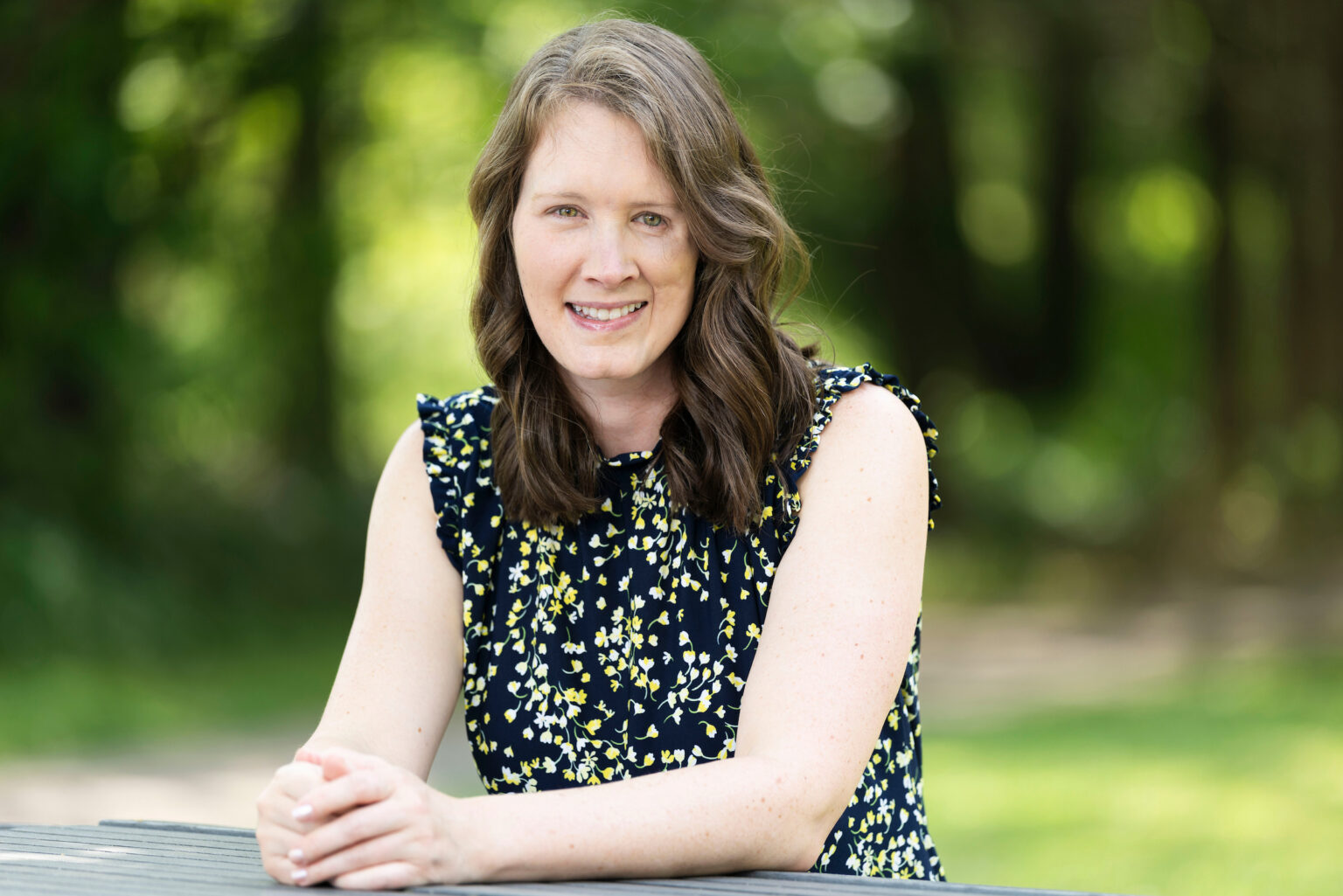
 After having reconstructive surgeries to repair the asymmetry caused by Parry-Romberg syndrome, Tracy Baker now faces the world with more confidence. (photo by Susan Urmy)

For the past 16 years, Tracy Baker has been a familiar face in Sevier County, Tennessee, where she worked as a municipal administrator; now, thanks to the expertise of the Adult Cleft and Craniofacial Program, her face reflects a powerful, new chapter in her life.
Baker was born with Parry-Romberg syndrome, a rare, progressive disorder that causes shrinking or atrophy of the soft tissue and muscle, and even changes to the bone and nerves on one side of the face. Typically beginning in childhood or adolescence, the condition often leads to significant asymmetry. Early signs of the syndrome are unusual skin tightening, headaches, hyperpigmentation, and fat loss on one side of the face, typically in the cheek or around the eye.
For Baker, it began at age 8 with frequent, incapacitating headaches — migraine-like attacks, and doctors struggled to diagnose her condition. It was the mid-1990s, and little was known about Parry-Romberg syndrome. Then, she began noticing subtle changes on the left side of her face. A physician at what was then Vanderbilt Children’s Hospital was able to identify her condition.

“We finally had a name for what was happening, but they told us then that there was really no way to stop it; there was no treatment, and even going forward there wasn’t really much to offer in terms of reconstruction,” she remembered. “They warned my parents that doing anything about it surgically might even make it worse. So, we just left it. It became my problem to live with. That was the story for the first 40 years of my life. It was not easy, and I wouldn’t wish it on anyone.”
Growing up in Nashville, Baker coped with bullying and social isolation by focusing on academics. She attended the University of Tennessee at Martin in West Tennessee for her undergraduate studies, then the University of Tennessee, Knoxville, for a master’s degree in public administration.
“I don’t think the rest of the world realizes that there is such an emotional component to craniofacial differences and issues,” she said. “Your face is the first impression people get of you. It’s how people see you, and in turn, it’s how you see yourself. It becomes the way you feel about yourself, and if you don’t like yourself, it can get dark.”
Baker built a successful career and did her best to put her facial differences out of her mind. Then a few years ago, while scrolling on Instagram, she discovered the posts of a young man named Lukas Caldwell. He looked like her twin.
“To this day I’ve never met anyone in person that has Parry-Romberg, but I had this immediate reaction to seeing him,” she said. “He was beginning the process of having surgeries to correct his facial asymmetry, and he was documenting the whole thing. It hit me like a bolt of lightning. I thought if he’s getting treatment, then maybe something has changed, and I can get help, too.”
She quickly found a website for the Adult Cleft and Craniofacial Program at Vanderbilt Health, which was within driving distance. She emailed her story using a provided link and asked if she would be a candidate for treatment.
Part of her letter read: “I’m ashamed to admit how embarrassed I am about my appearance. I can’t imagine how different my life might have been if my family, when I was a child, or myself, as an adult, might have sought remedial treatment for my condition.”
Matthew Pontell, MD, Assistant Professor of Plastic Surgery at Vanderbilt Health, quickly responded that the Adult Cleft and Craniofacial team had the knowledge and expertise to correct her facial asymmetry.
“I made an appointment, and I didn’t tell anybody about it,” Baker said. “I didn’t want to get my hopes up, and I didn’t want to get anyone else’s hopes up. Dr. Pontell said he’d worked with several kids with this syndrome, so he was familiar with it, but he hadn’t met an adult with this. He immediately started outlining multiple options for me. It was amazing.”
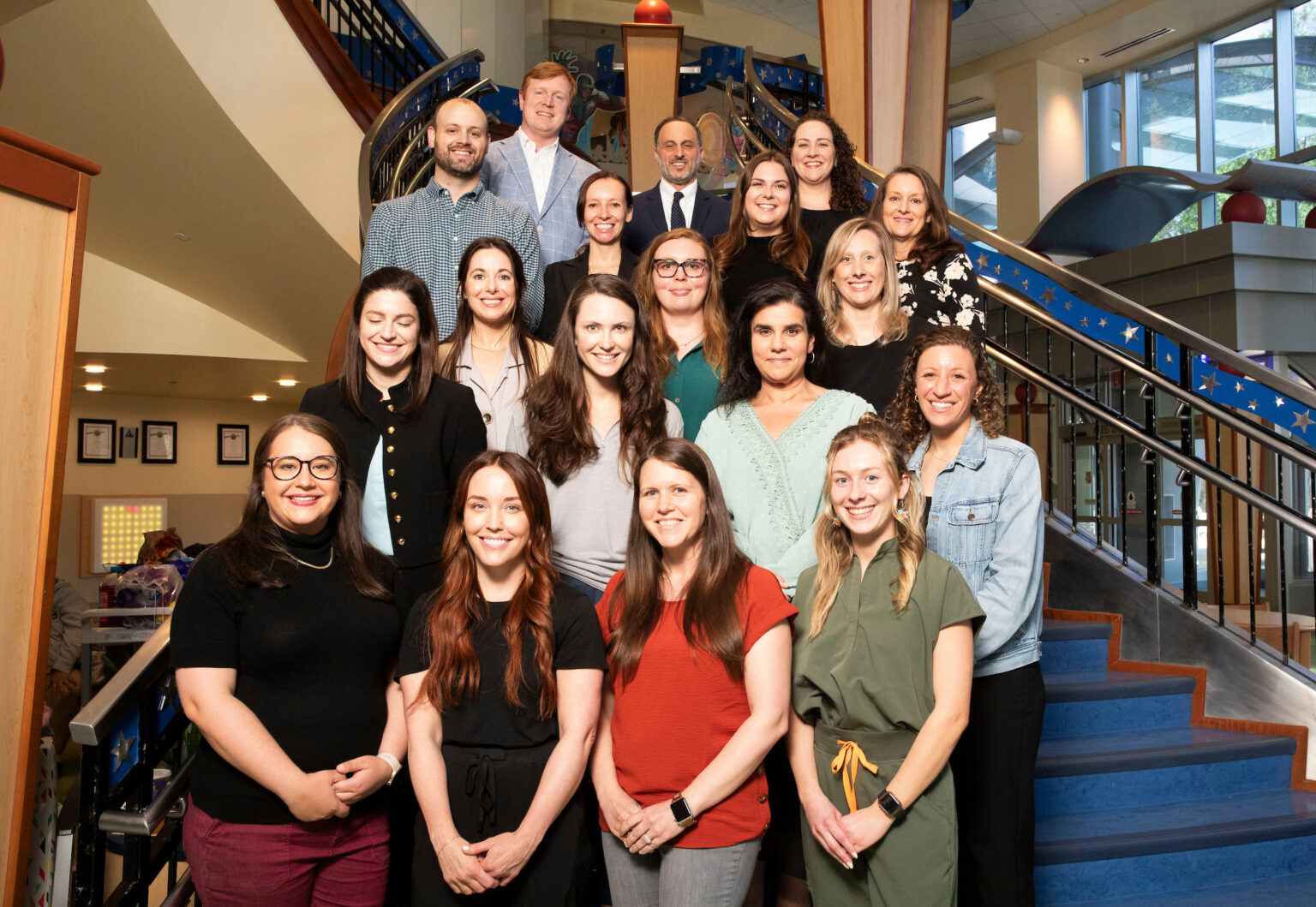
While cleft lip/palate and craniofacial care is most often associated with children, Vanderbilt Health’s Adult Craniofacial and Cleft Palate Program provides specialized care for adults with craniofacial differences from congenital conditions, injury or disease, offering reconstructive and cosmetic treatments throughout adulthood.
Temporomandibular joint dysfunction, malocclusion (misaligned bite), tumors of the face and head, congenital defects, facial asymmetry, orbital fracture, facial paralysis, ear and nose reconstruction, abnormal bone growth, Treacher Collins syndrome and even obstructive sleep apnea are among the issues that bring patients to the program.
According to Pontell, care extends far beyond reconstructive surgery. Patients often need treatment and support from a multidisciplinary team that can include dental, orthodontic, speech, psychological and nutrition specialists.
The program serves adults transitioning from pediatric craniofacial care, such as the Pediatric Cleft and Craniofacial Care program at Monroe Carell Jr. Children’s Hospital at Vanderbilt, co-directed by Michael Golinko, MD, and James Phillips, MD. Many Vanderbilt Health clinicians are members of both the pediatric and adult teams, which helps patients have a seamless transition to adult care.
The adult clinic also sees individuals who never received treatment as children. Many of these adults have long believed their conditions were untreatable. The adult team also treats individuals who’ve had complications from old repairs, such as outdated implants and inferior methods of fixation or restorative techniques.
“There is a large, essentially unknown quantity of adults who did not receive care for cleft or craniofacial issues as children,” Pontell said. “These are not necessarily people with lack of access, but people who just didn’t know where to go for help, or they’ve just believed their whole lives that what they were born with or changes that have occurred with their face or head were untreatable. With them, we’re starting from square one.”
Technology has improved significantly in the past 20-30 years, so surgical capability to address craniofacial differences has also advanced, Pontell added, which was a key factor in Baker’s case.
Mohamed Hania, MSD, Assistant Professor of Oral and Maxillofacial Surgery and Assistant Professor of Plastic Surgery, specializes in craniofacial orthodontics at Vanderbilt Health. He sees a wide range of patients, from individuals who have acquired significant facial differences due to trauma and burns to people with congenital craniofacial defects.
“One of the best things about Vanderbilt is that we have the specialties here to care for even the most complex cases,” Hania said. “We have multidisciplinary team conferences about complex patient cases to plan our treatment and surgical approaches. We plan most cases with a neuroradiologist who interprets the craniofacial scans, which not many teams have.
“I work with the other members of a patient’s care team and learn about their treatment journey. Then, I spend a lot of time talking to the patients. I want to learn their goals and aspirations so we can help determine the right approach for them. This does not always require orthodontics, however, craniofacial orthodontic input is often imperative, whether patients choose to have orthodontics or not.”
For Baker, advanced imaging revealed that Parry-Romberg syndrome had affected not only the soft tissues of her face but also her skull and facial nerves. Over two years, she underwent four fat-grafting procedures and a complex, reconstructive surgery by Pontell to secure a titanium jaw implant and a polyetheretherketone (PEEK) cheek implant to her skull to provide structure.
Now finished with treatment, Baker is pleased with the results. She’s moving back to Middle Tennessee, more than ready for new opportunities. While she still has some numbness and her senses of taste and smell have changed a bit, the greatest transformation has been her confidence and self-image.
“Parry-Romberg syndrome is such a cruel disease because it robs you of your confidence at a young age. I spent so much of my life hiding out from embarrassment and shame. It robbed me of experiences and maybe a whole different life. But Dr. Pontell gave me a reset. I get to start from scratch with confidence, and I’m so thankful.”
“We’re incredibly proud of the comprehensive care we provide for these patients here,” Pontell said. “There are certainly other centers in the country that are doing this, too, and there’s a move to offer multidisciplinary care like we offer here at Vanderbilt Health. I would encourage those who have a cleft or craniofacial difference they would like addressed to do a bit of investigation. Know there is help.”
Speech and language pathology plays vital role in healing from cleft and craniofacial differences
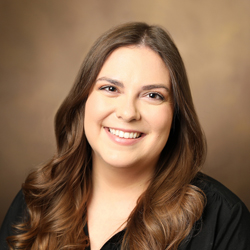
Lauren De Vries, SLP, is a Vanderbilt Health speech-language pathologist who works with patients who are undergoing or who have completed treatment to correct cleft and craniofacial differences. As more adults pursue specialized and advanced care for these issues, she’s seen referrals for older patients increase over the past year.
“My role, for children and adults, is to make sure as patients go through their care journey — medically, surgically and developmentally — they are well supported in their acquisition of speech and language skills as their mouth changes shape with surgeries and orthodontics, and that they maintain their skills and adapt to those structural changes,” she said. “And if additional support is needed, I make sure the patient is either routed to the correct surgeon or to therapeutic support so they can continue to communicate clearly and effectively.”
Speech-language pathologists (SLPs) evaluate an individual’s resonance, or the way air flows through their oral and nasal cavities, as well as articulation, which is how a person’s lips, tongue and teeth work together to form speech sounds. Video nasopharyngoscopy can allow SLPs to observe how the oral and nasal structures work together.
When it comes to cleft or craniofacial issues and the ability to speak, one of the most important parts of the mouth is the roof, or palate, De Vries explained. If someone is unable to generate sufficient airflow out of their mouth or out of their nose, they will not be able to make certain speech sounds and be understandable.
“Communication is so integral to our social lives, our perception of ourselves and our relationship to others,” De Vries said. “I’m proud of the work our team does as speech pathologists, and I’m even more proud of the broader interdisciplinary team and the way we work together to provide top-notch patient care. I’m excited that this team is in place so patients can more easily receive the comprehensive care they need.”