



 Illustration by Adobe Stock/Diana Duren
Carole Stover of Cookeville, Tennessee, had always been healthy and active, but not long ago she wasn’t herself.
“The fatigue was just unbelievable,” she said. “I got to where I was sitting down all day. I would come home during the day … and just sit down in a chair and go to sleep. And that was not like me because I never took naps.”
Her cardiologist discovered the trouble: She was suffering from tricuspid valve regurgitation, a serious condition that occurs when the tricuspid valve on the right side of the heart doesn’t close fully, allowing blood to flow back into the body. Fixing her problem has historically required open heart surgery, a risky procedure for an 85-year-old.
But there was another way. Her cardiologist referred her to the Vanderbilt Heart and Vascular Institute (VHVI), where a multidisciplinary team of clinicians is using novel, minimally invasive therapies to place artificial valves. The procedures avoid the need for open heart surgery, and patients typically spend just one night in the hospital after the transcatheter procedures.
Reimagining heart valve care
VHVI’s clinicians are at the vanguard of two decades of research that has revolutionized the treatment of serious heart valve disease.
Previously, the standard treatment has been either open heart surgery, which carries higher risk and a long recovery, or medications, which are modestly effective or ineffective. Many patients are also considered too high risk for open heart surgery. Left untreated, these heart valve diseases can lead to heart failure and death.
By contrast, today’s minimally invasive procedures use a catheter to place a small device in the valves to reduce the opening and prevent the backflow of blood. The procedures are relatively quick and painless compared to surgical alternatives, and patients typically require a significantly shorter stay in the hospital to recover.
“That allows us to expand markedly the population that can be treated because we can now treat those high-risk patients with a much less invasive procedure,” said Brian Lindman, MD, MSCI, medical director of the Structural Heart and Valve Center and associate professor of Medicine.
The Structural Heart and Valve Center at VHVI has numerous options for artificial valve devices, both Food and Drug Administration-approved devices and clinical trials for new ones. Kashish Goel, MBBS, associate professor of Medicine and director of Transcatheter Heart Valve Interventions at Vanderbilt Health, goes over the options with patients to find the best fit.
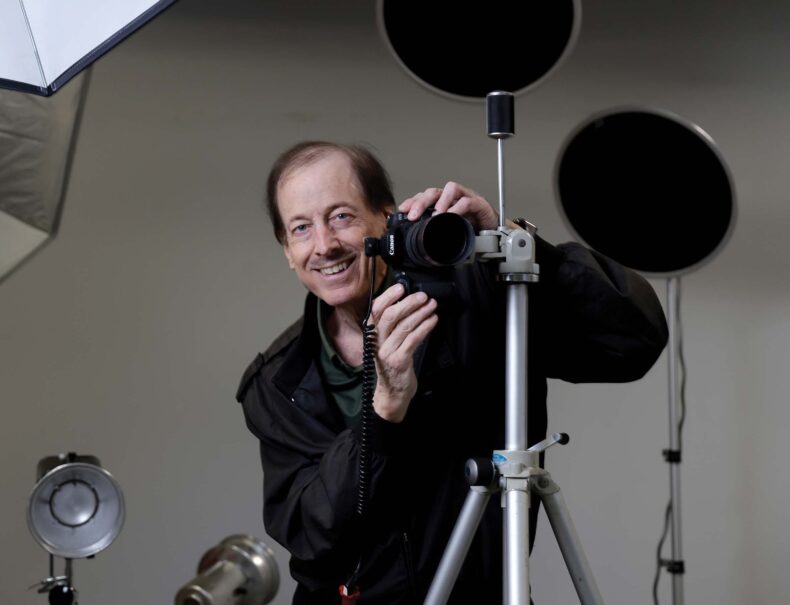
Dennis Carney, a professional photographer in Nashville, said he felt so good after his trans-catheter tricuspid valve replacement that he began to wonder why he even needed to stay in the hospital a couple of nights (it was for observation).
“Everything is like I’m back to brand new,” Carney said. “It’s just a whole miracle. I am so thrilled with that valve. I’m really tickled with Dr. Goel’s surgery. He was incredible at it. And we felt like it was almost a flawless operation.”
Minimally invasive, catheter-based devices are now available to treat aortic, mitral and tricuspid heart valve disorders. Transformative innovation over the last few decades has changed the landscape and treatment options for patients with heart valve disease with numerous devices approved and many others in development and testing.
What sets VHVI apart
VHVI is a destination center of excellence for artificial valve devices and treats patients from across Tennessee and surrounding states. It earns that reputation by the number of clinical trials underway (18 as of this writing), the high volume of procedures and excellent outcomes.
“When I think about our program, what I think sets us apart is that it’s not only truly expert care, but an individualized approach for every patient,” said Melissa Long, MSN, RN, valve program coordinator.
The breadth of the clinical trials at Vanderbilt Health and the deep expertise and research interests of the heart valve team have made the valve center a destination for patients. The center’s leaders are published authors and noted leaders in the transcatheter heart valve space.
“Most of the patients who come here can be offered a therapy that is either available commercially or through a clinical trial,” Goel said. “Because we participate in several early feasibility studies, patients also have access to treatment options that are only available at a handful of centers in the United States.”
The Structural Heart and Valve Center follows a multidisciplinary, team-based approach from initial evaluation to the procedure to postprocedure follow-up. The goal is personalized, precision medicine.

“We have a one-front-door process for our patients with heart valve disease,” Lindman said. “During their first visit, patients have the opportunity to meet with experts in heart valve disease from both cardiology and cardiac surgery in the same room, at the same time. We are trying to make this very tailored, so the right person gets the right therapy at the right time by the right clinicians.”
Next is diagnostic testing, when clinicians take a close look at the patient’s anatomy to see what procedures are feasible. Clinicians work to understand the patient’s goals and preferences throughout a shared decision-making conversation.
Most of the testing is finished on the same day, Goel said, which is especially beneficial for patients who come a long way to get care. They don’t have to make as many visits.
Team-based, personalized care
The conversation among clinicians doesn’t stop there.
“Every week we have a valve conference where we’re discussing and reviewing every patient, considering their risk factors and examining their anatomy to really hash out what seems to be the best option for each patient,” Lindman said. “Alongside commercially available devices, we are also considering clinical trials for which a particular patient may be well suited.”
Lindman said clinical trials offer newer artificial valves that may have distinct advantages over existing approved ones, allowing patients to get access to a therapy earlier or differently than the current standard of care.
Goel noted that patients are still evaluated for surgical options and many times a surgical approach, other than a noninvasive procedure, may be preferred for an optimal outcome.
“This points to the benefits of having a one-front-door approach that centers on the heart valve disease itself rather than referring for a specific procedure,” said Tarek Absi, MD, associate professor of Cardiac Surgery and surgical director of the Structural Heart and Valve Center.
“Patients get input from a multidisciplinary group of experts who aim to understand the patient’s goals and preferences but integrate this with the patient risk and anatomy to present options and make a treatment recommendation.”
Patients are the proof
If patients do need a transcatheter procedure, their hospital stay is minimal. They come in the morning for the procedure, which takes one to two hours, Goel said. Ninety-five percent of them will go home the next day.
“Usually in a week they’re back to their normal life,” Goel said. “We see them for another visit in 30 days to make sure the valve and everything else is good. Overall, this recovery is markedly shorter and easier than open heart surgery.”
“Our heart valve program exemplifies true collaboration and forward-thinking, patient-centered care,” said Colin Barker, MD, director of the Section of Interventional Cardiology and associate professor of Medicine. “From our physicians and nurses to our dedicated staff and supportive institutional leadership, every member of the team plays a vital role in delivering exceptional outcomes.
“We are proud of the unified commitment to innovation, compassion and excellence that allows us to provide the highest quality care for every patient we serve.”
Stover recently completed months of cardiac rehabilitation. She said she can feel a marked difference since her procedure.
“Most of the time, I can tell my energy level is much, much better,” she said. “I do for myself all the time, and I’m pretty active, and so I think I’m doing well.”
Carney said much the same.
“It also has given me so much energy,” he said. “I feel like a 20-year-old. I’m 79. So, to feel like you’re in your 20s, and to be as old as I am, is pretty incredible.”