


Cell Imaging Shared Resource Archive — Page 1 of 1




-
October 13, 2016
Nikon Center of Excellence for live-cell imaging makes debut
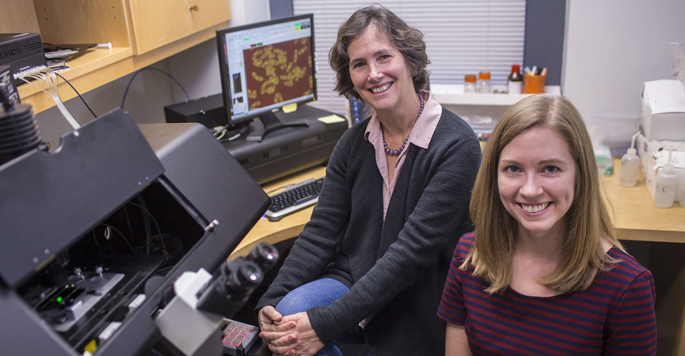
Officials of Vanderbilt University, Vanderbilt University Medical Center (VUMC) and Nikon Instruments Inc. last week celebrated the opening of the Vanderbilt Nikon Center of Excellence, which features state-of-the-art microscopy for live-cell imaging. -
September 29, 2016
Nikon Center of Excellence makes debut Oct. 4
On Tuesday, Oct. 4, the Cell Imaging Shared Resource (CISR) at Vanderbilt University Medical Center (VUMC) will officially unveil its new Nikon Center of Excellence, which will feature state-of-the-art microscopy for live cell imaging. -
January 22, 2015
VUMC research cores speed pace of discovery
Progress against America’s most intractable health challenges, among them heart disease, cancer and diabetes, requires the best minds, the latest tools and the easy collaboration demanded by 21st century science. -
July 11, 2013
New ‘super’ microscopes sharpen cellular imaging
Two new “super-resolution” optical microscopes have put Vanderbilt University Medical Center on the cutting edge of cellular imaging, and are giving researchers their first views of the cell at the molecular level.