PrediXcan Archive — Page 1 of 1

Futuristic blue digital illustration combining a DNA double helix with glowing circuit-board patterns, binary-style numbers, and vertical data streams.
March 28, 2023

Inflammation implicated in exfoliation syndrome

Computational genetics tools have implicated inflammatory pathways in exfoliation syndrome, the most common cause of secondary glaucoma, which can result in blindness.

Multiple blue-toned sagittal MRI scans of the human brain arranged together, with white technical labels overlaid.
July 8, 2021

Genetics of hydrocephalus

Fluid build-up in the brain — hydrocephalus — increases pressure and risk for brain damage; Vanderbilt researchers have now identified genes and signaling pathways associated with the condition.

Silhouette of a person facing a glowing DNA double helix, overlaid with floating binary digits in a blue-toned digital composition.
October 22, 2020

New tool to probe genetic mechanisms of disease

Vanderbilt Genetics Institute investigators have added a new method to the computational genetics toolbox. Their approach, described in the journal Nature Genetics, integrates vast genomics datasets to predict gene expression and facilitate discovery of genetic mechanisms underlying human diseases.

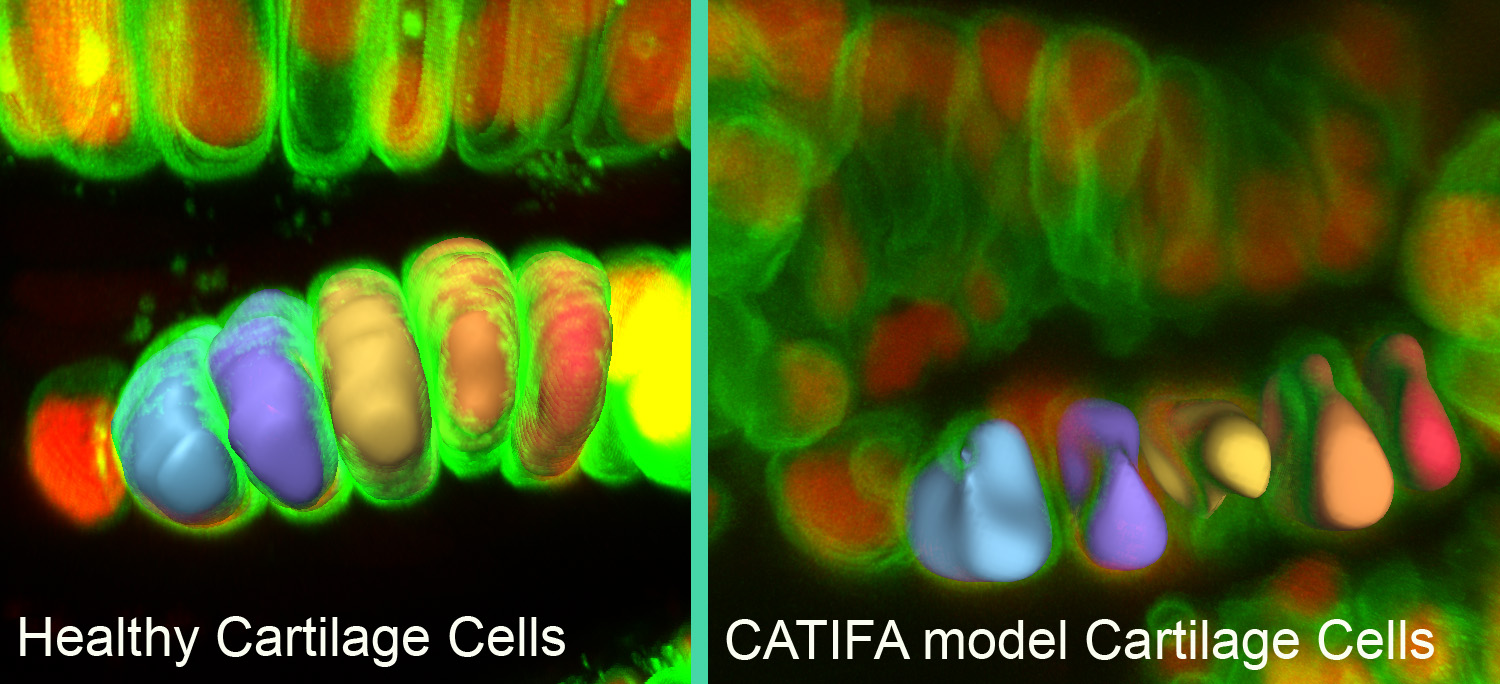
Side-by-side fluorescent microscopy comparison: larger, regularly shaped healthy cartilage cells on the left and smaller, irregularly shaped cells in the CATIFA model on the right, labeled “Healthy Cartilage Cells” and “CATIFA model Cartilage Cells.”
January 13, 2020

Vanderbilt-led team discovers new genetic disease and defines underlying mechanism

An international research team has discovered a new genetic syndrome caused by mutation of a single gene and named it CATIFA, an acronym for its core symptoms.

September 19, 2019

Gamazon receives NIH Genomic Innovator Award

VUMC’s Eric Gamazon is one of only six investigators to receive an inaugural Genomic Innovator Award from the National Human Genome Research Institute, part of the NIH.