


Vanderbilt Eye Institute Archive — Page 9 of 11




-
September 19, 2013
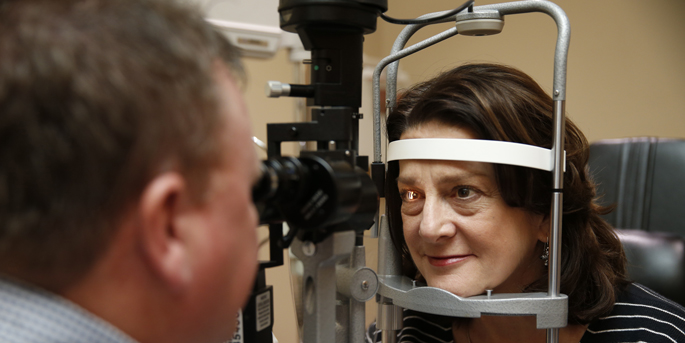
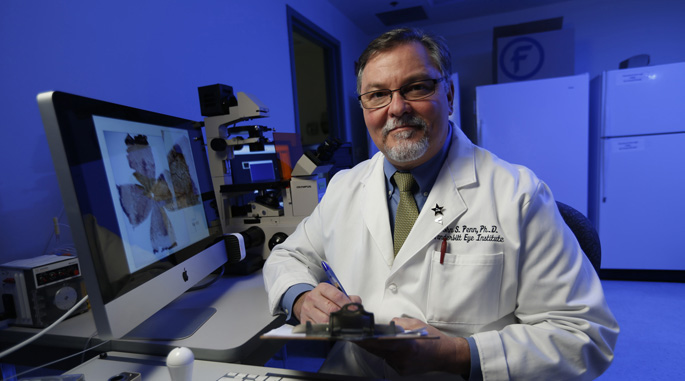
Team tracking new options to treat glaucoma
Three years ago, a team of researchers led by David Calkins, Ph.D., vice chair and director of Research at the Vanderbilt Eye Institute, showed that the first sign of injury in glaucoma, the leading cause of blindness in the United States, occurs in the brain. -
August 15, 2013
Glaucoma patients focus of Sousan’s sharing nature
Suzanne Sousan is not afraid of much. -
August 8, 2013
Glasses bring girl’s world back in focus
Once upon a time, teenage girls were not clamoring to sport a pair of thick, black, oversized eyeglasses. -
July 25, 2013
Grant to support blindess research
Research to Prevent Blindness (RPB) recently awarded a $110,000 grant to Vanderbilt’s Department of Ophthalmology and Visual Sciences in support of research into the causes, treatment and prevention of blinding diseases. -
July 25, 2013
‘Bionic eye’ new option for retinitis pigmentosa patients
Vanderbilt University Medical Center has been chosen as one of 12 sites in the United States to offer the first FDA-approved bionic eye for the treatment of retinitis pigmentosa (RP). -
July 17, 2013
Vanderbilt ophthalmologist stresses summer eye safety
-
June 26, 2013
Insights on glaucoma gene mutations
Glaucoma-causing mutations in the gene for myocilin reduce secretion of the protein into the aqueous humor, suggesting a new option for treatment.