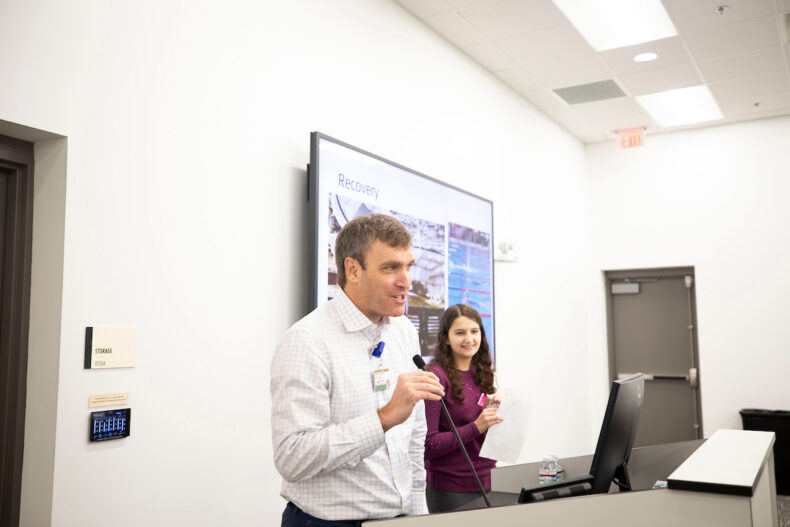




In summer 2025, 15-year-old Maggie Weiss spent a month in Monroe Carell Jr. Children’s Hospital at Vanderbilt battling histoplasmosis, a fungal infection that can cause critical illness in people with weakened immune systems, like hers.
Thanks to her physicians and Vanderbilt Medical Laboratories (VML), her infection was diagnosed promptly and treated effectively, and she was able to return to her 10th grade class last fall.
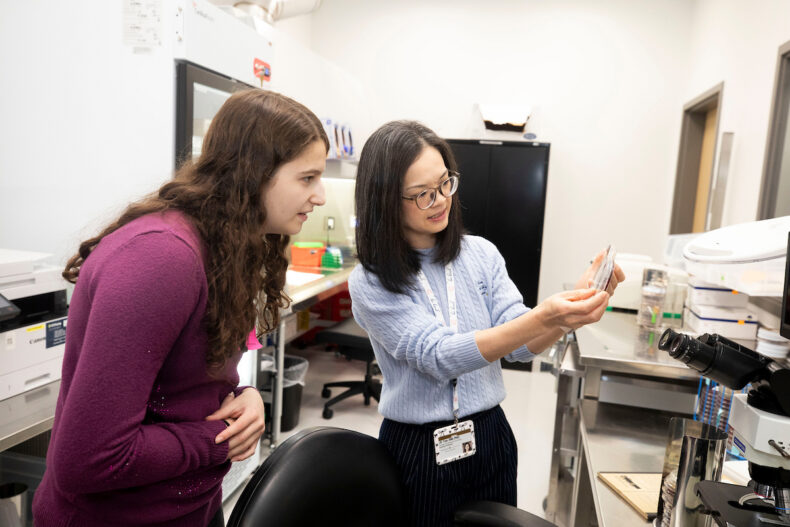
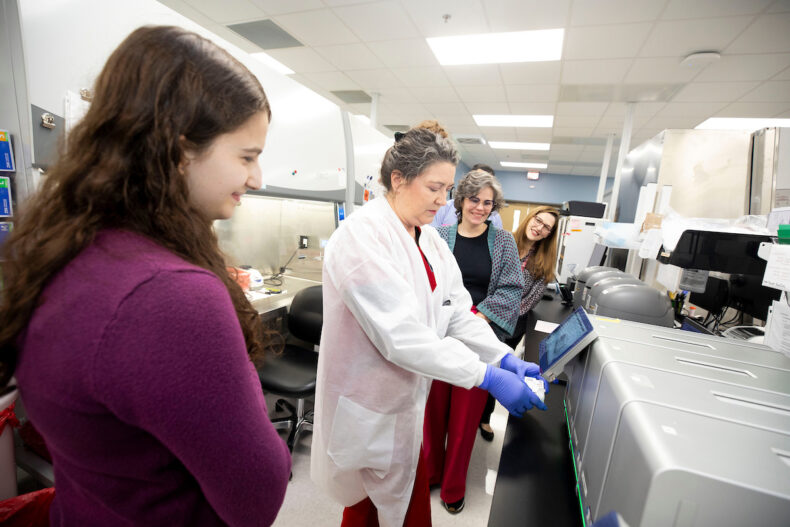
On Thursday, Jan. 15, Maggie and her parents visited VML’s MetroCenter facility for a tour and clinical presentation of her case to laboratory staff. Her mother, Vivian Weiss, MD, PhD, is associate professor of Pathology, Microbiology and Immunology at Vanderbilt Health.
Maggie, who has a type of arthritis caused by an autoimmune disorder, does not know how she became infected, but the immunosuppressive arthritis drugs she takes increased her vulnerability to the fungus.
Despite initial treatment with antifungal medications, she continued to have high fever and fatigue, and she was hospitalized after tests indicated that the infection had spread throughout her body and was attacking her liver.
“It was so scary,” she said. During her treatment and long convalescence, she “developed an irregular heartbeat and muscle weakness … I still have neuropathy and chronic nausea from the antifungal (medication), and I’m still trying to get my autoimmune disease under control.”
But overall, “I’m doing so much better,” Maggie said. VML “continues to help me stay healthy, and I come in regularly for histoplasmosis testing … I’m so grateful for my doctors and the lab staff for all their wonderful care.”
Histoplasmosis can result from inhaling spores of the fungus Histoplasma capsulatum, which grows in soil throughout Middle Tennessee, especially in soil contaminated with bird or bat droppings.
“We’re all exposed to it,” pediatric infectious disease specialist Daniel Dulek, MD, said during the presentation. “Most of us have had it and just have nonspecific symptoms including headaches, chills, body aches, almost flu-like symptoms.
“But when your immune system is weakened from medications or other conditions, you can have progressive infection that can become quite severe,” said Dulek, who is part of Maggie’s medical team, an associate professor of Pediatrics and director of Pediatric Immunocompromised Infectious Diseases Service at Vanderbilt Health.
Maggie “really had, and handled with grace and aplomb, a very long course (of therapy) and a lot of side effects from the medications,” he said. “She’s doing great right now.”
Dulek acknowledged the crucial role that VML played in diagnosing Maggie’s illness and monitoring her therapy. “Having next-day turnaround is really huge,” he said. “Getting results back (quickly) definitely helped keep her from getting much sicker.”
When Maggie became ill, VML offered the highly sensitive urine test for the Histoplasma antigen, hastening her diagnosis. Acquiring a blood test for the antigen, in combination with the urine test, provided a more comprehensive picture of her condition and response to treatment.
Previously, blood samples had to be sent to a reference lab in Utah, and it would take several days to get results, said David Vinson, Senior Vice President for Diagnostic Laboratory Services.
“The investment that Vanderbilt Health made in this facility and VML is what is allowing us to in-source this test,” Vinson said. “For us to be able to turn out labs more quickly leads to better outcomes for our patients.”
And for the public. Maggie’s was one of several histoplasmosis cases from Middle Tennessee evaluated at VML last fall, noted Romney Humphries, PhD, professor of Pathology, Microbiology and Immunology, and executive medical director of Pathology and Clinical Laboratory Services.
Among other health care providers, Lili Tao, MD, PhD, medical director of Mycology and Immunoserology, reported the cases to the Tennessee Department of Health. In December the state issued a health alert about an increase in pulmonary and disseminated histoplasmosis cases in Williamson and Maury counties, south of Nashville.
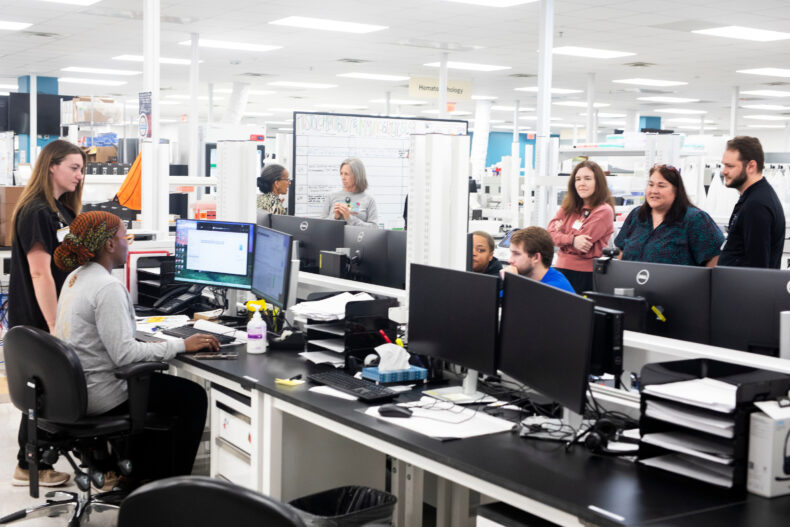
More than 550 pathologists, laboratory scientists, and support staff work at VML, Vanderbilt Health’s main diagnostic core laboratory, which moved in March 2024 to a new 110,000-square-foot facility in MetroCenter, five miles north of Vanderbilt Health’s Nashville campus.
Each quarter VML hosts a clinical presentation, sometimes featuring patients and their doctors, to connect staff with the grateful fruits of their labors.
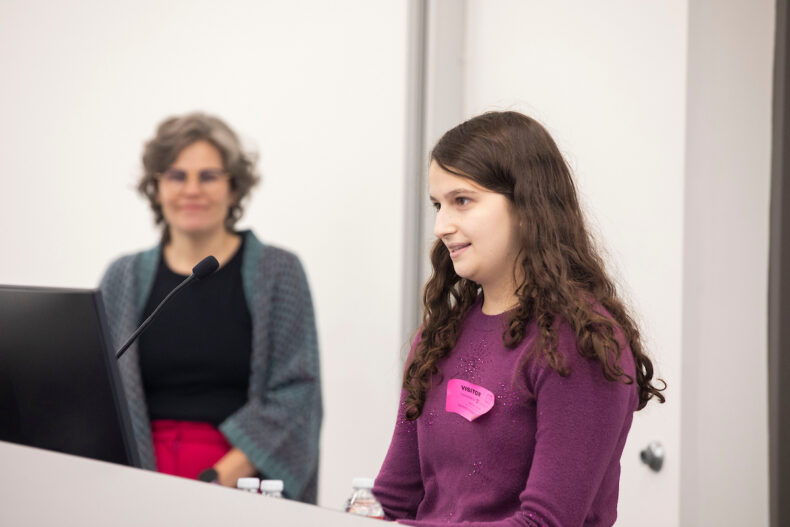
During the Q&A portion of Maggie’s presentation, she was asked about her future.
“I really want to go to medical school,” she responded. “I know how important it is.”