


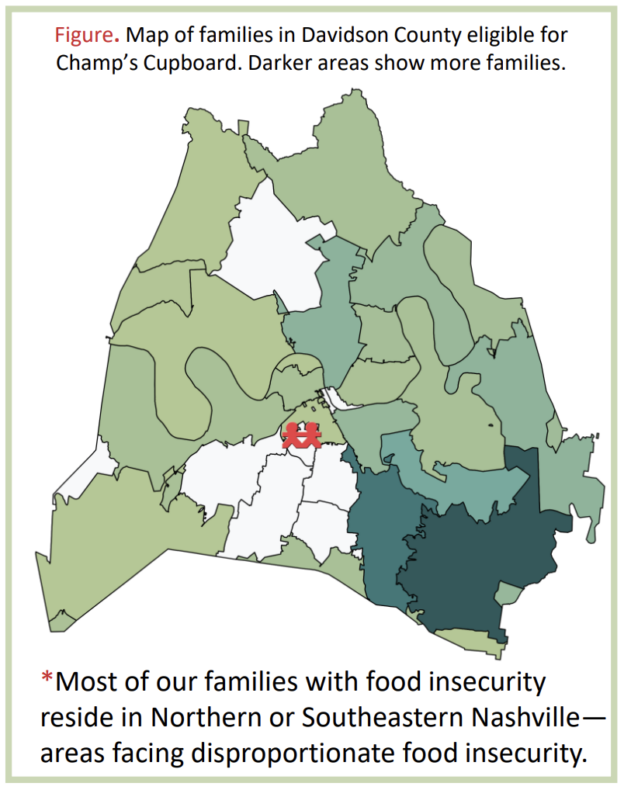
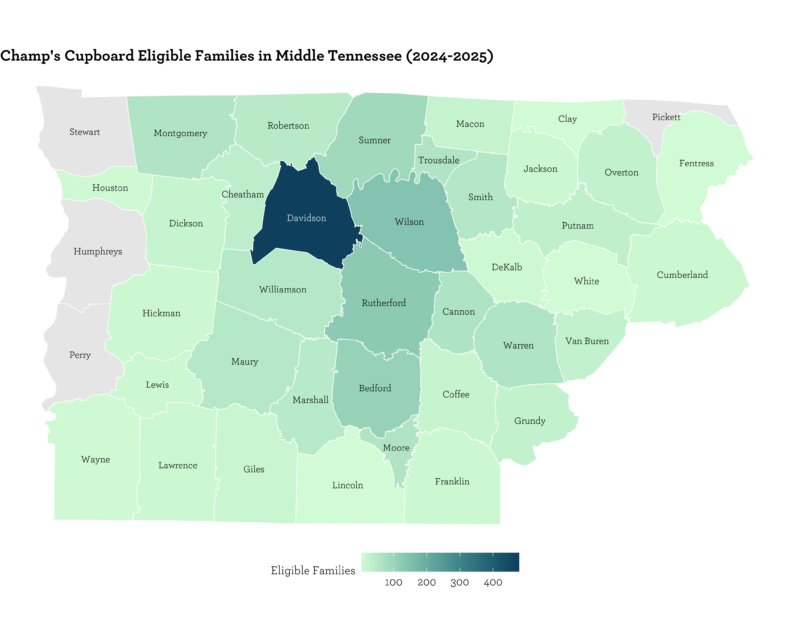

Families with children admitted to the hospital are focused on their child getting well. For some of those families, there is also sometimes an unseen, pressing need — access to nutritious food.
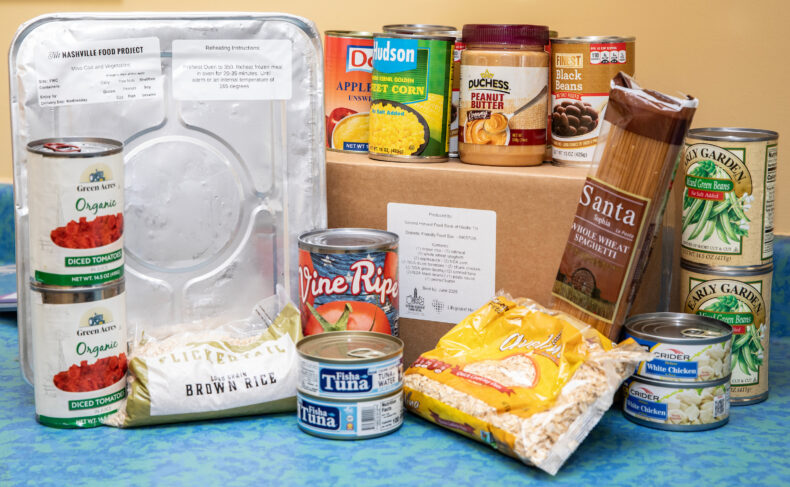
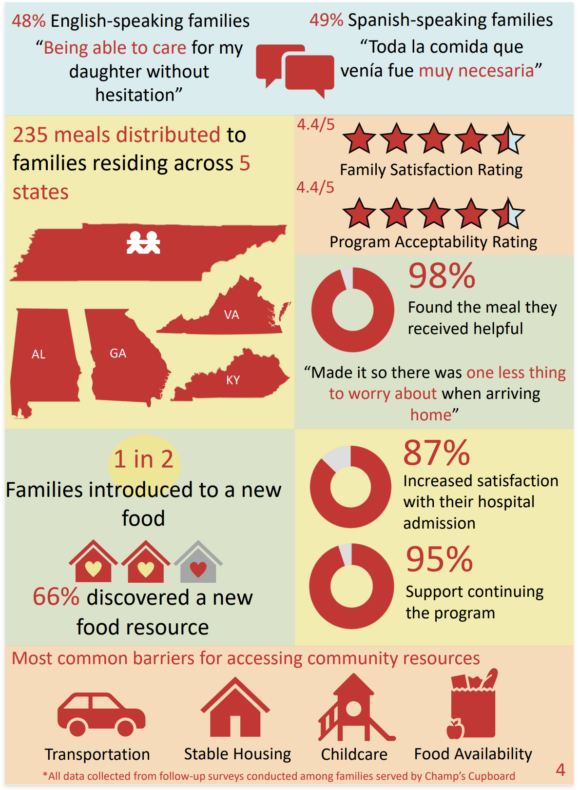
Launched just over a year ago, Champ’s Cupboard is a hospital-based nutrition resource program supporting families experiencing food access challenges. The program has already made a meaningful impact on families at Monroe Carell Jr. Children’s Hospital at Vanderbilt. In the program’s first year, the team distributed a frozen meal or box of nonperishable food items to 235 families in the hospital, with 98% of recipients saying the food was helpful.
Originally a successful pilot, Champ’s Cupboard serves as a central access point to connect families with food resources during a hospital stay or upon discharge, helping to improve nutrition security and, ultimately, children’s health.

“This sort of additional assistance and support we’re able to provide families from the hospital may not solve the long-term issues that a lot of these families have, but it really does go a long way in terms of showing them that their doctors and their medical teams really care about supporting them in lots of ways, in addition to the health care and medicines they need,” said Cristin Fritz, MD, MPH, a pediatric hospitalist at Monroe Carell. “As people who are here to serve families, this is another way, a tangible resource, to help people.”
Food insecurity is defined by the Department of Agriculture as “the limited or uncertain availability of nutritionally adequate and safe foods, or limited or uncertain ability to acquire acceptable foods in socially acceptable ways.” A 2024 Vanderbilt Child Health Poll found that more than 40% of Tennessee families with children reported being food insecure.
The Junior League Family Resource Center at Monroe Carell serves as the hospital hub for Champ’s Cupboard.
“Being able to support families in a holistic way has been a really big win,” said Sara Hanai, director of the Family Resource Center. “We make sure that families, to the best of our ability, are going to have the support and resources for the nutrition that they need to be healthy at home too.”
A year-one impact report for Champ’s Cupboard revealed families’ top barriers to accessing community resources, including transportation, stable housing, childcare and food availability.
Program survey results were also positive, with 87% of families saying the program increased their satisfaction with their hospital admission:
- “It gave us food we didn’t have because we were struggling,” one family said.
- “The meal got us through when we needed it,” another family said.
- Half of participants said they were introduced to a new food through the program.
So how does the program work?
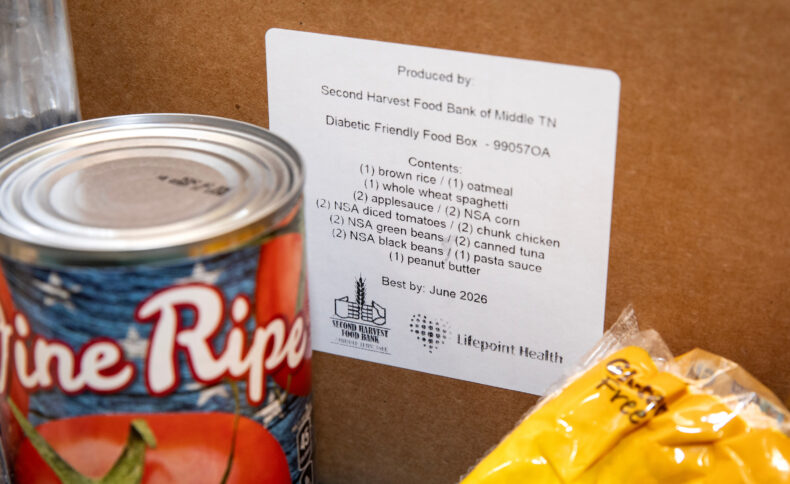
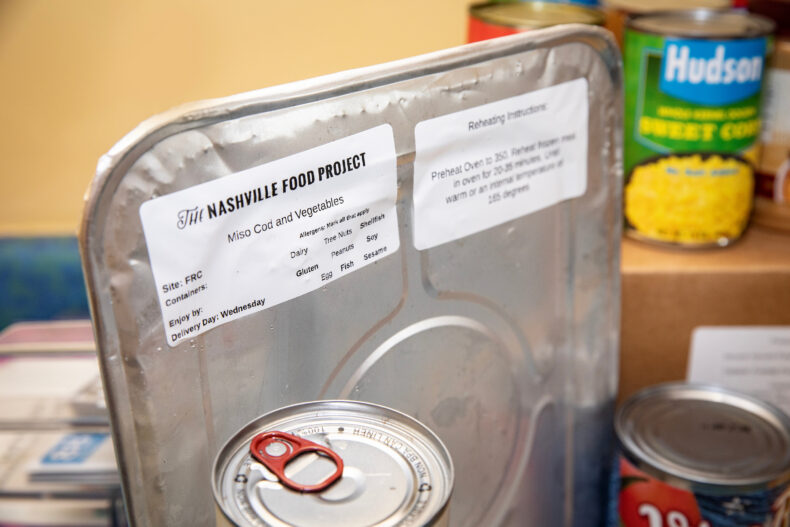
During the hospitalization admission process, families complete a standardized screening form that is provided in English, Spanish and Arabic to identify food insecurity. If the screening shows the presence of food insecurity, families receive a “Take-Out Ticket,” a voucher for a nonperishable food box from Second Harvest Food Bank or a family-size frozen meal from the Nashville Food Project. Families can either present the voucher to the Family Resource Center staff, or items can be brought to the patient’s room.
During the agricultural growing season, the program expanded through the efforts of Vanderbilt University School of Medicine students, led by fourth-year medical students Russell Stewart and Elizabeth Sun, who partnered with the Rooted Community Health program to redirect leftover community-supported agriculture produce.
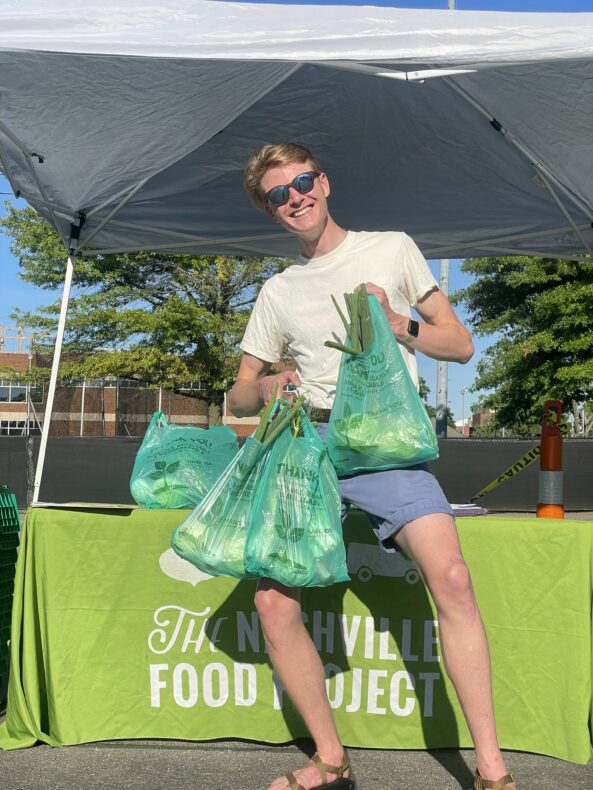
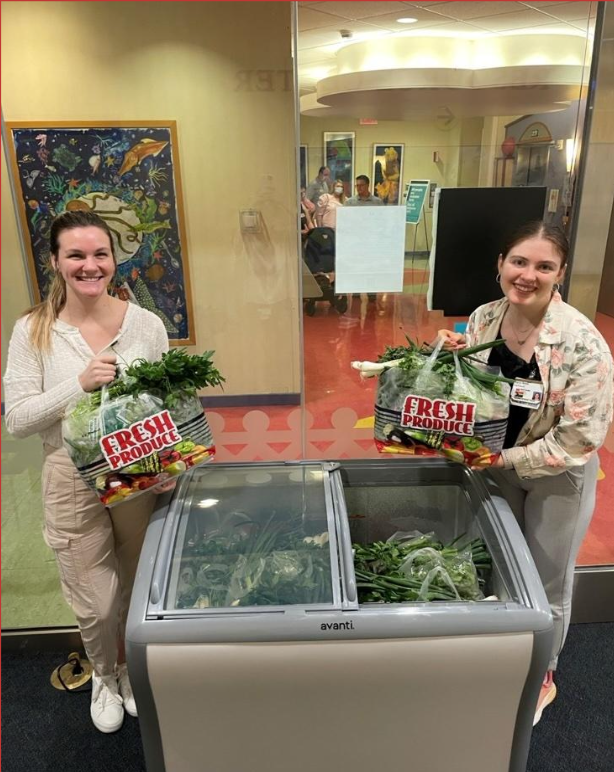
“Families were able to get a half-share of fresh produce, which was huge, and a very welcome and very popular addition. That effort was completely led and run by medical students, which is truly remarkable,” Hanai said.
Looking ahead, teams are working to increase culturally appropriate foods and develop options for families with dietary restrictions, including gluten-free boxes designed in partnership with the Celiac Clinic. The Champ’s Cupboard ordering process has also been integrated into Epic to make it easier for teams to identify families in need.
“I feel very grateful that hospital leadership prioritized taking a chance on this to support our families and that others are invested and interested in this work,” Fritz said. “Participation from the hospital and community partners shows the value that people place on this. We will keep working together to grow this in a way that is best for families and meets their needs where they are.”
Sponsors of Champ’s Cupboard include Bank of America, Lee Company and the Vanderbilt Department of Pediatrics.