


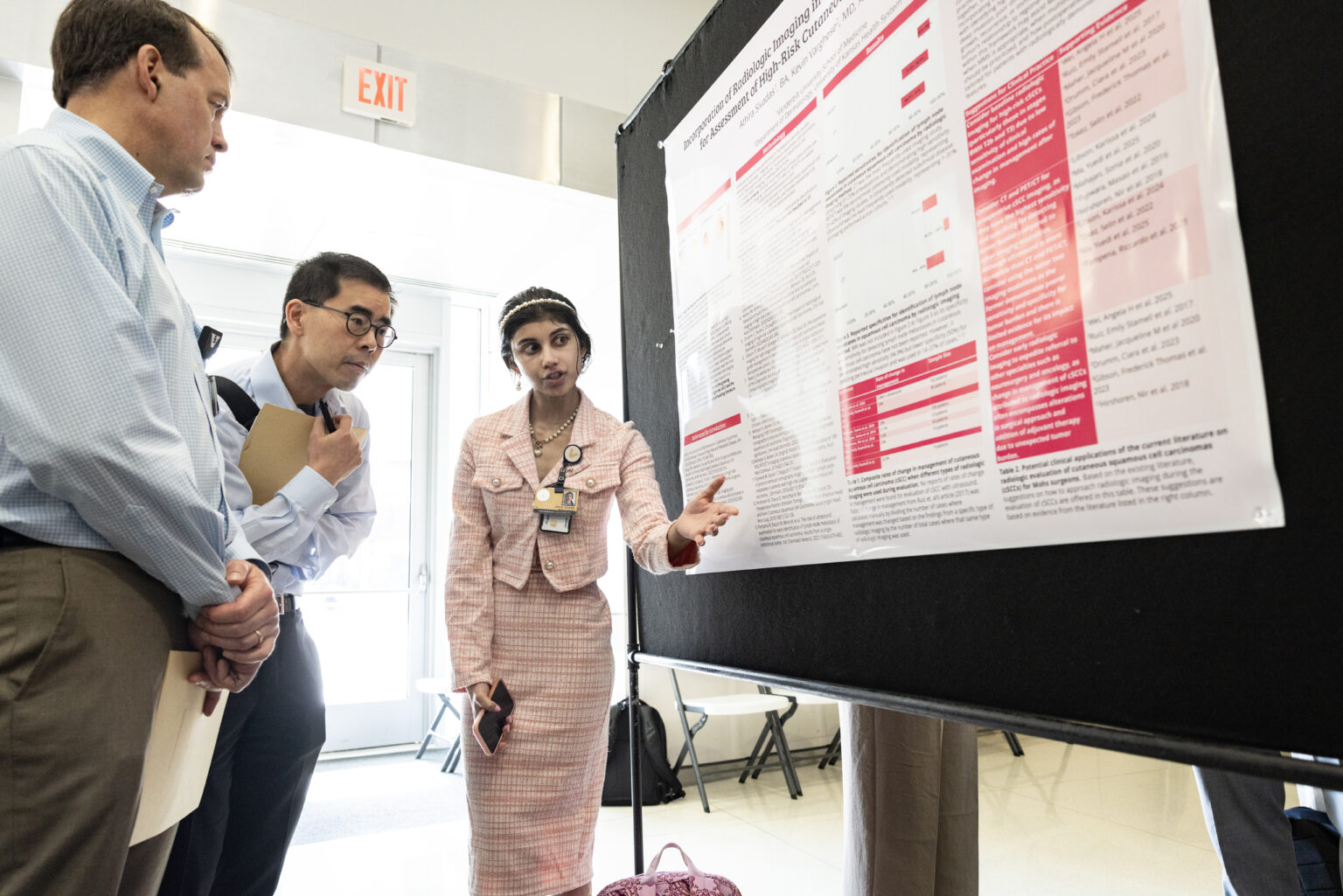
 Peter Reese, MD, PhD, and Marcus Tan, MBBS, listen to Vanderbilt medical student Athira Sivadas, as she explains her research on incorporating radiologic imaging in Mohs micrographic surgery for assessment of high-risk cutaneous squamous cell carcinoma. (photo by Erin O. Smith)

The Vanderbilt Health Section of Surgical Sciences recently held a research symposium to honor the legacy of the late R. Daniel Beauchamp, MD. A celebrated surgeon-scientist and former chair of the section for 17 years, Beauchamp’s pioneering work in colorectal cancer continues to guide modern treatment, and his dedication to mentoring and supporting the work of generations of surgeons is foundational to the section’s mission today.
The R. Daniel Beauchamp Research Day — now endowed in perpetuity — brought together members of Beauchamp’s family, his former colleagues and trainees to showcase the latest scientific contributions from the Medical Center’s surgical community.
“This is our second year, and it is now, therefore, a tradition,” said Seth Karp, MD, H. William Scott Jr. Professor of Surgery and chair of the Section of Surgical Sciences. “It is one of my favorite days of the year and celebrates a great surgical leader and his vision for training surgeon-scientists … I think Dan would have been so proud to see the fruits of his labor.”
Karp recognized the dramatic expansion of the Section of Surgical Sciences during Beauchamp’s tenure, with the faculty nearly doubling, the implementation of sophisticated techniques for surgical care, and significant advances in transplant and global surgery.
“Both locally and nationally, a significant aspect of Dr. Beauchamp’s legacy is the importance of the development of surgeon-scientists, for which he was an archetype,” Karp said. “He imbued the surgical services at Vanderbilt with an understanding of the necessity of surgeons performing research and supported this with great energy and personal commitment.”
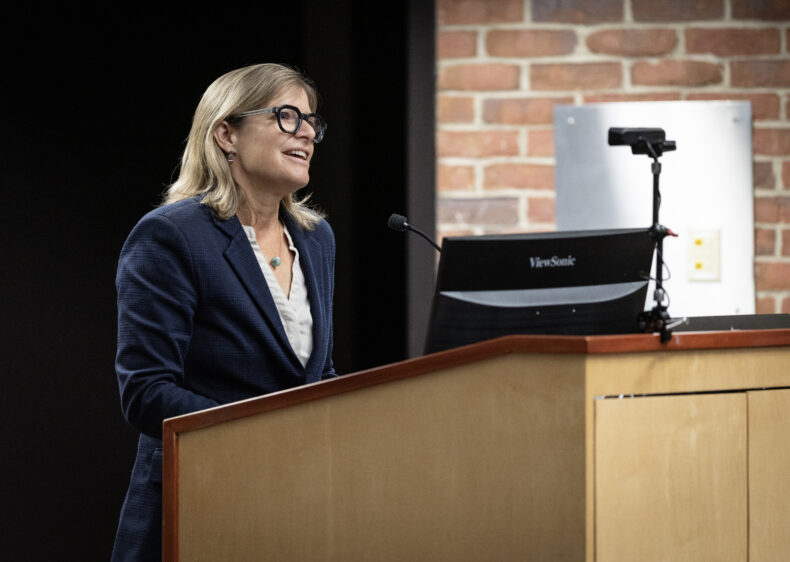
The event’s keynote speaker was Jennifer Wargo, MD, MMSc, R. Lee Clark Endowed Professor in Surgical Oncology and Genomic Medicine, and founder of the Platform for Innovative Microbiome and Translational Research at the University of Texas MD Anderson Cancer Center. Wargo’s groundbreaking research focuses on enhancing cancer therapies through targeted therapy, immunotherapy and modulation of the gut and tumor microbiome.
Wargo’s lecture, “Targeting the Microbiome to Promote Health an End Cancer,” highlighted paradigm-shifting, bedside-to-benchtop, or “reverse translation,” studies that have led to a greater understanding of how the tumor microenvironment and the gut microbiome influence cancer treatment responses. She also discussed modulating factors that impact gut microbes and health.
Early research revealed that targeted therapies could “heat up” tumors, making them more immunogenic but also trigger mechanisms like PD-L1 upregulation that suppresses immune responses. Combining targeted therapies and immunotherapy has since proven successful in treating cancers like melanoma and others.
Studies have also shown that posttreatment biopsies are better predictors of immunotherapy response compared to pretreatment biopsies, with tertiary lymphoid structures and B cells identified as potential biomarkers. Research has also shown that administering immunotherapy before surgery significantly improves outcomes compared to adjuvant therapy, with promising results seen in melanoma and other cancers.
Because the human body is known to be 99% microbial by genomic content, Wargo and her team hypothesized that these microbes could impact immunity and therapy response, and that microbes found inside tumors might also contribute to cancer progression and metastasis. The human microbiome, which consists of 500-1,000 bacterial species and numerous fungal and viral species, is shaped by many factors including diet, environment, medications and genetics.
In related studies, fecal microbiota transplantation (FMT) has shown promise in enhancing immunotherapy responses across cancers like melanoma, lung and kidney cancer. Synthetic microbial communities are now being developed as a next-generation alternative to FMT.
Research published by Wargo’s team in Science has also indicated that a fiber-rich diet has been shown to optimize gut microbiome composition, fostering beneficial immune responses, specifically in persons with melanoma. Wargo cautioned that research evaluating over-the-counter probiotics has indicated that these products might actually harm gut health rather than supporting it.
Wargo’s team investigated the tumor microbiome of both primary and metastatic brain tumors, the results of which were published in Nature Medicine. They detected intracellular bacterial 16S rRNA and lipopolysaccharides in both glioma and brain metastases samples. Surprisingly, there was significant sequence overlap with matched oral and gut microbiota, suggesting a potential correlation.
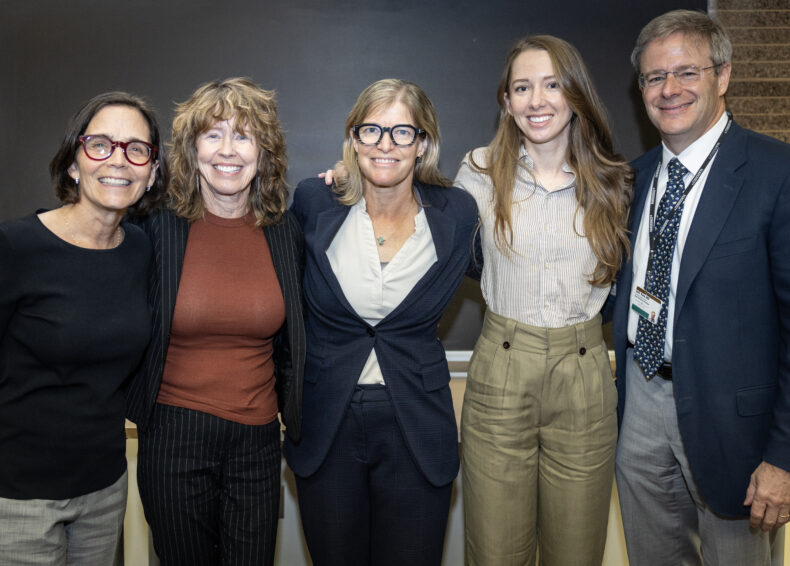
These investigations collectively confirm that gut and tumor microbiomes profoundly influence cancer development and treatment response as well as overall well-being. And together these studies reinforce two classic, if sometimes neglected, pieces of advice: Brush and floss daily, and “You are what you eat,” Wargo told the audience.
Wargo advocated establishing the microbiome as a pillar of cancer care, emphasizing personalized nutrition, reforming school lunches, and continuing to lobby for changes in public health policy that can combat rising rates of early-onset cancer. She emphasized the need for collaboration in advancing microbiome research, and the promotion of healthier lifestyles, including a plant-based, fiber-rich diet.
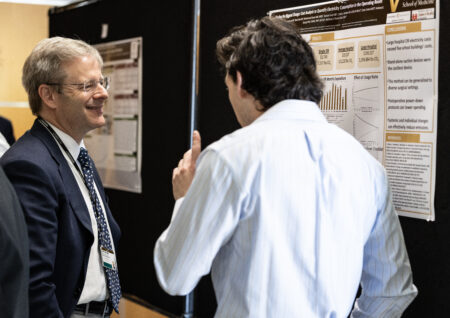
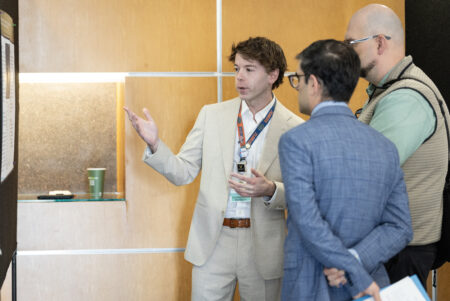
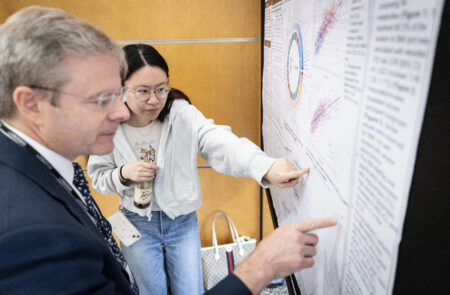
Following Wargo’s talk, research posters from Vanderbilt Health investigators at every level — medical students, residents, fellows and faculty — were displayed in the Langford Auditorium lobby highlighting investigations in basic and translational science, clinical outcomes, and quality improvement.
A sampling of research topics featured:
- Causal evidence of seizure suppression in human intercranial EEG recordings
- Toward minimalism: Early experience with a novel wristed 3mm surgical robot
- Finding the biggest charge: Cost analysis to quantify electricity consumption in the operating room
- Health literacy and surgical treatment of breast cancer
- Not all variables are created equal: Stratifying NSQIP elements for AI automation
- Divergent network dynamics across the consciousness spectrum in human temporal lobe epilepsy
- Effect of preoperative GLP-1 receptor agonist use on postbariatric surgery weight loss
- A blood-based biomarker strategy for enhancing diagnosis of indeterminate pulmonary nodules