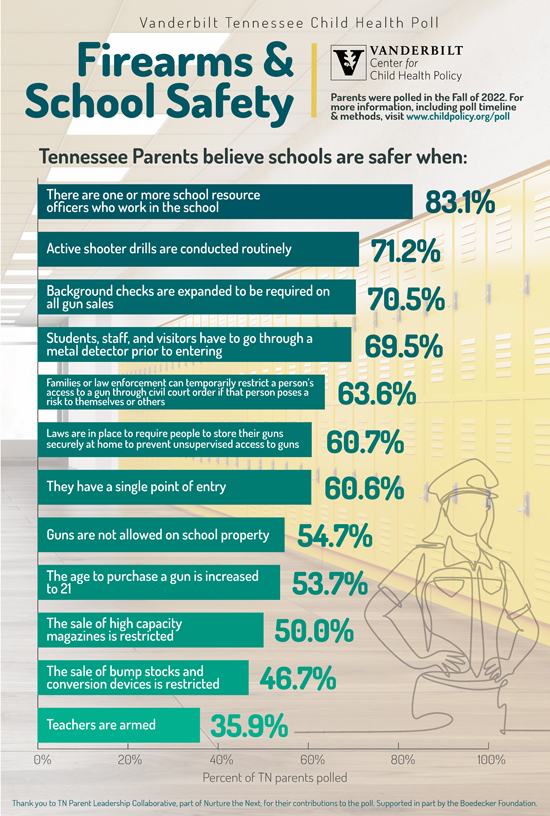
Polling data of roughly 1,000 Tennessee parents shows that, generally, many parents still have concerns about community violence and are open to conversations about firearm injury prevention strategies, like safe storage of firearms, with their child’s health care provider.
While they say they are open to those conversations, the polling data shows that many parents are not having them in this setting.
“Parents view pediatricians as trusted sources of information regarding their child’s safety. Given the persistent concern about gun violence in the community, firearm safety remains a parental worry and one where families are seeking guidance,” said Kelsey Gastineau, MD, MPH, assistant professor of Pediatrics and injury prevention researcher at Monroe Carell Jr. Children’s Hospital at Vanderbilt.
Many parents ranked firearm safety highly on their list of concerns for their children. More than half of those polled (53%) listed gun violence among the top 10 concerns. Nearly 70% of Black parents said they were either very or somewhat concerned about gun violence, compared to just under half of white parents.
Tennessee parents have consistently ranked community violence near the top of their list of concerns since questions related to violence and firearms were added to the annual Child Health Poll after tragic school shootings and other acts of violence took place in Tennessee and elsewhere.
Nearly two-thirds of all parents polled said they agreed or strongly agreed that doctors caring for children should have conversations about safety and injury prevention, including 60% of self-disclosed gun owners.
However, just 17% of parents said their child’s doctor has discussed firearm injury prevention and safety with them, including topics like what to do when a child finds a firearm, safe storage of firearms, and how to talk to children and youth about firearm safety.
“Pediatricians are uniquely positioned to address this need due to their understanding of child health and well-being, including anticipatory guidance centered on injury and disease prevention, and their trusted, longitudinal relationships with families, which enable nuanced, tailored conversations over time. This enables pediatricians to engage in nuanced, evidence-based conversations that can be tailored to each family’s circumstances and fill an important gap in preventive care,” Gastineau said.
About the Vanderbilt Child Health Poll
The Vanderbilt Child Health Poll is conducted annually to gauge Tennessee parents’ concerns about a wide range of health-related topics. The data, collected from a representative sample of Tennessee parents across the state, focuses on issues related to child health and well-being, ranging from top health concerns to health care access and delivery, education, and food security. Roughly 80% of all parents polled identified as registered voters.