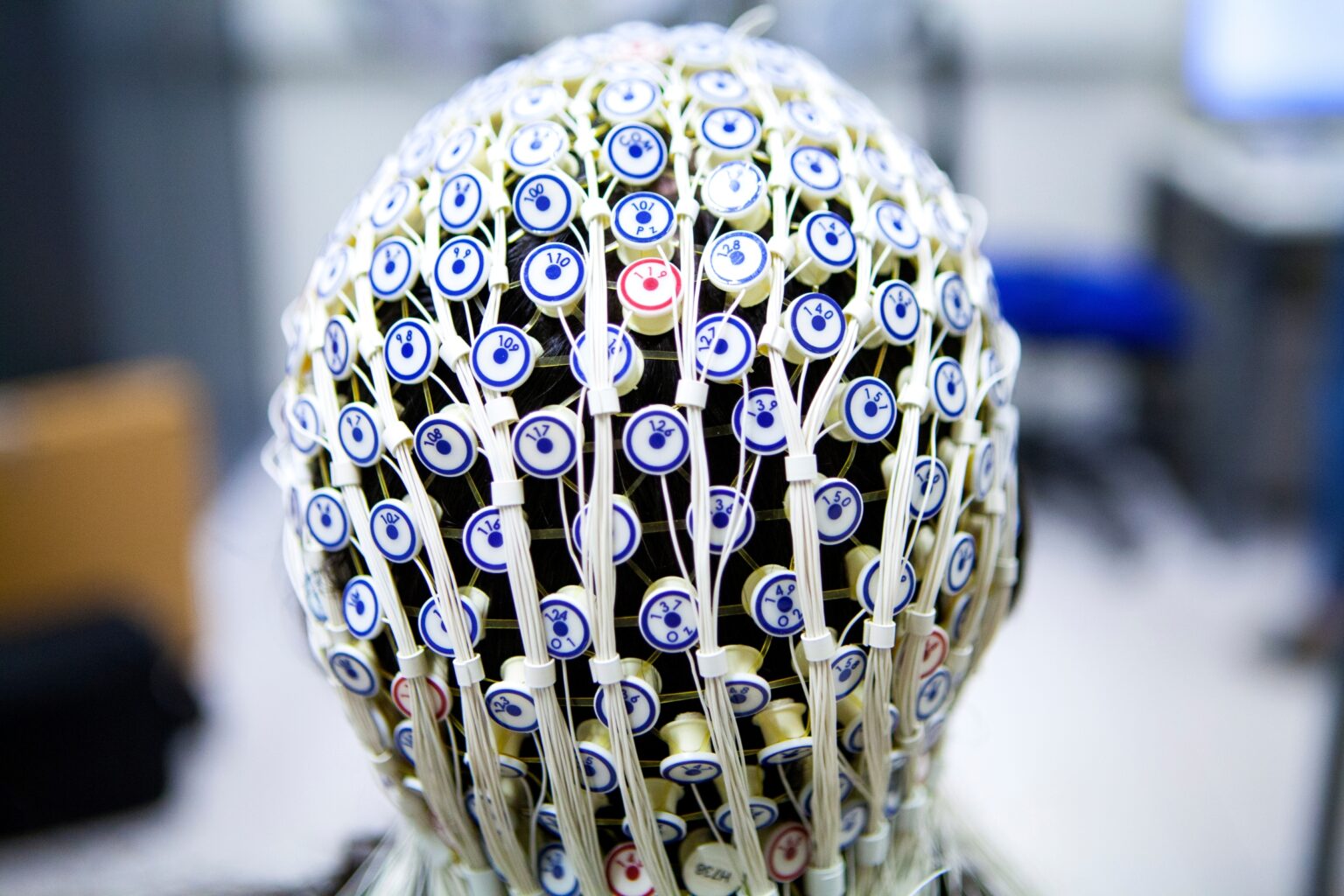
 Dense-array electroencephalography uses a net of sensors to measure brain activity. (Adobe Stock)

People with chronic tic disorders (CTD), including Tourette syndrome, often report heightened sensitivity to common sensations such as touch. These sensory experiences can interfere with daily activities, but little is known about the brain mechanisms underlying this sensitivity.

David Isaacs, MD, MPH, Associate Professor of Neurology at Vanderbilt Health, and colleagues tested whether somatosensory gating, the brain’s ability to filter repetitive touch information, might help explain this sensory over-responsivity. Using dense-array electroencephalography (EEG), they measured event-related potentials, brief changes in brain activity following a stimulus. The study included 28 adults with CTD and 34 adults without CTD, who received pairs of gentle air puffs to a fingertip while their brain activity was recorded.
The results were not quite what the researchers expected. Somatosensory gating did not differ between the groups. Instead, adults with CTD had a smaller P50 response to the first air puff. The P50 is a brief burst of brain activity that occurs about 50 milliseconds after a stimulus and is thought to reflect early, preconscious processing of basic sensory information. Among adults with CTD, smaller P50 responses were also associated with greater self-reported sensitivity to touch.
The findings, published in Biological Psychology, point to differences in how the brain initially processes touch, rather than how it filters repeated sensory information. They add to evidence that CTD involves sensory processing differences as well as motor and vocal tics.
Other authors are Alexander Conley, PhD, and Michelle Eckland of Vanderbilt Health and Alexandra Key, PhD, of Emory University School of Medicine. The research was supported by the National Institute of Neurological Disorders and Stroke (K23NS131592) and the National Center for Advancing Translational Sciences (UL1TR002243).