


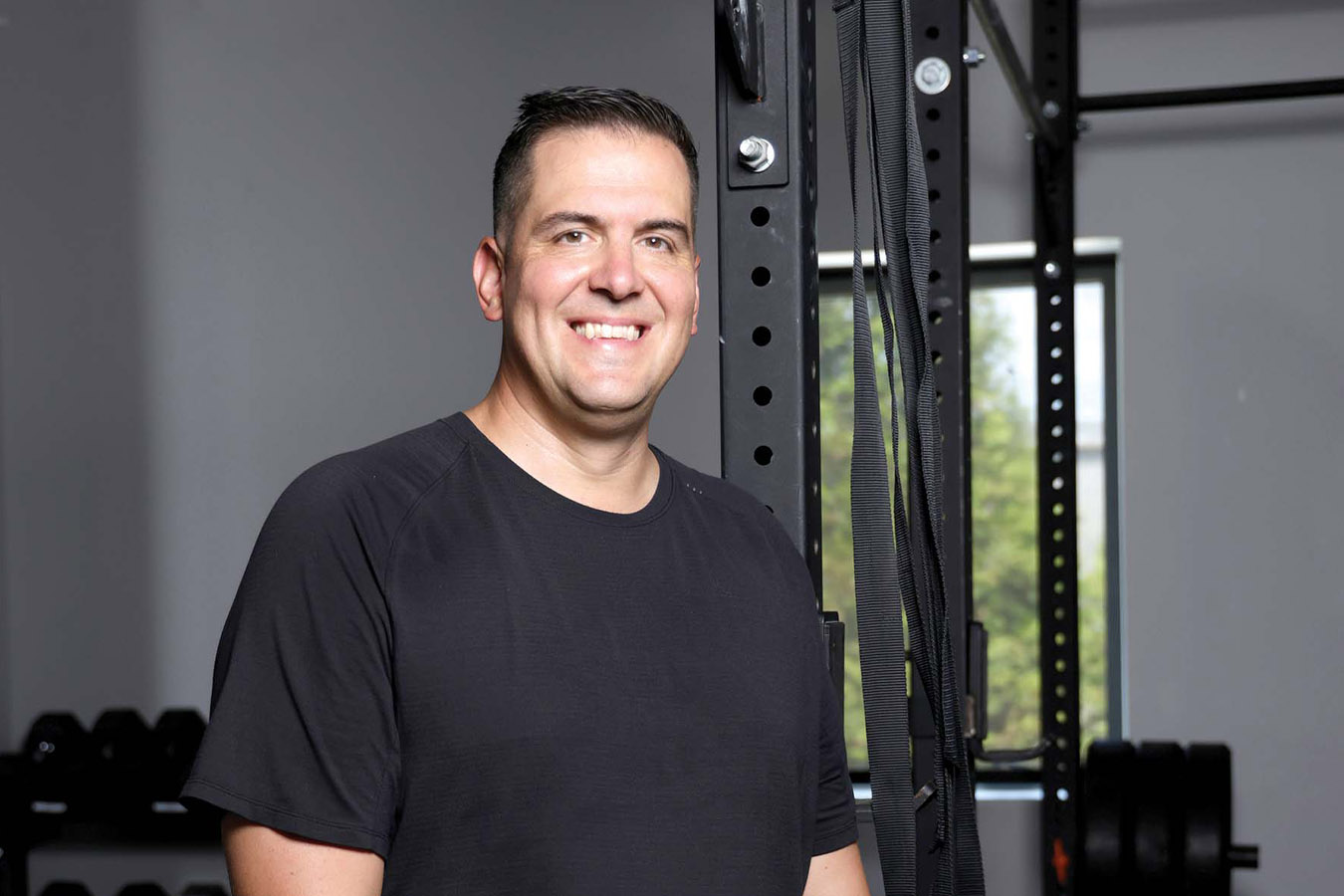
 Photo by Donn Jones

Kyle Stephens thought his days were numbered. His cancer had recurred after intensive chemotherapy, and he feared that he would not be around for his three young children or his wife.
He was in his early 40s in 2022 when he was diagnosed with Stage 4 non-Hodgkin lymphoma that had spread throughout his abdominal cavity. Chemotherapy had put it into remission, but follow-up scans in 2024 showed that the cancer had come back. A year after undergoing therapy with a cellular therapy called CAR-T, the cancer is now gone, and Stephens is running half-marathons and hiking mountains.
Stephens had never heard of CAR-T, which is shorthand for chimeric antigen receptor T-cell therapy, until his oncologist at Vanderbilt-Ingram Cancer Center, Nishitha Reddy, MBBS, MSCI, professor of Medicine, recommended the immunotherapy that reengineered his immune cells to recognize and attack the cancer cells. Many patients have achieved durable remission with CAR-T, and Stephens is the 200th patient at Vanderbilt-Ingram treated with it.
Vanderbilt-Ingram has for decades been a leader in cellular therapies and continues to be at the vanguard in this field of oncology, which entails transforming human blood cells into either healing therapies with stem cell transplants or cancer eradicators with immunotherapies like CAR-T. The array of cellular therapies is expanding, and Vanderbilt-Ingram is pioneering these treatment advancements for patients in Tennessee and beyond.
“All in all, the CAR-T is a lot easier than the chemotherapy,” Stephens said. “The rounds of chemotherapy really wear you out. With the CAR-T, it was a one-time deal.”
CAR-T is a form of immunotherapy where a patient’s T cells, which are part of the immune system, are harvested, reengineered in a laboratory to recognize and attack cancer cells, and then infused back into the patient’s body. The Food and Drug Administration has approved seven CAR-T therapies, which are made from a patient’s own T cells, for lymphomas, leukemias and multiple myeloma. Other clinical trials are underway to potentially expand their approvals, and Vanderbilt-Ingram is offering them to patients who meet the medical protocols. Vanderbilt-Ingram was the first center in Tennessee to administer CAR-T to patients, and it treats more patients with this immunotherapy than any other provider in the state.
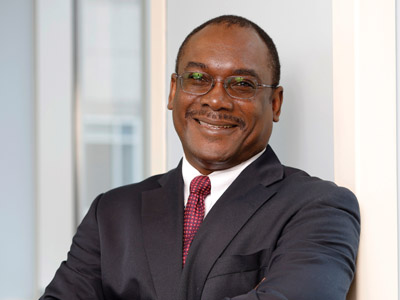
Stephens’ doctor, Olalekan Oluwole, MBBS, MPH, associate professor of Medicine, is one of a team of physicians at Vanderbilt-Ingram specializing in CAR-T and other cellular therapies. He has been an investigator on numerous clinical trials that have led to treatment approvals by the FDA, including two trials for which he presented data on patient outcomes at the European Hematology Association meeting in June 2025 in Milan.
He and colleagues have established Vanderbilt-Ingram as an international leader in cellular therapies.
The first CAR-T approval by the FDA occurred in 2017, and the therapy has proven to be a durable treatment for patients who respond. Vanderbilt-Ingram was offering CAR-T to patients even before the approval through clinical trials.
The first Tennesseans treated were four very ill lymphoma patients who had run out of treatment options. All four of the patients had a clinical response to the treatment, and three were cured, Oluwole said.
“The fact that we can now say that many who responded to CAR-T therapy are cured of their lymphoma is truly remarkable,” Oluwole said.
Ongoing clinical trials are testing whether it can be used for solid tumors in addition to blood cancers. Other research seeks to identify which patients will respond to the therapy and develop strategies to enable responses in more patients. Several initiatives are underway by pharmaceutical companies working with Vanderbilt-Ingram and other top cancer centers in the U.S. to develop “off-the-shelf” CAR-T, where T cells would be reengineered from donors instead of patients, which would expedite the manufacture of the immunotherapy and make it readily available, allowing patients to start treatment sooner.
Bhagirathbhai Dholaria, MBBS, associate professor of Medicine, presented interim results from one off-the-shelf CAR-T clinical trial in September 2024 at the 21st International Myeloma Society Annual Meeting in Rio de Janeiro. He described the results as “remarkable” in the ongoing clinical trial for patients with relapsed or refractory multiple myeloma who had run out of treatment options.
CAR-T is one of many breakthroughs that the cellular therapy program has made over several decades to extend the lives of cancer patients. In 2007, Darrell Tyler of Knoxville, Tennessee, was diagnosed with chronic myelogenous leukemia. By the time he was diagnosed, the cancer had progressed to the point that his elevated white blood cell count, a hallmark of the disease, had skyrocketed. His Vanderbilt-Ingram physician estimated that he had about three to six weeks to live, but the doctor offered him hope with a new drug, which would not be a cure but could stabilize his white blood cell levels.
The drug worked. The next step was a stem cell transplant, which would require finding a matching donor. A stem cell transplant is a potentially lifesaving procedure for blood cancers, but patients must endure a conditioning regimen with chemotherapy that depletes their bone marrow of normal and diseased cells to make room for healthy transplant cells — a process that results in myelosuppression and poses infection risks. There’s also the potential for other complications, including graft-versus-host disease, which occurs when donor T cells begin attacking the recipient’s healthy tissue. Sometimes finding a matching donor is a patient’s biggest obstacle to overcoming cancer. Matches are made according to human leukocyte antigens (HLA), cell surface proteins the immune system uses to determine which cells belong in a patient’s body and which ones don’t. Typically, a close relative can be a donor, but not in Tyler’s case. He was matched with someone in Switzerland but then disappointed when that donor didn’t pan out.
Tyler had one option left — stem cells that had been saved from a newborn baby’s umbilical cord that might match his HLA type. He wound up being one of the first patients at Vanderbilt to receive a cord stem cell transplant. It worked. In the years since, he’s continued to run his farming equipment business, share his story of how his faith got him through his illness and enjoy time with grandchildren. He continues to be monitored by Adetola Kassim, MBBS, MS, professor of Medicine and clinical director of the Adult Stem Cell Transplant Program. Having lost a stepdaughter and a brother to cancer, Tyler knows how lucky he is. He recently donated funding to Vanderbilt-Ingram for stem cell research in honor of them.
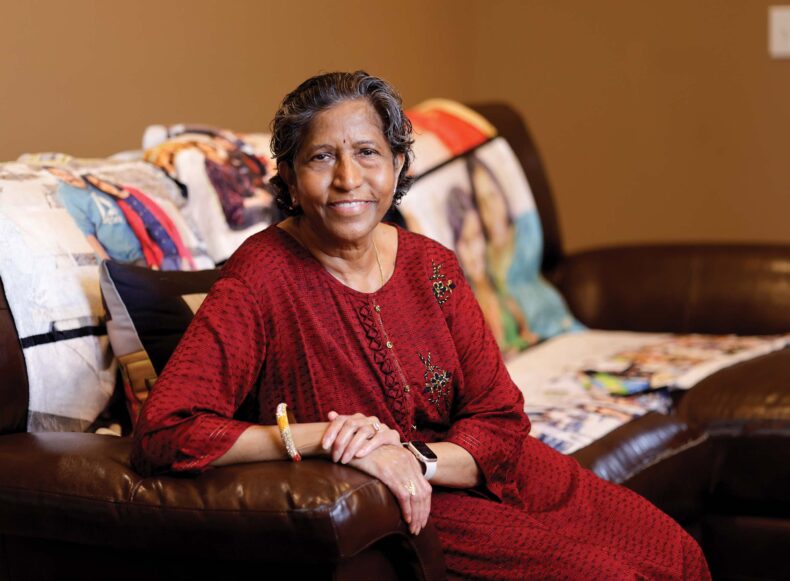
Another Vanderbilt-Ingram blood cancer patient, Bhagya Samudrala, who has homes in Detroit and Nashville, also faced the uncertainty of finding a match. Her brother, who lives in India, was a perfect match. Her family and caregivers navigated the logistics of getting a bone marrow transplant from him. She and her family did a testimonial video encouraging more people to sign up for the National Marrow Donor Program (NMDP). When a patient doesn’t have a family member who is a match, the NMDP assists with a database of 42 million potential donors, but more people with varied ethnic backgrounds are needed. Matching donors are more likely to be of similar ethnic backgrounds because HLA genes are inherited. Donor registries aren’t diverse enough to ensure every patient finds a fully matched donor.
Vanderbilt’s cellular therapy program originated in 1979 when its first patient received a stem cell transplant from a donor. The Vanderbilt-Ingram Stem Cell Transplant Program now ranks among the best in the nation for survival rates among comparative programs, according to the annual report for the Center for International Blood and Marrow Transplant Research.
The program continues to innovate as other cellular treatments emerge, such as tumor-infiltrating lymphocyte (TIL) therapy for melanoma and T-cell receptor (TCR) therapy for soft tissue sarcoma. Vanderbilt-Ingram has 10 physicians who provide cellular therapies and is investing in research, having recently recruited a translational scientist to focus on hastening laboratory discoveries to treatment improvements.
Stephens, who lives in the Old Hickory neighborhood of Nashville, said he’s grateful to be near a cancer center with an internationally respected cellular therapy program.
“The hard part about this experience has been going through it with my wife and three kids, who are 10, 8 and 4,” he said. “They’ve had to go through all this as well. My wife took me to all my appointments and was by my side all the time. I am thankful for her and just having family. I am fortunate to have a good support system. When I had talked to other folks and told them my cancer had come back, the reaction in their eyes was ‘Oh, my God, the cancer came back. This guy is cooked.’ When I see people now, they’ll ask, ‘How are you?’ and tell me they’ve been thinking about me.
“Since completing the treatment and going into remission, I’ve gone back to CrossFit, completed a half-marathon and just hiked the iconic Half Dome in Yosemite. It’s interesting to see people’s reactions now, and I hope my experience can provide hope to anyone in a similar situation.”


