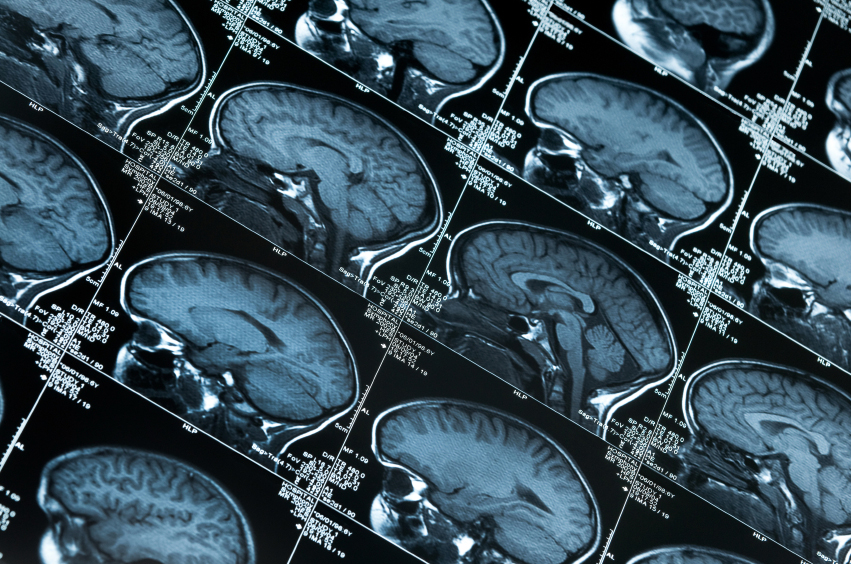
A study published in the journal Proceedings of the National Academy of Sciences applied novel neuroimaging methods to evaluate how a focused-attention style of mindfulness meditation affects the flow of fluids within the brain, finding that meditation may serve as a noninvasive way to stimulate fluid circulation and removal of harmful proteins in a manner similar to sleep.
Led by corresponding author Manus Donahue, PhD, professor of Neurology and assistant vice chair for Research in the department at Vanderbilt Health, the study focused on the circulation of cerebrospinal fluid (CSF) through the brain. Efficient CSF flow is essential for removing problematic molecules in the brain that contribute to conditions such as Alzheimer’s disease, Huntington’s disease and Parkinson’s disease. CSF circulation efficiency deteriorates with increasing age, yet becomes more efficient with sleep.
“We know that forms of meditation can represent distinct arousal states, and we asked the question: Does meditation alter fluid flow in the brain in a manner analogous to sleep and opposite to aging and neurodegeneration?” said Donahue.
Study participants underwent MRI testing using new methods developed by the Donahue lab to analyze CSF flow during focused-attention meditation. Researchers compared this flow to simple mind wandering states and states with changes in respiration but without meditation. As participants practiced meditation, the CSF motion became more efficient, mirroring patterns seen in sleep. At the same time, CSF flow and brain blood flow shifted into opposite rhythms, consistent with the alterations in brain activity that partially modulate improved cleaning processes.
“Our study suggests that meditation may improve the clearance of waste that accumulates in the brain from ongoing metabolism and activity in a manner similar to sleep,” said Donahue. “Further, our study helps explain many of the anecdotal health benefits that people report from meditation, and importantly, may help to support a nonpharmacological intervention for a range of conditions related to the dysfunction of neurofluid circulation.”
“The combination of cognitive, emotional and physical effects of meditation underscore that patients have accessible, noninvasive ways to exercise their brains, boost function and promote health benefits,” added David Vago, PhD, research associate in Psychiatry at Mass General Brigham and one of the study’s authors.
“The effects we observed were not simply due to slower breathing; they were tied specifically to the meditative state,” said Vago. “Because aging and brain disorders often disrupt CSF movement, our findings suggest that meditation could help support long-term brain health by enhancing the brain’s own waste-clearance processes.”
Other authors from Vanderbilt Health included co-first author Bryce Keating, Kilian Hett, PhD, Ciaran Considine, PhD, Maria Garza, MBA, Caleb Han, Colin McKnight, MD, and Daniel Claassen, MD. The study was supported by National Institutes of Health grants R01AT011456 and R01AG083159.