



Two faculty researchers in the Department of Medicine at Vanderbilt Health have received Young Physician-Scientist Awards from the American Society for Clinical Investigation (ASCI).
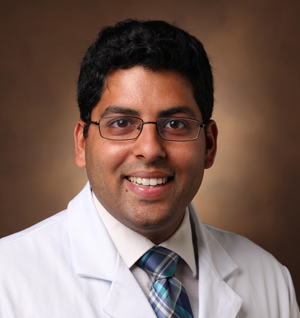
Vineet Agrawal, MD, PhD, and Fabian Bock, MD, PhD, are among 50 investigators nationwide selected for the 2026 Young Physician-Scientist Award by the elite honor society. Since 2014, 27 Vanderbilt faculty members have received the annual award, which recognizes “notable achievements” by researchers early in their first faculty appointments.
Agrawal, assistant professor in the Division of Cardiovascular Medicine, directs the Invasive Cardiopulmonary Exercise Testing Laboratory at Vanderbilt Health.
His research program is devoted to understanding and treating heart failure with preserved ejection fraction (HFpEF), right ventricular dysfunction, and pulmonary vascular disease in heart failure. HFpEF is a form of heart failure associated with obesity, Type 2 diabetes, hypertension, atrial fibrillation and chronic kidney disease.

Agrawal earned his MD and PhD in cellular and molecular pathology from the University of Pittsburgh. As a postdoctoral cardiology fellow at Vanderbilt, working with Anna Hemnes, MD, chair of the Department of Medicine, he uncovered new mechanisms linking dysregulated lipid metabolism to right ventricular dysfunction in heart failure.
For this work, and for his explorations of the genetic underpinnings of obesity-related cardiovascular disease, he received a Young Investigator Award from the Pulmonary Hypertension Association.
A faculty member since 2019, Agrawal has investigated the regulation of heart muscle cell metabolism, the role of pro-inflammatory signaling in pulmonary microvascular remodeling, and the impact of obesity, diabetes and other risk factors on pulmonary vascular and right ventricular remodeling in heart failure.
The ASCI cited his “innovative work” for advancing understanding of cardiovascular pathology and potential therapeutic targets in HFpEF.
Bock is an assistant professor and attending physician in the Division of Nephrology and Hypertension. His investigations have revealed the critical role that dynamic actin cytoskeleton regulation plays in tubular kidney epithelial cells during cell division and metabolic recovery, and how dysfunction in actin cytoskeleton-related genes can lead to kidney disease.
Bock earned an MD and PhD from the University of Heidelberg in Germany and completed his clinical training (residency and nephrology fellowship) in Vanderbilt’s Physician Scientist Training Program (Harrison Society).
As a postdoctoral fellow in the lab of Roy Zent, MD, PhD, the Thomas F. Frist Sr. Professor of Medicine, Bock discovered that a protein, Rac1, was critical to establish and maintain kidney epithelial cell structure after birth. During this time, he was awarded an ASCI Emerging-Generation Award.
Bock joined the Vanderbilt faculty in 2021. With funding from the National Institutes of Health and Southern Society for Clinical Investigation, he established his research group focused on actin cytoskeleton-driven kidney development and cell cytoskeletal remodeling during repair of the kidney tubule, part of the kidney’s blood-filtering unit.
His goal is to fundamentally understand and provide proof-of-principle of the targetability and reversibility of actin cytoskeleton disruptions in the kidney tubule using experimental models that recapitulate human disease.