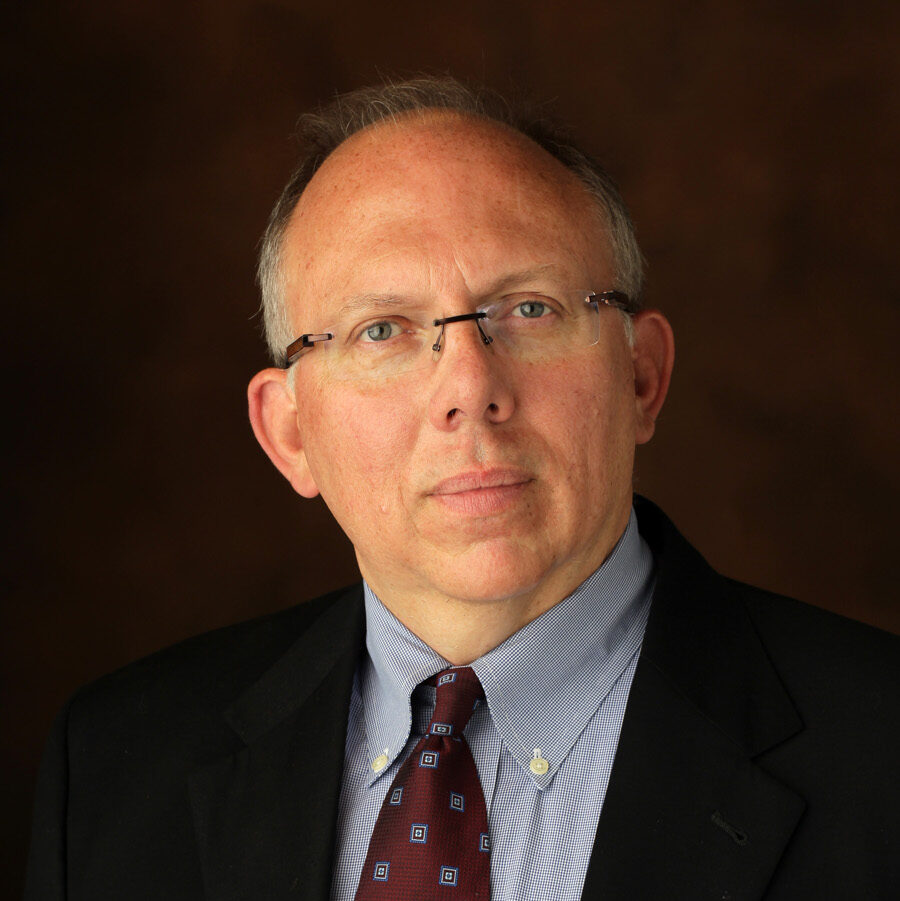
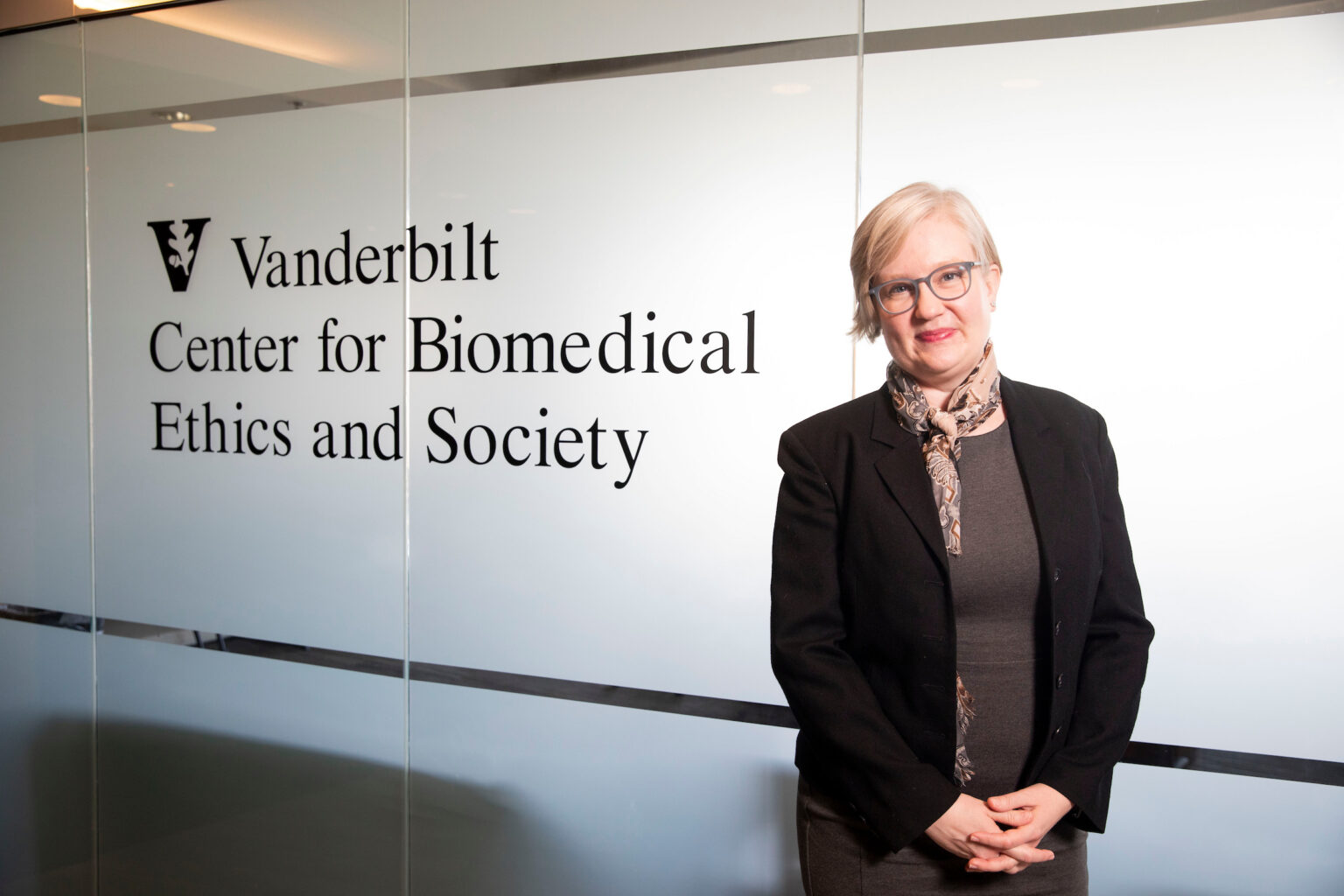
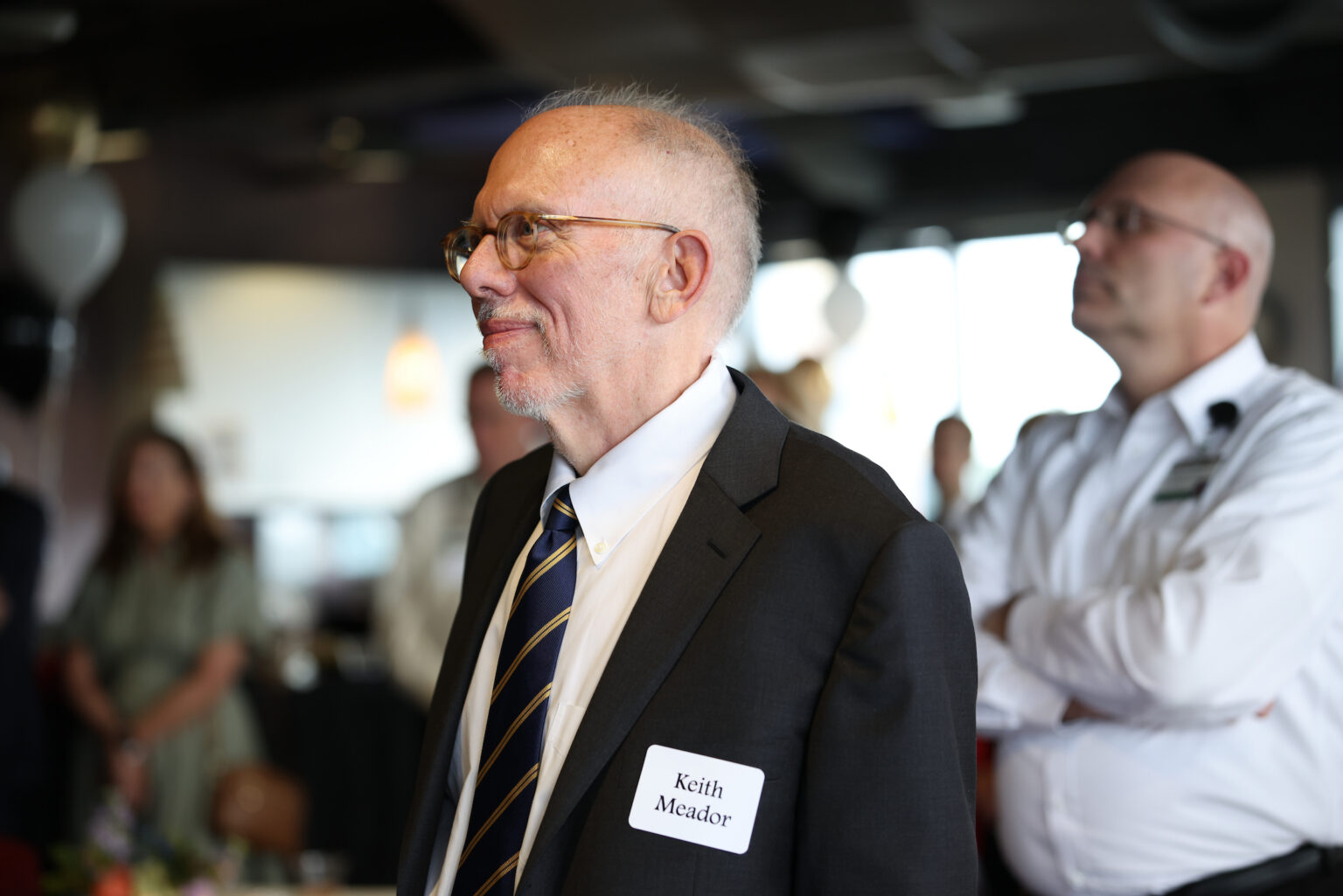
 Guests celebrated the career of Keith Meador, MD, ThM, MPH, on May 5, 2026. (photo by Donn Jones)

Keith Meador, MD, ThM, MPH, the Ann Geddes Stahlman Professor of Medical Ethics and director of the Center for Biomedical Ethics and Society, will retire July 1 after 16 years of leadership that shaped the ethical foundation of care at Vanderbilt Health.
Meador joined the Vanderbilt University faculty as vice chair for Faculty Affairs in the Department of Psychiatry and Behavioral Sciences in July 2010 from Duke University, where he was a tenured professor of Psychiatry and Behavioral Sciences and directed programs in the School of Medicine and Divinity School.
It was a return to a place that felt significant for Meador both professionally and personally: The Phi Beta Kappa graduate of Vanderbilt met his first wife, Patricia, who became an accomplished health care attorney, on campus in the late 1970s. Meador was offered the opportunity to return to Vanderbilt shortly after she died at 52.
“It was a fresh opportunity. I love Vanderbilt, and it was the right place,” said Meador, who founded the Patricia Townsend Meador Lecture in Law, Ethics and Health Care in her honor.
In 2012, Meador was appointed director of the Center for Biomedical Ethics and Society. He succeeded Ellen Wright Clayton, MD, JD, the Craig-Weaver Professor of Pediatrics, who created the center with Larry Churchill, PhD, in 2006, combining the Center for Clinical and Research Ethics and the Center for Genetics and Health Policy.
Meador has integrated ethics into the daily life of clinical departments.
Under his direction, the center expanded its reach across specialties, establishing programs in surgical ethics, pediatric ethics and maternal-child health.
“If we’re going to take ethics seriously, it must be embedded within departments and clinical care,” he said.
Meador is also behind the evolution of the Clinical Ethics Consultation Service. Once limited in scope, the service now supports more than 400 consultations annually.
“Ethics is not an assessment of error. Our commitment is one of ongoing service to the providers, patients and their families — the community of Vanderbilt Health,” he said.
“How do we optimize the care of this patient, their family, etc., in a spirit of service as we sort through the ethical complexities? That commitment to service is why we’ve grown so much over the past decade. I think people have realized it’s a clinical ethics service, not a scrutiny externally applied to clinical situations, and I’m very proud of that.”
Meador’s influence at Vanderbilt is tangible and extensive. He helped establish Rooted Community Health, “an ethical reflection within ecology and health” through which Vanderbilt Health employees receive discounts on community-supported agriculture programs or a fully subsidized share, depending on their salary and eligibility. He is a professor of Ethics and Society at Vanderbilt Divinity School and a professor in the Vanderbilt Graduate Department of Religion.
In addition to service, Meador leaves a legacy of education.
During his tenure, the center developed a robust ethics curriculum spanning all four years of medical education, including the creation of Vanderbilt’s first certificate program for medical students. He also helped establish a Graduate Medical Education certificate and expanded interdisciplinary coursework that brings together students from medicine, divinity, philosophy and beyond.
“We are grateful for Keith’s leadership of the center for the past 14 years,” said Russell Rothman, MD, MPP, the Ingram Professor of Integrative and Population Health, Senior Vice President for Population and Public Health, and director of the Vanderbilt Institute for Population and Public Health, which supports the center. “During this time, Keith was instrumental in growing the scholarship, education, community outreach and clinical activities of the center — making it an integral part of the university and Vanderbilt Health and expanding its national recognition.”
Beyond Vanderbilt Health, Meador has made a great impact nationally. As director of the Department of Veterans Affairs Integrative Mental Health program, he has advanced efforts to incorporate chaplaincy into mental health care for veterans and service members. Through innovative training programs, this work has addressed critical issues such as post-traumatic stress disorder and moral injury, equipping providers across the VA and Department of Defense to deliver more holistic evidence-based care.
Meador’s scholarship — spanning clinical practice, theology and public health — has further shaped conversations around the role of spirituality in health. He co-authored “Heal Thyself: Spirituality, Medicine, and the Distortion of Christianity” and has contributed extensively to research on the sociocultural dimensions of health and human flourishing.
Meador will be succeeded by Susannah Rose, PhD, whom he recruited to Vanderbilt more than two years ago.
“Susannah is truly distinctive in being well-grounded in clinical ethics, health policy and administration,” Meador said. “I wanted someone who could engage with empirical bioethics and between that and her interest in artificial intelligence, I knew she was who we needed.”
Following his retirement in July, Meador will transition to the role of professor emeritus at Vanderbilt and continue to serve as a senior consultant within the VA and with the Doctor of Ministry degree program at Vanderbilt Divinity School. He reflects on his time at Vanderbilt with great fondness and gratitude for its support, while anticipating “more time with grandchildren spread up and down the east coast.”
“My privilege of directing the Center for Biomedical Ethics and Society is reflective of Vanderbilt’s long-standing commitment to the work of an ethics of care,” he said. “Any good work is done in a community, and I look forward to celebrating the ongoing growth of the center as a community of amazing colleagues in service to Vanderbilt Health for many years to come.”