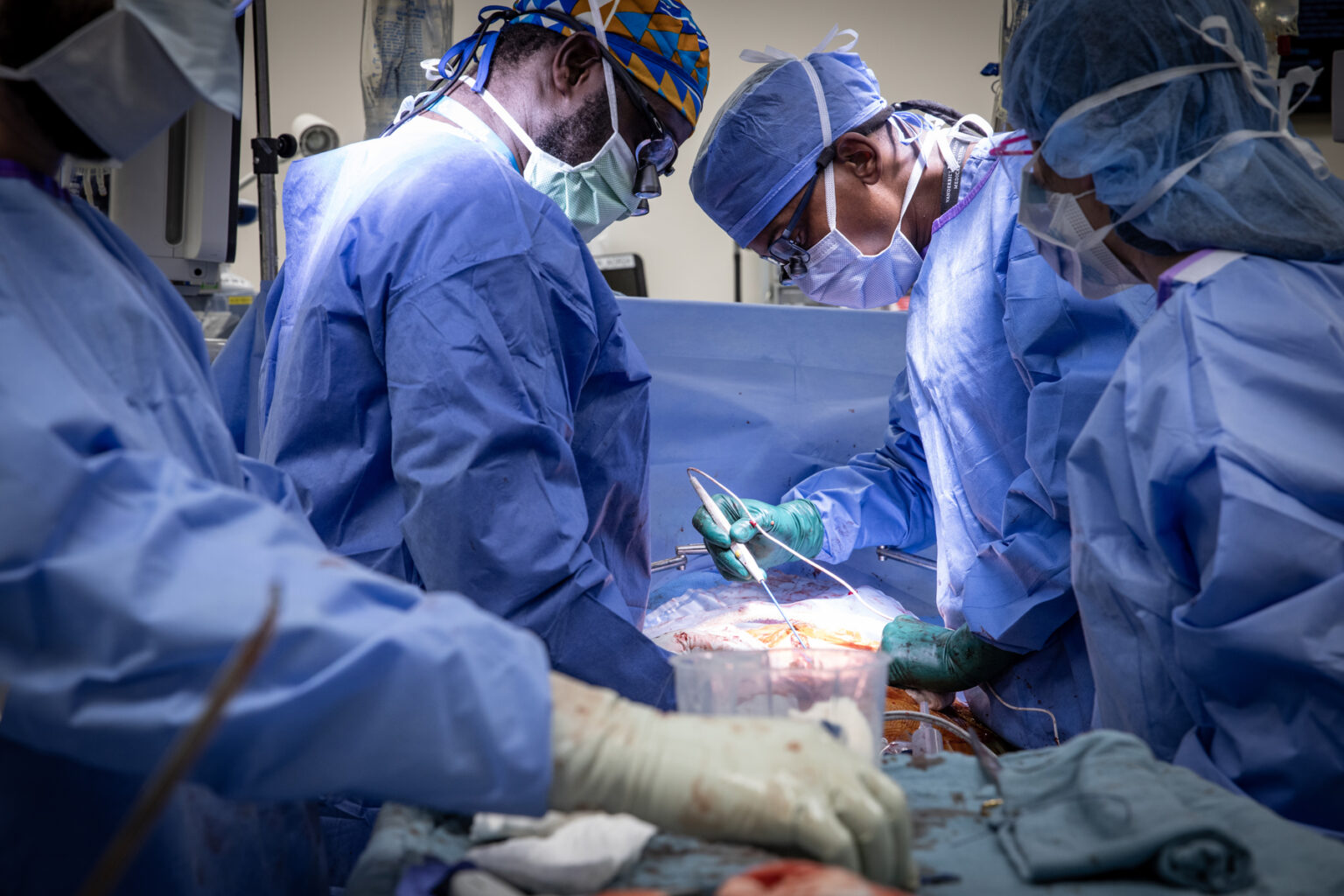
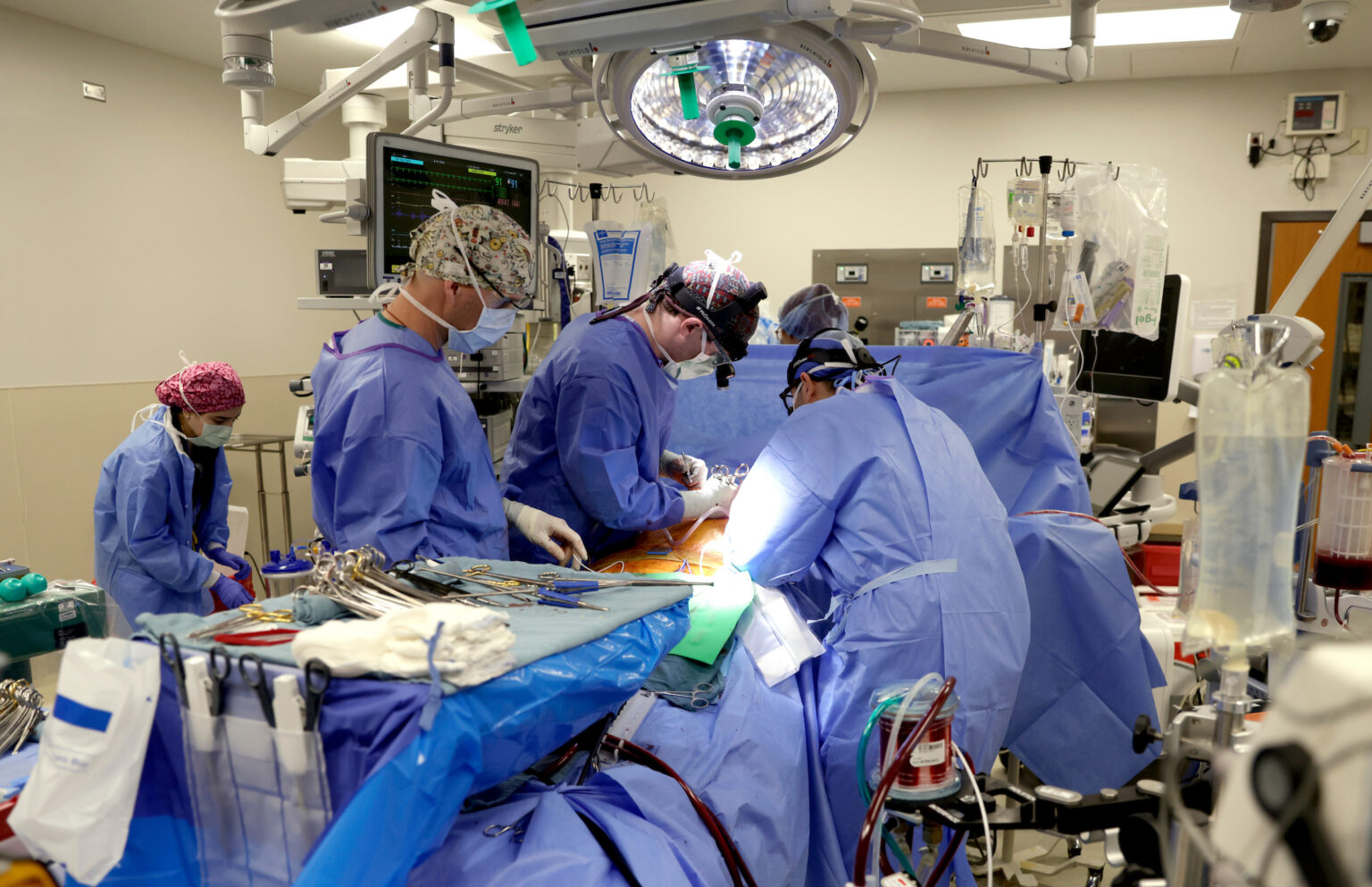
 It takes a highly specialized, multidisciplinary team of about 150 people to work on a single transplant. Shown here: a lung transplant at Vanderbilt Health on March 11, 2025. (photo by Donn Jones)

The Vanderbilt Transplant Center (VTC) performed a record number of solid organ transplants in fiscal year 2026 — 981 lifesaving procedures among its adult and pediatric programs. The adult program performed a record 926 transplants, and the pediatric program completed 55 transplants during the fiscal year, which ran from July 2025 until the end of June 2026.
Vanderbilt Health’s adult heart, lung, liver and kidney transplant programs individually had record fiscal years, with 177 heart transplants, four heart-lung transplants, 150 lung transplants, 202 liver transplants, 380 kidney transplants, 12 kidney-pancreas transplants and one pancreas transplant.
Pediatric transplant teams with Monroe Carell Jr. Children’s Hospital at Vanderbilt performed 19 heart transplants, 19 liver transplants, 16 kidney transplants and one pancreas transplant.
At the end of 2025, Vanderbilt Health became the No. 1 largest transplant center by volume in the United States in addition to retaining its status as the world’s busiest heart transplant program. This was made possible by the selfless acts of organ donors, from friends and family members who donated live kidneys and partial livers, to deceased donors of hearts, lungs, livers, kidneys and pancreases, who in their last acts gave the most personal gifts.
Vanderbilt Health has exceeded 14,000 total transplants of all organs since its first kidney transplant in 1962.
It takes a highly specialized, multidisciplinary team of about 150 people to work on a single transplant. The transplant teams include physicians in each organ specialty, surgeons, anesthesiologists and nurse anesthetists, intensivists, nurses, nurse practitioners, pharmacists, social workers, financial coordinators, nutritionists, organ procurement coordinators, preservationists and operating room staff, among others.
“Our greatest accomplishment isn’t setting records,” said Heather O’Dell, MSN, ANP-BC, MMHC, VTC Executive Director and Associate Operating Officer, speaking on behalf of VTC leadership. “Rather, it’s seeing patients receive a second chance at life and witnessing the dedication of the countless individuals who put in long hours; ask the hard questions; continually strive to improve; and never lose sight of giving every patient the very best opportunity for a brighter future. I’m sincerely grateful for the opportunity to work alongside such inspiring teams and to celebrate the lives they help change every day.”