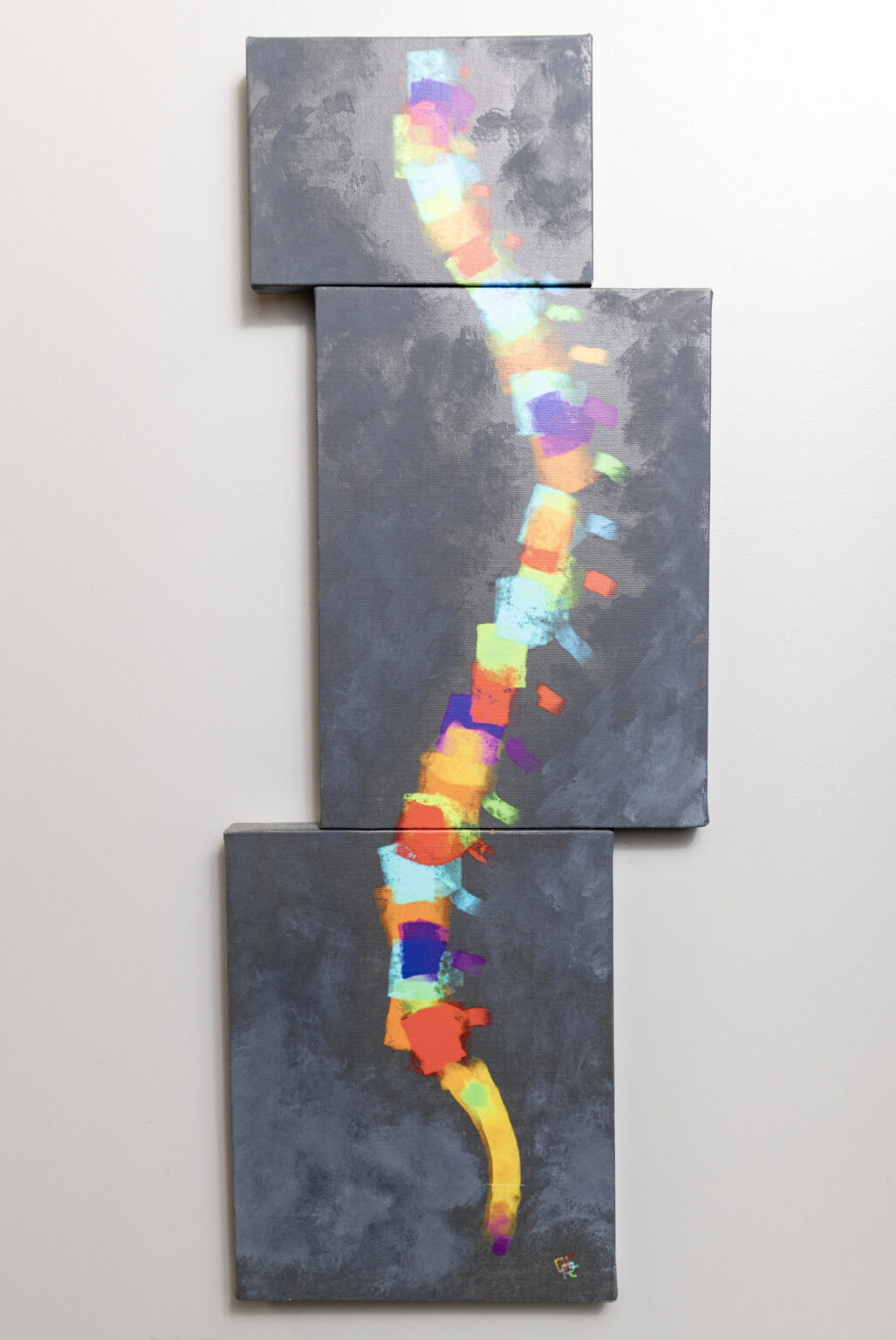
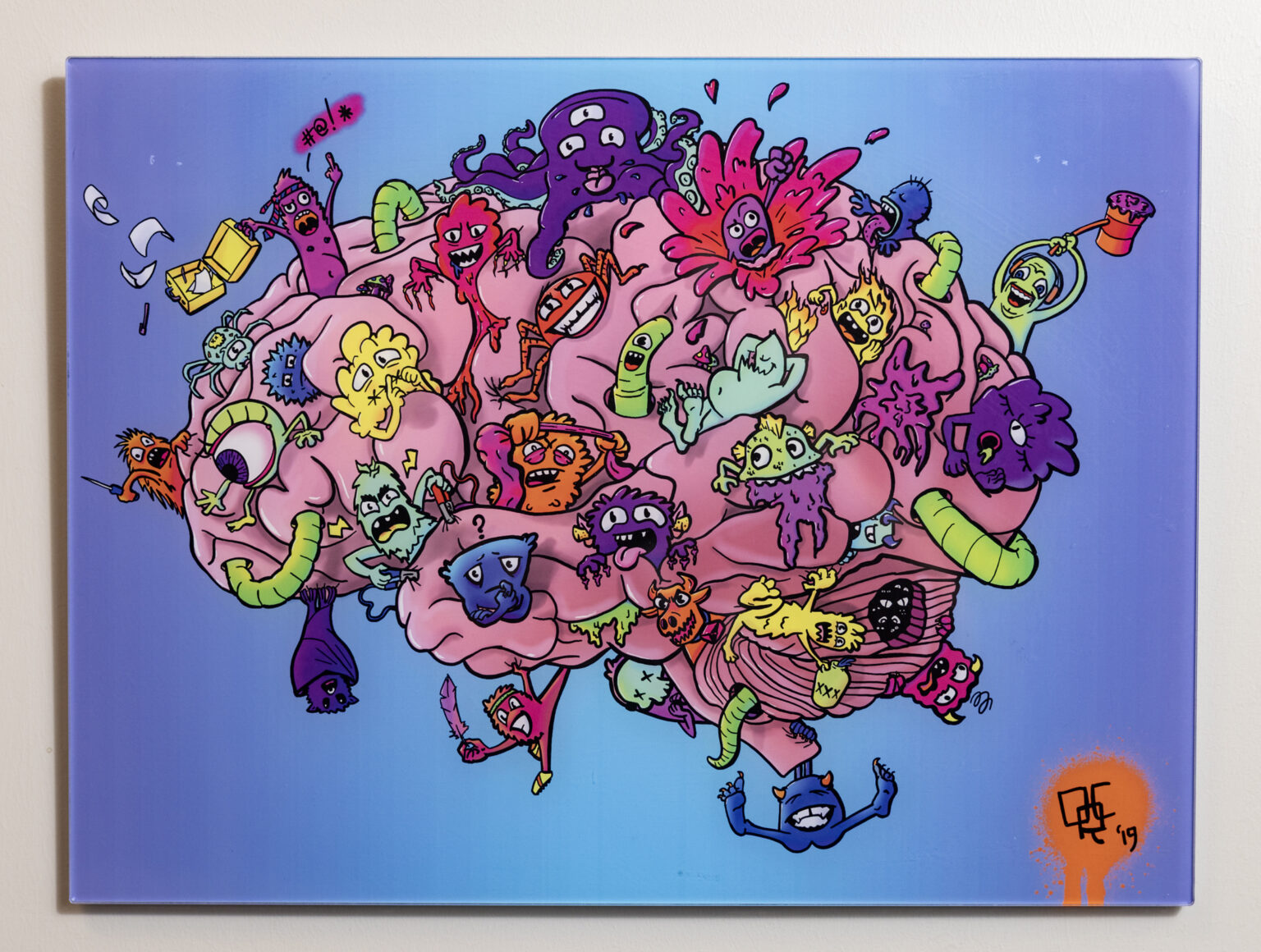
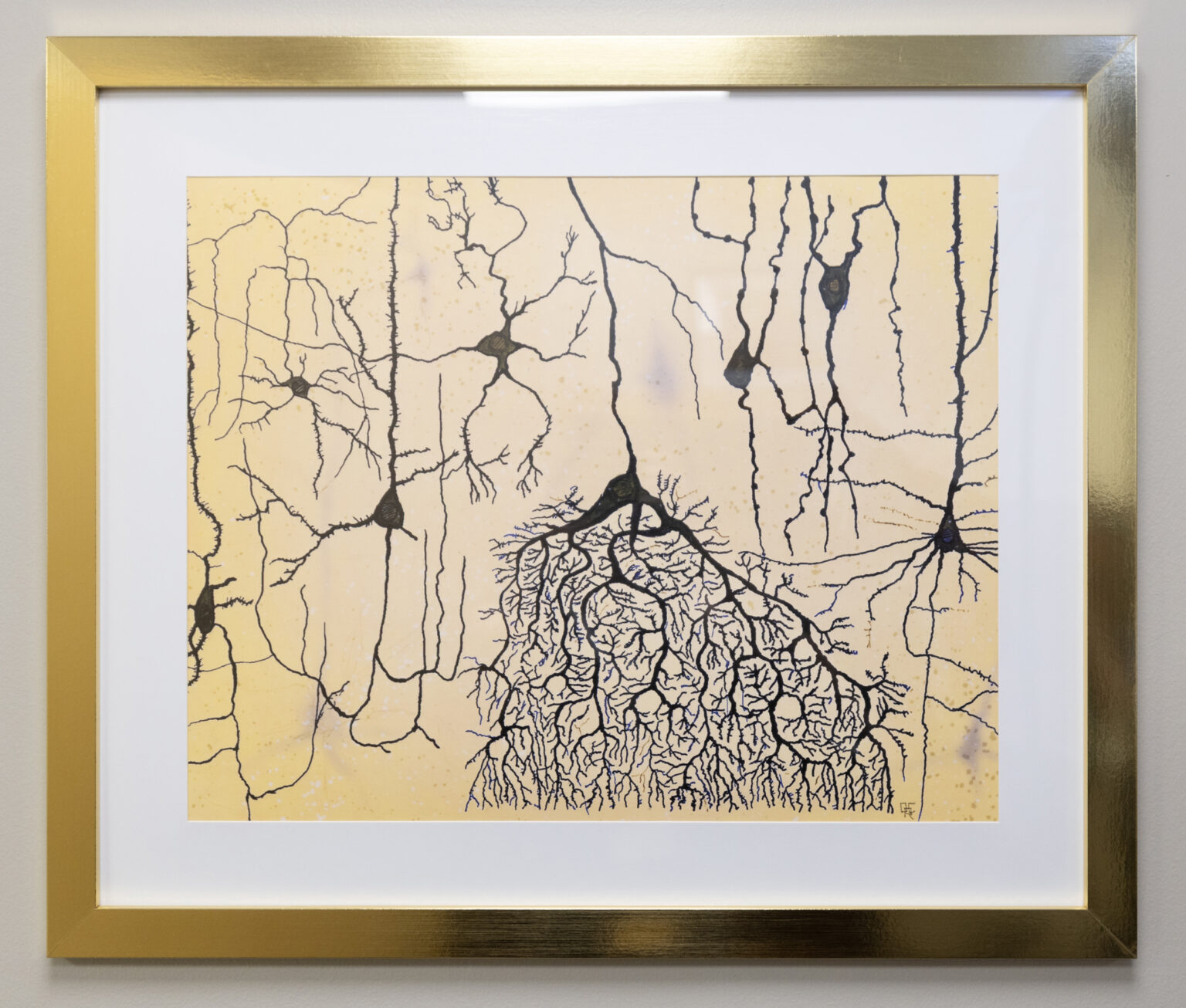
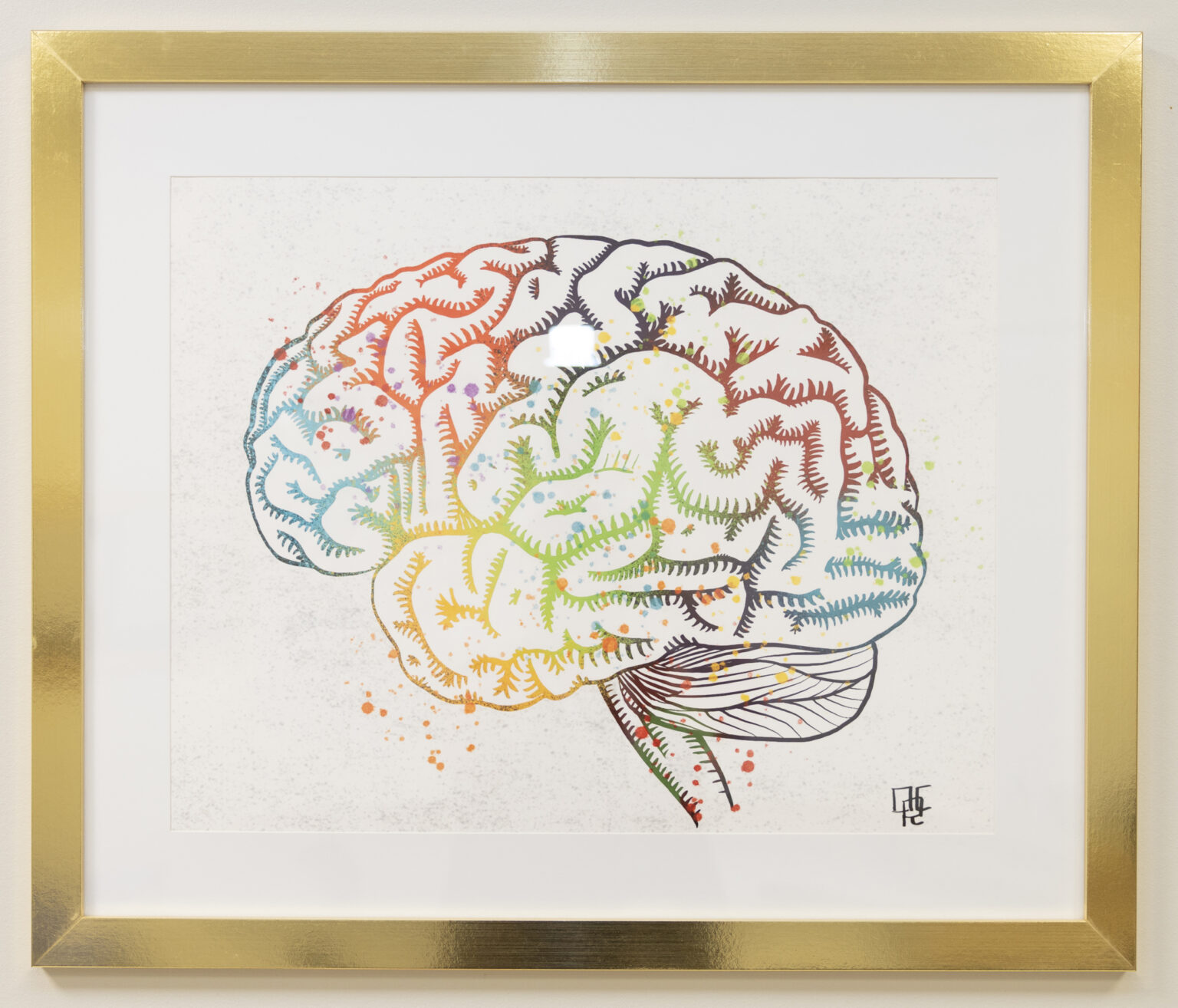

There’s a certain flavor of art adorning the walls of the Vanderbilt Neurology Clinic.
While the artwork is understandably neurologically inspired, knowing who created it may come as a surprise. Picture your physician coming in and you ask who’s responsible for the eye-catching digital art of a spinal cord, and he says, “I am.”
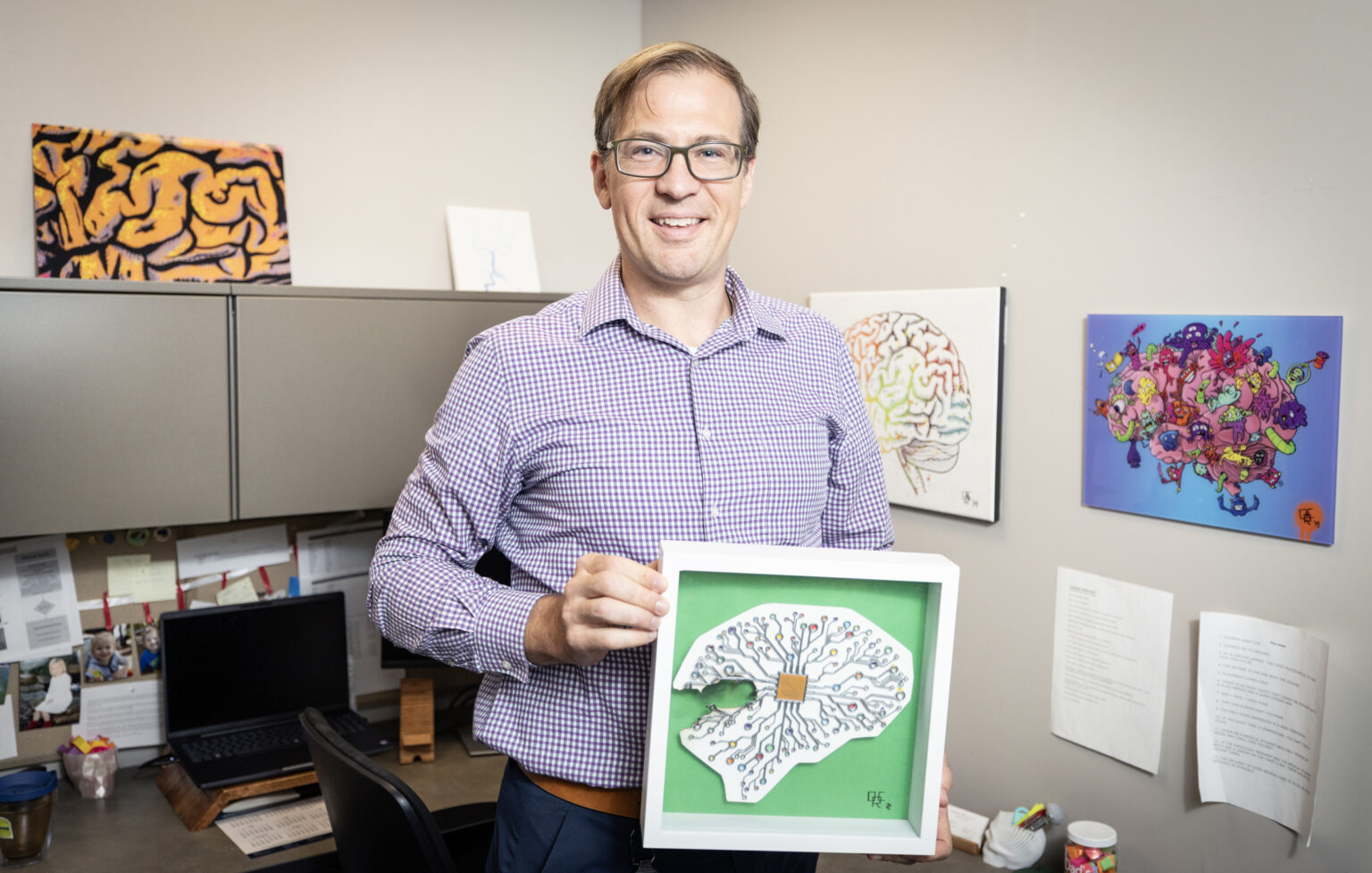
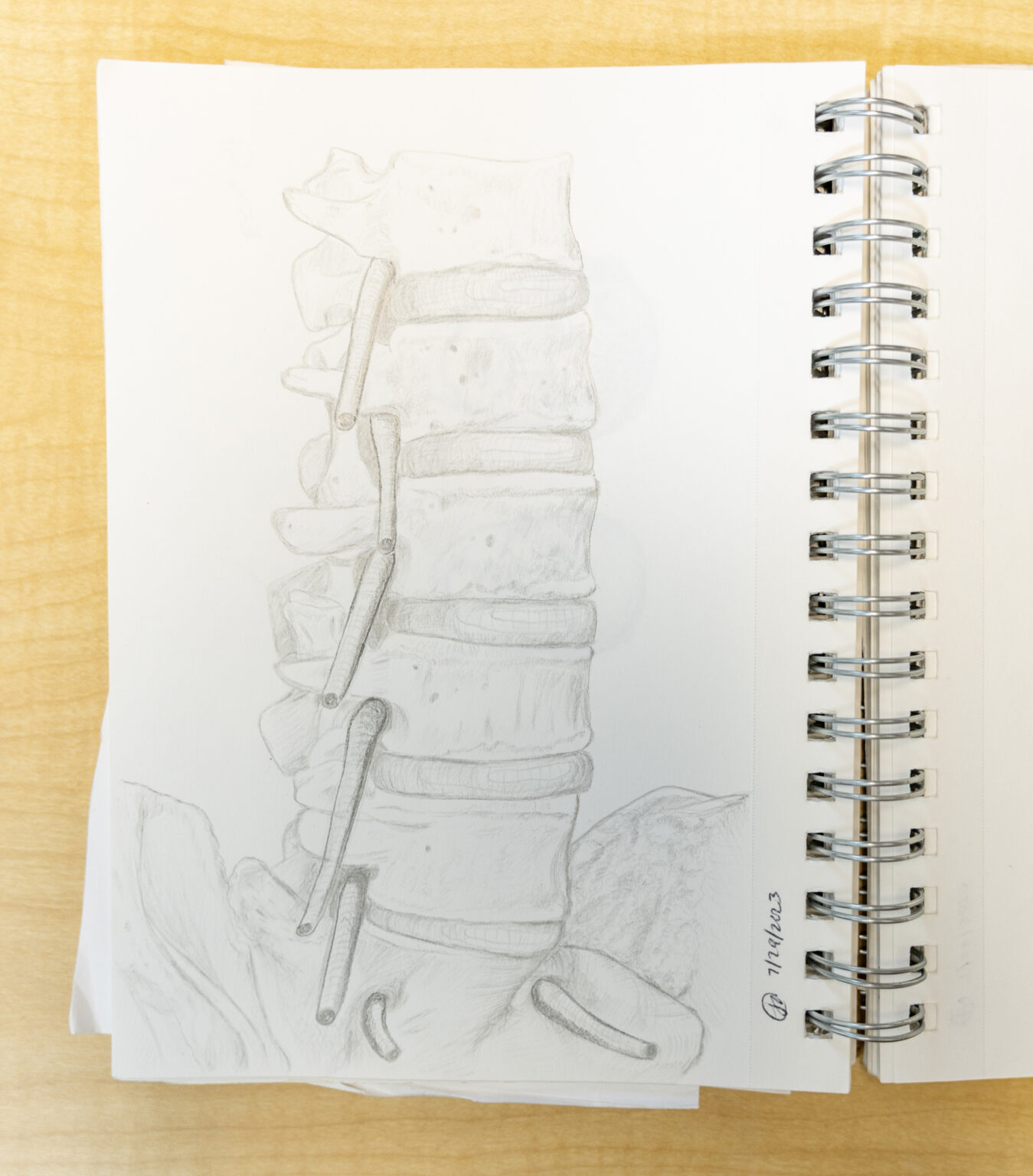
In this case, it would be likely that you’re being treated by David Curfman, MD, Assistant Professor of Clinical Neurology and Division Chief of General Neurology. Curfman’s drawings are often inspired simply by him asking himself, “What would inspire me artistically to do something fun that I haven’t tried before?”
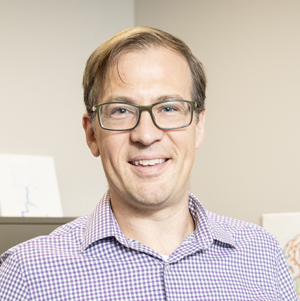
Believe it or not, busy doctors do have enough time and mental capacity to find their “Zen” through all manner of artistic media. Especially in Nashville, it would hardly be a surprise to encounter a clinician who can pluck a tune on the banjo, and plenty of doctors seem to have a gift for prose. The visual arts, such as painting and drawing, are also alive and well among physicians.
“It’s something I’ve always been interested in,” said Curfman. “I was always the kid who doodled in class while I was thinking. … In college, I took my science classes, but I also took creative writing, drawing and other things for fun on the side.”
Curfman said he got back into visual arts during medical school, noting it became an important means of stress relief. After school and training, Curfman realized that having his own office presented an opportunity to spice up the decor. He put his creativity to work and livened up the walls with a number of his own drawings and digital artworks.
“It started as a way of making my office walls a little bit more interesting, so I kept it thematic to the brain and spinal cord,” he said.
Visual arts can offer unexpected benefits in a place of healing. Seeing a painting can have calming effects on a patient, for instance. And the connection between art and healing is one that invites people to create for themselves.
“For people who have strokes, tremors or other neurologic illness, there can be a natural healing practice that involves art,” Curfman said. “It’s a cognitively active process that engages the brain, and that’s good for brain health in general. … And particularly for people with neurologic disease who can’t express themselves in the way they’re used to, art can be a new way to do that.”
While there may not be a direct link between artistic inclinations and neuroscience knowledge, it turns out the Department of Neurology boasts multiple physician-artists who draw inspiration from the organ responsible for creating works of art. Lealani Mae Acosta, MD, MPH, Associate Professor of Neurology in the Division of Behavioral and Cognitive Neurology, has quite a collection of brain-related artworks.
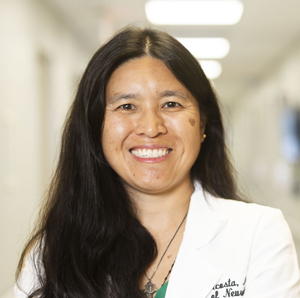
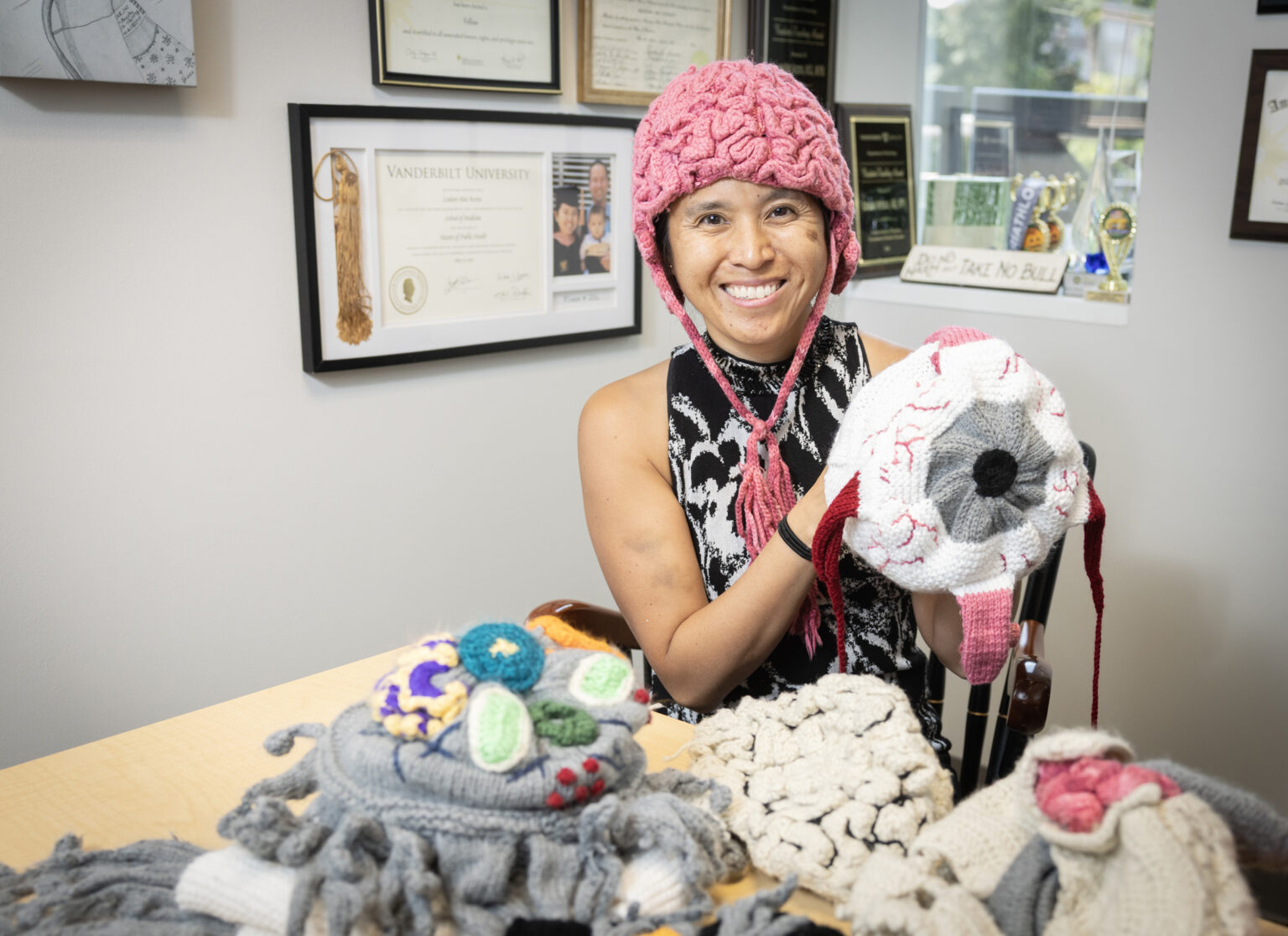
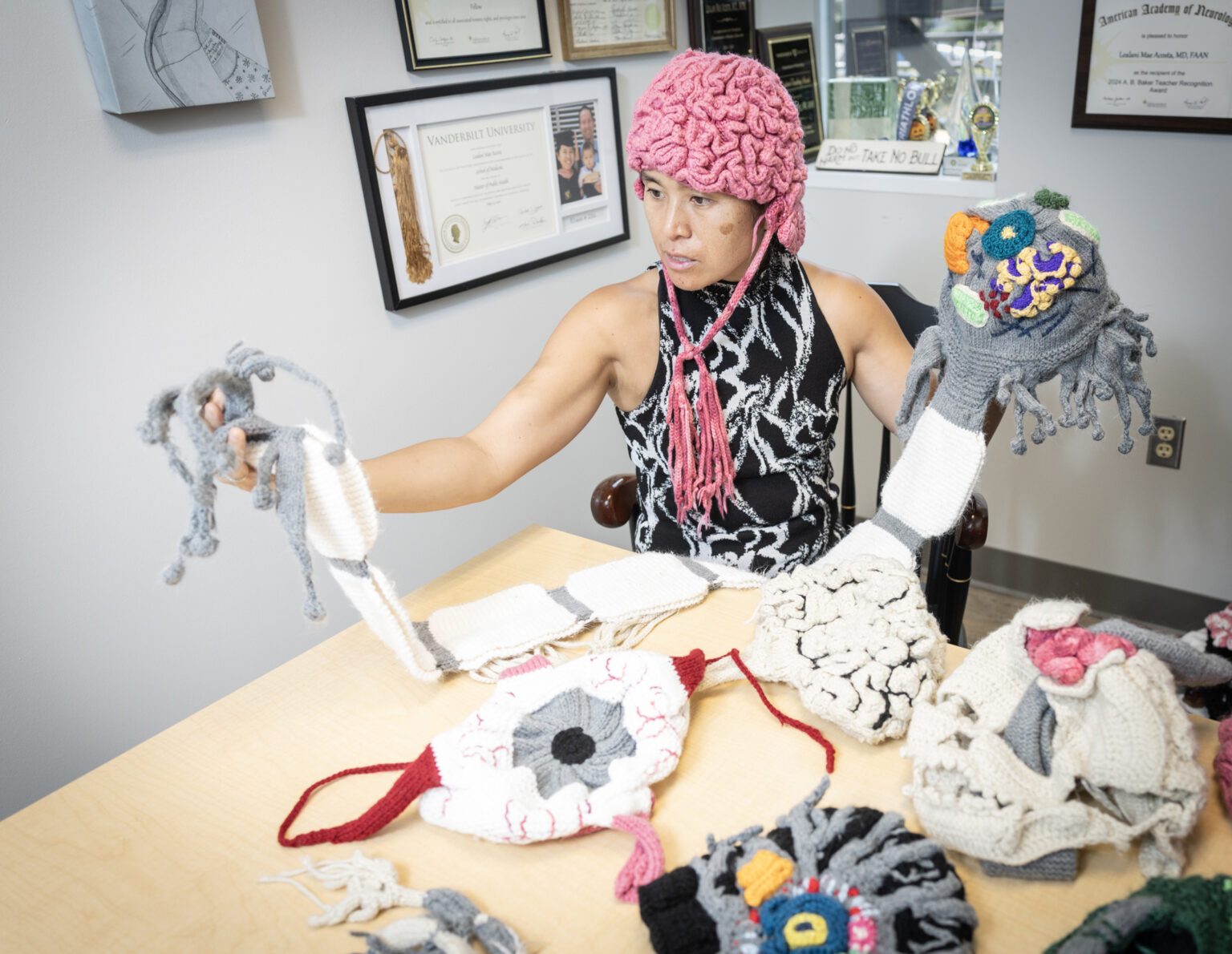
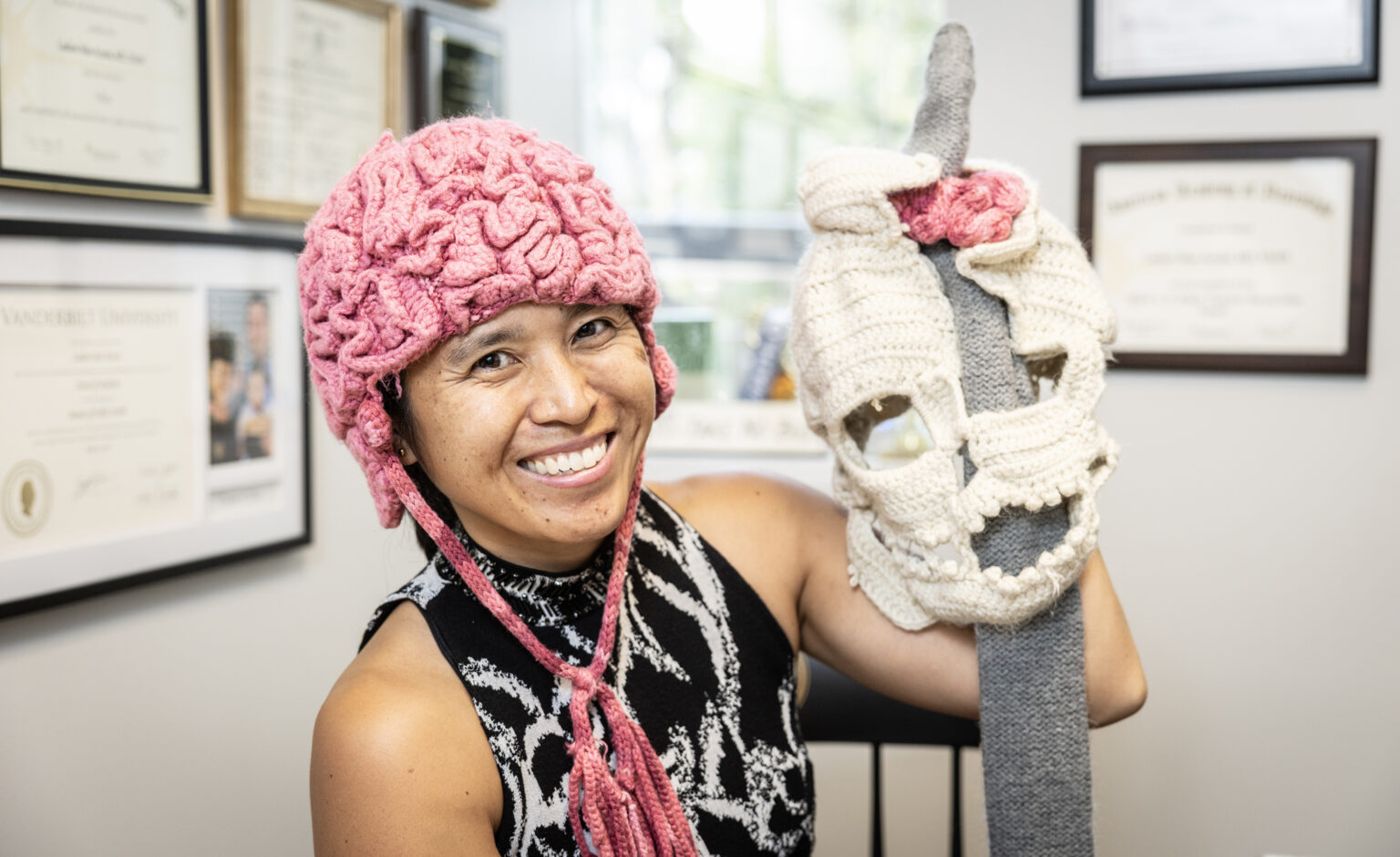
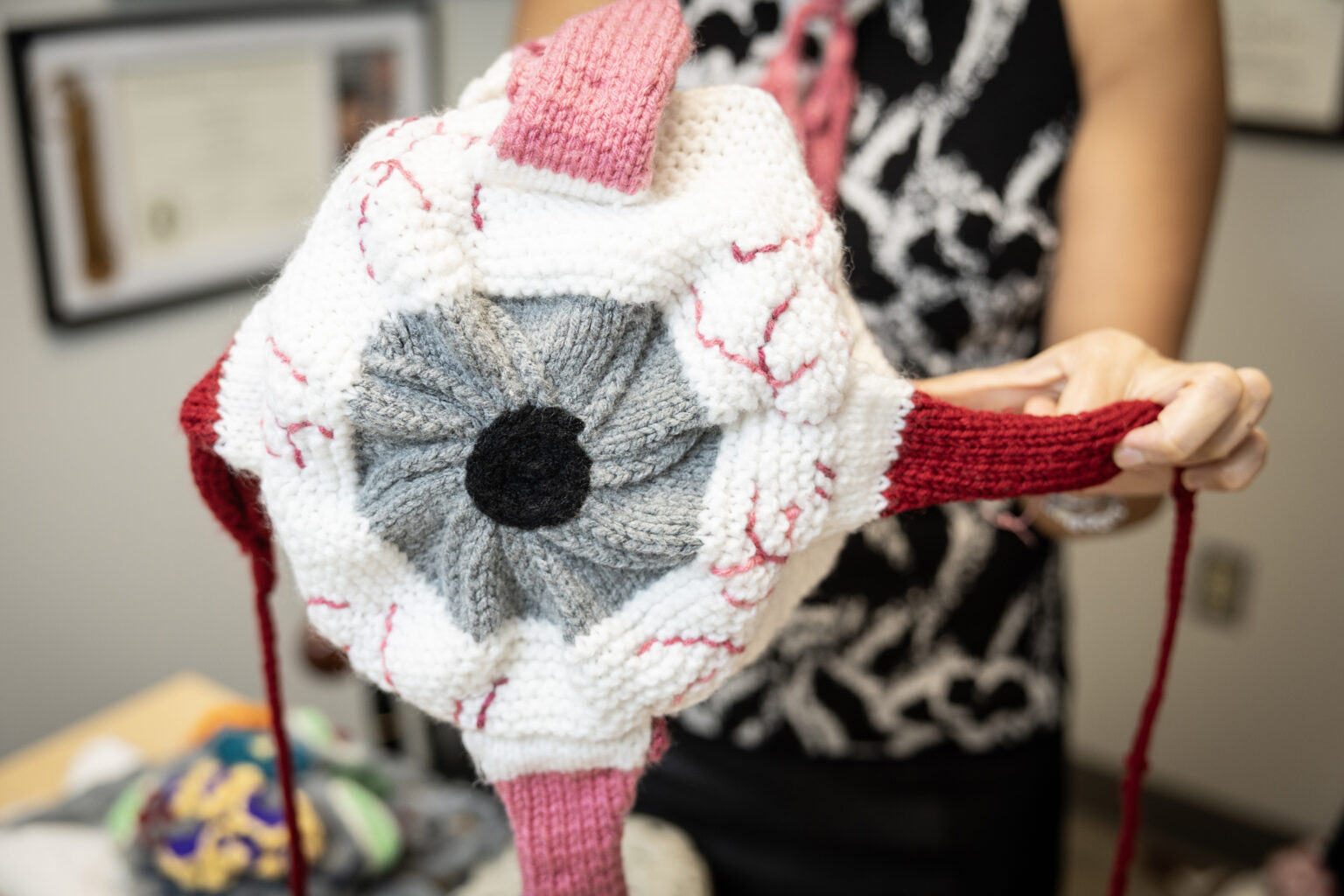
Acosta has knit numerous hats that tell the story of her life, including some that depict aspects of neurological anatomy.
“Depending on where I was in my life, I would make a hat to honor that,” Acosta said.
This knitting hobby — which she picked up as a child from a teacher who knit during recess and graciously taught her the craft — has led Acosta to create hats that depict everything from eyeballs to neurons to the brains of Albert Einstein and Phineas Gage, a 19th century railroad worker who survived a metal rod being driven completely through his head.
“I tend to wear these out, not only around the hospital or medical school, but I’ll wear them out in public,” Acosta said. “People at Trader Joe’s will have conversations with me about, for instance, their mom who got diagnosed with Alzheimer’s disease. … It usually ends up producing some really interesting conversations about the brain.”
When art starts a dialogue about medicine, it helps advance the idea that the two disciplines aren’t entirely separate.
“I think a lot of artistic exploration in the past, whether those artists knew it or not, was getting at some of those universal truths about how the eyes and brain synthesize information and organize it so it’s something you can understand,” Curfman said. “In some ways, it is an experiment in neuroscience. Even if we don’t understand exactly which organizational structures and levers we’re playing with, we’re still trying to get to the root of that. I appreciate that aspect of art, too.”
Asked if he ever consciously thinks about the neuroscientific underpinnings of artistic expression as he’s creating, Curfman said he usually separates those aspects of himself while he’s focusing on each, but he acknowledged there are clear connections to be drawn between the two.
“You’re trying to convey an experience to another person through art,” he said. “To do that, you have to understand how to draw a person’s attention to what you want them to see, how to express what you want them to see in a way that’s going to be universally accessible. … To do that involves understanding how the brain breaks things down and makes that accessible for other people.”
And on the opposite side of that analogy, “Working toward a diagnosis is kind of the reverse of that: ‘How do I take what other people are experiencing and understand exactly what’s going on?’”
But as much as neuroscience seeks to understand how the brain works, there’s still plenty that’s unexplained or that can leave both doctors and laypeople alike in awe. For example, people experiencing neurodegeneration from frontotemporal dementia, known for its devastating effects on personality and language abilities, may suddenly develop astonishing aptitude in the visual arts.
It doesn’t happen to every patient, Acosta said, “but there have been some fascinating cases in which patients who had either zero or minimal artistic skill began to develop amazing artistic skills as their frontotemporal dementia worsened.”
One specific case is the experience of Canadian scientist Anne Adams, who became an extraordinary visual artist in the final stages of her life as her condition worsened. She created vibrant paintings that are now studied by neurologists around the world as an example of how some diseases can paradoxically breathe life into an individual’s artistic expression.
“The disease process is tragic and incurable, and it stripped away a lot of her typical personality,” Acosta said of Adams’ case. “Even with the change in her personality and the loss of language, it still allowed this other part of her brain to blossom, an artistic side manifested in ways that no one had even seen before.”
Studying how life-altering diseases affect patients weighs on those who care for them, but there is value to examining such deficits, Acosta said.
“I find the idea of a ‘deficit’ interesting, whether you think of that as a patient’s diagnosis or a mistake on a piece of artwork,” she said. “I think there are still ways to take that and find something good out of it.”
Acosta sees medicine, to some extent, as an art.
“I think there’s a science to it, but I think there’s also an art to it,” she said. “For example, if you’re giving somebody a diagnosis of Alzheimer’s disease, there are ways to do it that are more approachable; that speak to the patient’s values or the family’s values. … Or to use words that communicate that without being devastating or incomprehensible.”
This approach of blending art and medicine can benefit a patient under the care of a physician-artist, but, Curfman said, it’s also important to recognize how embracing one’s artistic side can build up the person wearing the white coat.
“Neurology is a very analytical field in that you’re trying to examine a patient and trying to get to exactly where in the nervous system a problem is,” he said. “And art, in general, is more open-ended and allows for that creativity. So, I think they’re a natural pairing … having these hobbies allows you to be a full person.”
Acosta said she was nervous earlier in her career to embrace the artistic side of herself in her work, but, she said, “The more I do this, the more I find people who live at that intersection of the humanities and medicine, and they find ways of integrating those things. I think it’s integral to be whole people; whole physicians. … It’s not just the science of medicine that matters.”
She added that the idea of being a whole person is why she always encourages medical students to, for instance, join an a cappella group or start running marathons in order to have an outlet.
“Doing these things also enriches the pursuit of medicine itself because your brain needs a rest sometimes, and sometimes thinking about other things gives us the opportunity to be more creative,” Acosta said. “When we’re studying disparate things, sometimes we find connections we weren’t expecting to see.”
Two doctors’ artistic pursuits take their work nationwide
Acosta said she’s been immersed in the arts since childhood. Her father loved calligraphy, and her mother designed and sewed her own clothing in addition to drawing portraits.
As a child, Acosta said, she and her sister brought home supplies from the craft store for everything from drawing to beading to working with clay and oil paints.
Recently, she has found new avenues to share her work. She attends meetings of the Literature, Arts and Medicine student group at Vanderbilt University, which is open to community members who want to share a piece of creative work inspired by the intersection of art and medicine. And last year, she presented some of her knitting work as part of a session at the American Academy of Neurology’s annual meeting.
She’s also written prose and poetry about neuroscience, and each Halloween she carves pumpkins based on brain-related imagery. She’s even contributed sketches to the game Neurdle, a neuroscience-coded spin-off of the popular daily word game.
Curfman’s walls are lined with his own work, and in the fall of 2023, so were the desks of neurologists around the country. Curfman was the featured artist on that October’s cover of the journal Neurology Clinical Practice, which used one of his pieces that was inspired by the work of 19th-century Spanish neuroscientist Santiago Ramón y Cajal. Curfman and Acosta agree that Ramón y Cajal is one of the preeminent historical individuals in the neuroscience community thanks to his understanding of the organization of the brain, as well as his detailed pen and ink drawings of neurons. “In art, you think about composition, focal points, contrast, the way the eye is drawn by how things align,” Curfman said of his artistic process. “There is a natural inclination there that you think about. I don’t necessarily think about it in neuroscience terms; I think about it in artist terms. But the principles underlying, I think, do get back to neuroscience.”