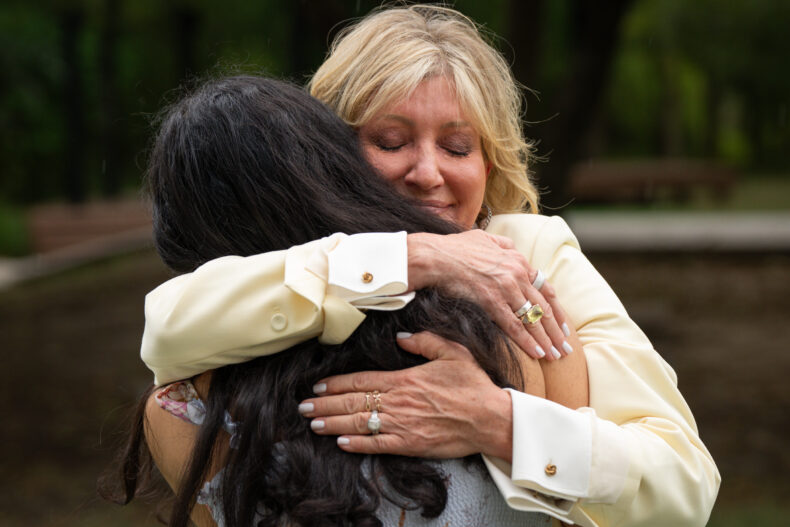
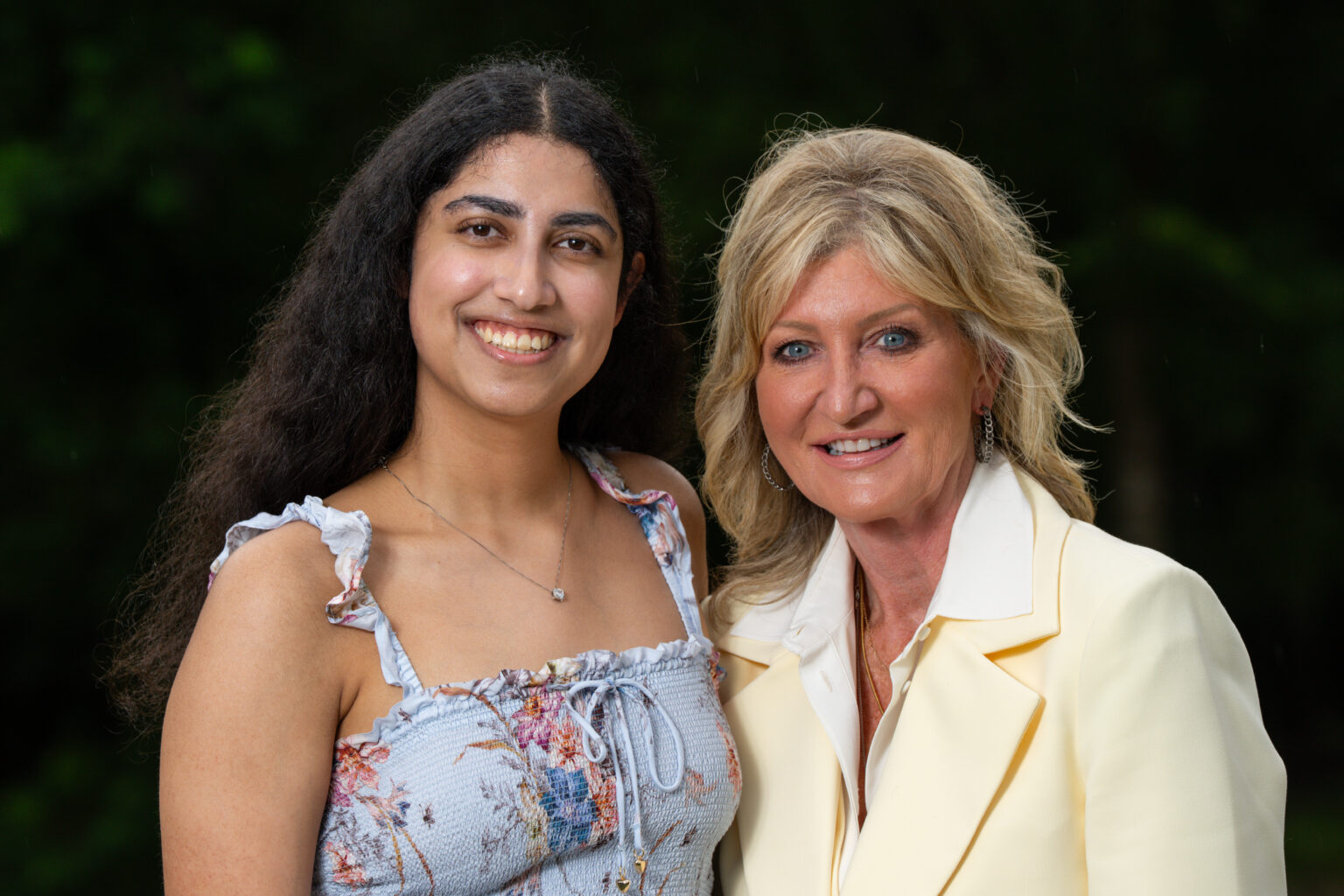
 Kareena and Jill Grandas at their meeting on Sept. 3, 2026. (photo by Jon Shapley for Tennessee Donor Services)

It was a meeting a quarter century in the making.
A few days ago, Jill Grandas, RN, CEO of Tennessee Donor Services, looked across a lawn and saw the smiling face of a young woman named Kareena. Grandas smiled back, and the women hugged. There were tears.
Even though they had never met, Grandas and Kareena have been connected for 25 years by an invisible thread stretching from Tennessee to Texas. A connection that began on a day of national tragedy.
Expecting ‘no,’ hearing nothing but ‘yes’
On Sept. 11, 2001, the world was horrified as terrorists used airplanes as weapons to attack the World Trade Center and the Pentagon, while another attack aimed at Washington was thwarted by passengers, and the would-be attack plane crashed in Pennsylvania.
In response, all flights were canceled, and the Federal Aviation Administration ordered all planes already in the air to immediately land. For the first time in decades, American airspace was virtually empty.
For Grandas, the horror she shared about the attacks and the loss of life was compounded by something else she knew: A surgical team at Vanderbilt University Medical Center was in the process of preparing a liver for transport to Houston for a 6-month-old girl who was in liver failure and would die without a transplant.
In order for the lifesaving transplant to occur, the donor liver had to get to Houston by plane. And there were no planes flying.
“It galvanized our resolve,” a member of the Vanderbilt transplant team said at the time. “We can’t let them win. If we don’t get (the liver) to this person, they’ll have killed someone else.”
At Tennessee Donor Services, which connects the Vanderbilt Transplant Center with other transplant centers nationwide, Grandas was putting all the information together. She was determined that the sick little girl in Texas would not be another casualty of the terrorists — not when the liver she needed to survive was at Vanderbilt in Nashville, only a couple of hours away by air.
People who work in organ transplantation are accustomed to high-pressure work, problem-solving, and thinking on their feet — but this case presented a new set of challenges.
Grandas, reasoning that if the FAA could ground planes, the FAA could give permission for one to fly, checked the phone book and discovered that the number of the air traffic control tower at Nashville International Airport was listed.
She took a deep breath before making the call, expecting to be told ‘no’ and expecting to have to fight and argue to get anything to happen.
What she actually found was that everyone immediately wanted to do anything possible to help.
10 ounces of cargo
The call to the Nashville control tower paid off, and the Tennessee Air National Guard was granted special permission for the lifesaving flight. An emergency crew was assembled, and soon a giant C-130 cargo plane was on its way to Houston with only one piece of cargo: a tiny liver. For perspective, a C-130 can carry up to 42,000 pounds. That day, its cargo weighed about 10 ounces.
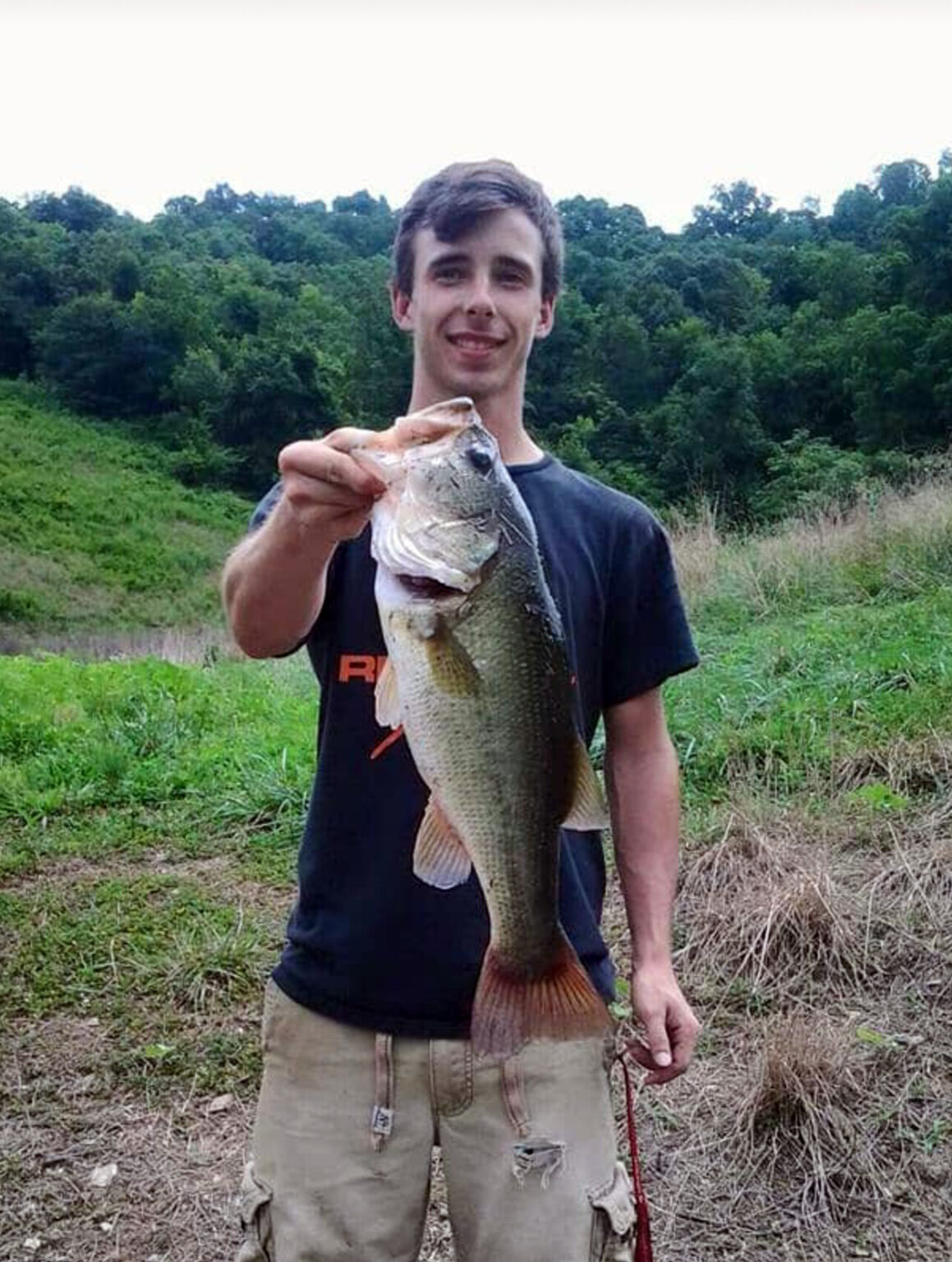
At a time when the situation was so terrifying and uncertain that national leaders were in hidden bunkers, members of the Tennessee Air National Guard risked taking to the air to get that liver to the little girl who needed it. The transplant teams at Vanderbilt and in Houston focused on their task, blocking out as best they could the terrible news unfolding around the country. The professionals at Tennessee Donor Services and the FAA worked out how to save a life in the midst of tragedy. And, before all that, a family in the midst of grief made the decision to donate the organ that saved Kareena’s life.
And now, 25 years later, Kareena (she prefers that her last name not be used) is a law student and plans to focus on health policy in her career.
“She calls me every Sept. 11”
Kareena and Grandas first spoke several years ago and have remained in contact since.
“She calls me every Sept. 11 and has for the past five or six years,” Grandas said.
They arranged to meet in person for the first time a few days before the anniversary this year, on Sept. 3. Grandas flew to Texas and, after the hugs and tears, they found a picnic table in a local park for a good place to sit and visit.
“We sat outside and talked for a while,” Grandas said. “It was a delight. It felt really natural.”
Grandas, who is a Certified Procurement Transplant Coordinator, has worked in organ procurement for nearly 40 years and has been a nurse since 1985, when she began her career in a neurological intensive care unit. She has been involved with thousands of patients in that time and has seen many lives transformed by an organ transplant, but Kareena is special.
“We just have a connection,” she said.
If you want to know more about organ donation, or register to become a donor, go to donatelifetn.org.