



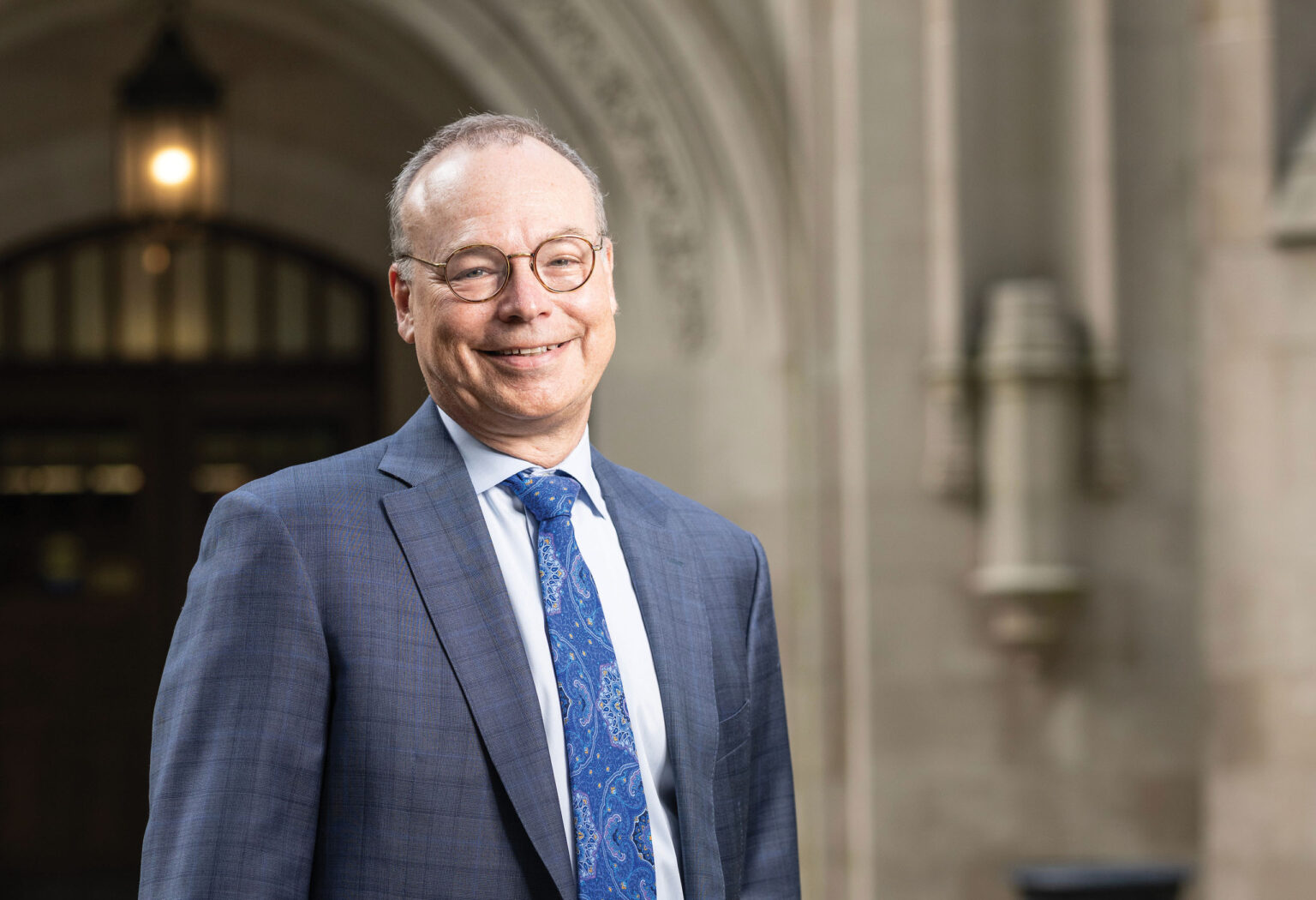
 Photo by Erin O. Smith
There are many important dates in Vanderbilt University Medical Center’s storied history; however, steps taken April 30, 2016, have perhaps generated the greatest impact in the past half-century on shaping its future. That day, VUMC became a fully independent nonprofit entity, legally and financially separate from Vanderbilt University.
Shortly before the separation was finalized, Jeff Balser, MD, PhD, President and Chief Executive Officer of Vanderbilt Health and Dean of Vanderbilt University School of Medicine, explained the need for VUMC’s independence: “As the national health care economy restructures to fewer health systems, we have a choice — leading such a health system or being part of someone else’s system. We want to lead our system and control our destiny. We believe health care should be delivered a certain way.”
For VUMC to separate itself in this way from the safe harbor of VU, one of the nation’s oldest and most prestigious universities, was an almost unheard-of concept at the time. Through an innovative process led by VU’s Chancellor Nicholas Zeppos, JD, and Balser, along with teams from both parties, VU would no longer be responsible for operating a large, resource-intensive academic medical center, while VUMC gained operational and financial independence. This allowed VUMC to have self-governance through its own Board of Directors and the ability to pursue investment capital necessary to fuel growth in an increasingly competitive health care environment.
Today, VUMC, now referred to as Vanderbilt Health (VH), and VU are legally and financially separate entities, yet remain tightly connected in countless other ways through shared missions supporting academia and research.
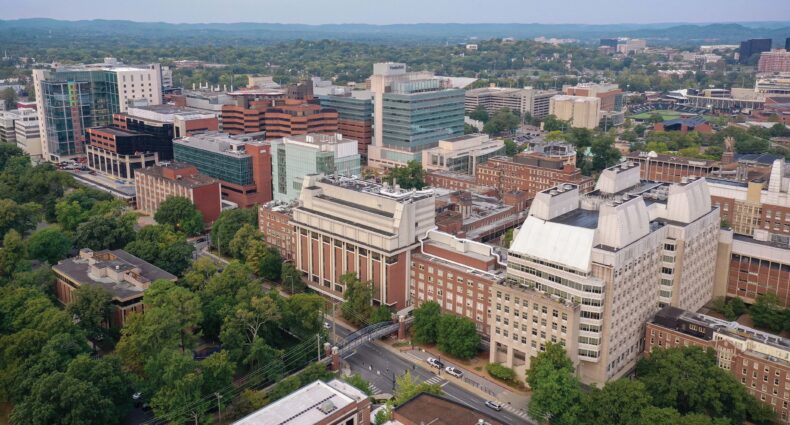
Balser, whose corporate title changed from Vice Chancellor for Health Affairs to President and CEO on that day in 2016, has dedicated his 41-year career in health care to taking bold steps that have continued to advance VH and Vanderbilt University School of Medicine into the nation’s forefront.
After graduating from VUSM in 1990, Balser spent the next seven years serving as a resident, fellow and faculty member at Johns Hopkins Hospital where he was a cardiac anesthesiologist and surgical intensivist. He was recruited back to Vanderbilt in 1998 as a clinician, investigator, and as the first Associate Dean for Physician-Scientist Development.
Through years of serving in successively responsible leadership roles, including as the James Tayloe Gwathmey Professor and Chair of the Department of Anesthesiology (2001-2004) and Associate Vice Chancellor for Research (2004-2008), Balser was named the 12th Dean of VUSM in the fall of 2008. Months later, at age 47, he became the youngest person ever chosen to serve as the Medical Center’s Vice Chancellor for Health Affairs (former title), assuming this role July 1, 2009. During the past 17 years, he has continued to serve in both roles as health system leader and dean.
Balser inherited an organization experiencing a financial crisis tied to the ailing U.S. economy. A deep recession caused by fiscal mismanagement across the home mortgage industry was gripping the nation. The recession’s economic impact was so broad and deep that it also enveloped the health care industry. At that point, the Medical Center’s days of cash on hand, a measure of organizational financial health, were fewer than 20.
Undaunted by the challenges ahead, Balser’s vision for the future of VH was centered on the continued pursuit of excellence across all mission areas. He was also determined to lead the nation in developing the blueprint for personalized medicine, an emerging practice of medicine tailoring prevention, diagnosis and treatment to an individual’s genetics and lifestyle.
In 2009, VH had approximately 16,000 employees, 1,840 faculty and $2.2 billion in operating revenues. By 2015, just before the separation, the Medical Center had approximately 20,000 employees, 2,700 faculty and $3.5 billion in operating revenues. Organizational growth was respectable and incremental, but sluggish due to restrained access to investment capital.
Another obstacle Balser inherited was the Medical Center’s reputation as a place where smart people gathered, and the quality of care was high, but also where customer-friendly service was lacking. Consumer preference surveys at that time often had VH finishing behind Nashville’s other health systems and the category of “other.”
In 2009, VUSM’s research funding from the National Institutes of Health (NIH) was $289 million, which ranked 12th in the nation among schools of medicine, according to the Blue Ridge Institute for Medical Research. By 2015, VUSM’s funding had increased to only $291 million.
“Throughout his career, Jeff has demonstrated an amazing talent for expressing bold, clear, strategic ideas while positioning and enabling others to evolve and execute those strategies.”
Donald Brady, MD
In its independent structure since the 2016 separation, VH now has more than 45,000 employees, 5,000 clinicians and scientists, and its net revenues have grown threefold to surpass $9.5 billion at the end of fiscal year 2026. Days of cash on hand have risen to more than 110, and total cash on hand and investments now exceed $3 billion.
Under Balser’s leadership, the health system has grown from two to six regional campuses with eight hospitals and more than 2,100 licensed beds. Annual visits at more than 200 ambulatory clinics located throughout a multistate region now exceed 4 million patients arriving from all 50 states.
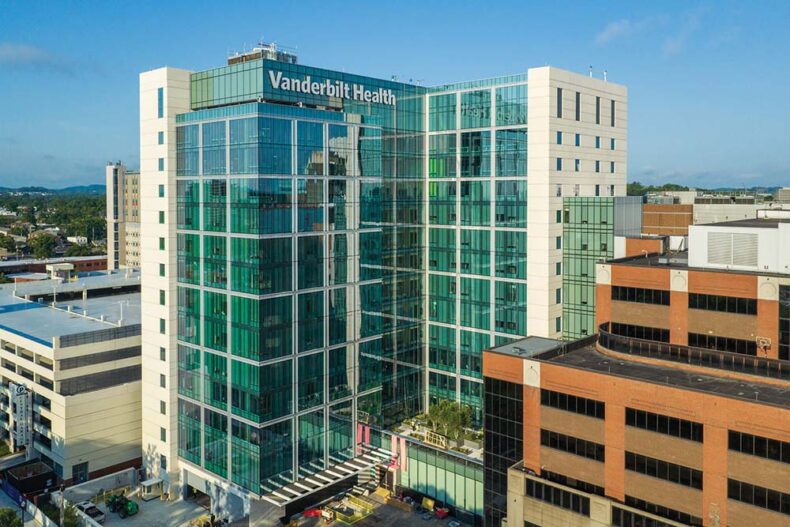
Today, thanks in part to acknowledgments for quality, safety and innovation from entities such as the Centers for Medicare & Medicaid Services, The Leapfrog Group and others, VH is home to Tennessee’s No.1 adult and pediatric hospitals and dominates a multistate region in overall consumer preference.
“Jeff strengthened every part of our mission while positioning the organization to thrive independently. His leadership was never just about growth; it was about building a durable academic health system capable of delivering exceptional care, advancing discovery, and training the next generation of physicians and scientists,” said C. Wright Pinson, MBA, MD, President of the Vanderbilt Health Affiliated Network. From 2009-2025, Pinson served with Balser as VH’s Deputy Chief Executive Officer and Chief Health System Officer.
As Dean of VUSM, Balser graduated thousands of physicians, physician-scientists and other health care professionals. In 2012, after years of innovation and development, VUSM unveiled a new, four-year model for medical education, Curriculum 2.0. The curriculum addresses the ever-advancing accumulation of knowledge in health care, transforming medical education at Vanderbilt while also impacting medical curricula nationwide by focusing on deeply integrated coursework requiring flexibility and teamwork on the part of faculty and students.
“Throughout his career, Jeff has demonstrated an amazing talent for expressing bold, clear, strategic ideas while positioning and enabling others to evolve and execute those strategies,” said Donald Brady, MD, Executive Vice President for Educational and Medical Staff Affairs at VH and Executive Vice Dean for Academic Affairs at VUSM. “That was true with Curriculum 2.0, our scholarship fundraising efforts, and now our move for more integration of information management and the use of artificial intelligence into medical education.
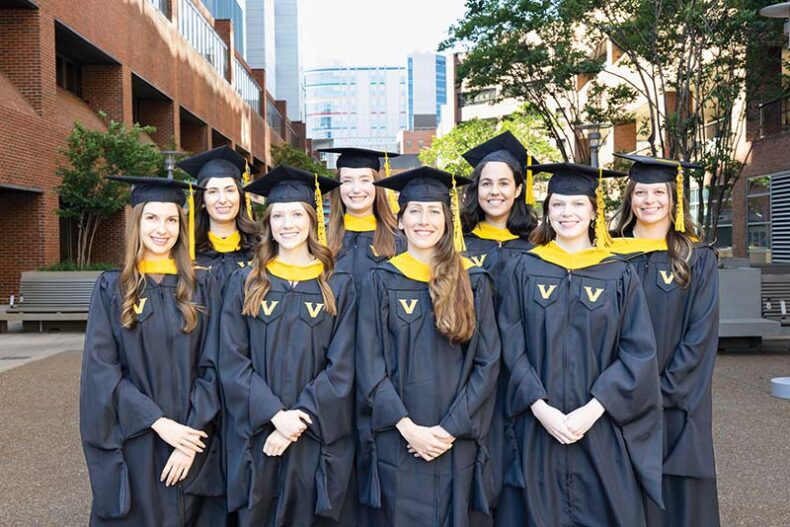
“His persistent mantra that the goal of VUSM is to train leaders — compassionate, servant leaders — has resonated with generations of medical students. Additionally, his own background as a physician-scientist and his support of our Medical Scientist Training Program has enabled it to flourish and become one of the premier such programs in the nation. Today, the medical school has a national and international prominence that has been achieved because of Jeff’s leadership and his ability to allow his leadership team to thrive.”
VUSM’s NIH funding over the last two decades has grown significantly, advancing from 24th at the turn of the century to now consistently ranking in the nation’s top 10. In 2025, with NIH support exceeding $560 million, VUSM ranked seventh, despite federal slowdowns in grant awards, while VH’s overall discovery portfolio has grown to nearly $1 billion in research grants and contracts. Also in 2025, the Departments of Medicine, Otolaryngology-Head and Neck Surgery, Hearing and Speech Sciences, and Emergency Medicine all ranked No. 1 in total NIH funding among peer specialty departments.
Over the past 17 years, Balser’s commitment to growth and innovation across all missions has fueled numerous organizational accomplishments. The Medical Center’s scientific discoveries, training programs and clinical advancements are responsible for multiple institutional strengths, such as the Vanderbilt Transplant Center becoming the world’s leading center for heart transplants and solid organ transplants in aggregate; being home to the Southeast’s highest-ranked children’s hospital and the nation’s fifth largest neonatal intensive care unit; the Mid-South’s largest National Cancer Institute-designated Comprehensive Cancer Center; and the principal Level I trauma center in Tennessee and one of the busiest in the nation. Vanderbilt Health is also home to the region’s largest health professions training center with more than 1,300 physicians training in 200 specialties.
In 2007, as Associate Vice Chancellor for Research, Balser championed the creation of BioVU, which is now the nation’s largest, single-site DNA repository linked to de-identified health record information, containing more than 350,000 genetic samples. BioVU has proven such an asset that Vanderbilt Health developed a wholly owned company called Nashville Biosciences for engaging industry. It was the catalyst for an alliance of 10 major pharmaceutical companies, the Alliance for Genomic Discovery, investing over $100 million to whole genome sequence BioVU samples. AGD companies and investigators across VH and VU are now using BioVU’s data to speed up drug discovery and development.
“Jeff recognized the potential of personalized medicine long before it became a national priority. He understood that by linking genomic data with deeply characterized clinical information, Vanderbilt could create a resource that would fundamentally change how we discover disease mechanisms, identify therapeutic targets, and deliver more precise care to patients,” said Jennifer Pietenpol, PhD, Chief Scientific and Strategy Officer and Executive Vice President for Research for Vanderbilt Health.
“BioVU has grown from a bold idea into one of the world’s most valuable platforms for translational research, enabling discoveries that extend far beyond Vanderbilt and benefit patients worldwide. Jeff’s vision, commitment to innovation, and willingness to invest for the long term made that impact possible,” added Pietenpol, who holds the Brock Family Directorship in Career Development.
Vanderbilt Health’s steady investment in biomedical informatics and personalized medicine has allowed the institution to set the pace nationally in this field, leading to the 2016 announcement of a $71.6 million NIH grant, the single largest award in Vanderbilt’s history, and for the Medical Center to become home to the Data and Research Center for NIH’s All of Us million-plus person precision medicine program, a responsibility it continues to hold today.
“Over the past 20 years, VUMC has risen to international prominence as a leader in personalized medicine,” said Dan Roden, MD, Professor of Medicine, Pharmacology and Biomedical Informatics, Senior Vice President for Personalized Medicine, and holder of the Sam L. Clark, MD, PhD Chair.
“That happened because we have had extraordinarily talented people collaborating across basic, translational, population and implementation science. But there are lots of talented people at lots of other institutions, so a very important and underrecognized ingredient for our success has been Jeff’s enthusiastic and visionary support, from the very beginnings of BioVU to the Alliance for Genomic Discovery, to the PREDICT program, to our participation in multiple national personalized medicine initiatives, like the Data and Research Center for All of Us, and many others,” he said.
“Over the past 20 years, VUMC has risen to international prominence as a leader in personalized medicine,”
Dan Roden, MD
“Without Jeff’s sustained institutional leadership, we would not have been able to build those programs and help shape the contemporary discipline of personalized medicine.”
Many former employees who reported directly to Balser have gone on to achieve top positions in academia, including becoming a university president, medical school deans, and directors of the National Cancer Institute and National Library of Medicine.
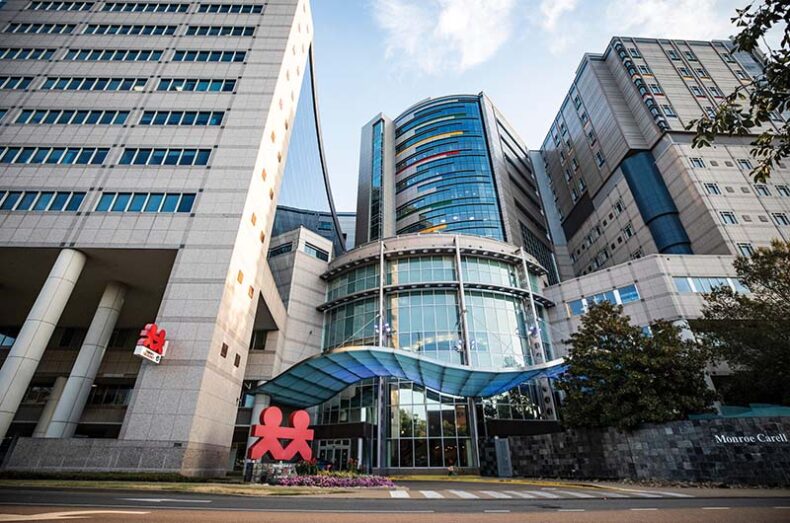
Recent examples of Balser’s lasting impact on the growth of VH include the 2025 opening of Jim Ayers Tower, the largest hospital construction expansion in Vanderbilt University Hospital’s history; completion of a four-floor expansion to Monroe Carell Jr. Children’s Hospital at Vanderbilt; and the addition of the 270-bed Vanderbilt Clarksville Hospital to the Vanderbilt Health system in February 2026. Plans are in place for construction of a new freestanding hospital in Murfreesboro, Tennessee, to be called Vanderbilt Health Rutherford County, and the conversion of a 350,000-square-foot office complex in adjacent Williamson County into a multispecialty clinic and ambulatory surgery center.
Earlier this year, Balser announced he will retire on Dec. 31. A national search to identify his successor was completed in July. David C. Miller, MD, MPH, Chief Executive Officer of Michigan Medicine and Executive Vice President for Medical Affairs for the University of Michigan, will join VH on Jan. 1, 2027, as President and CEO and Dean.