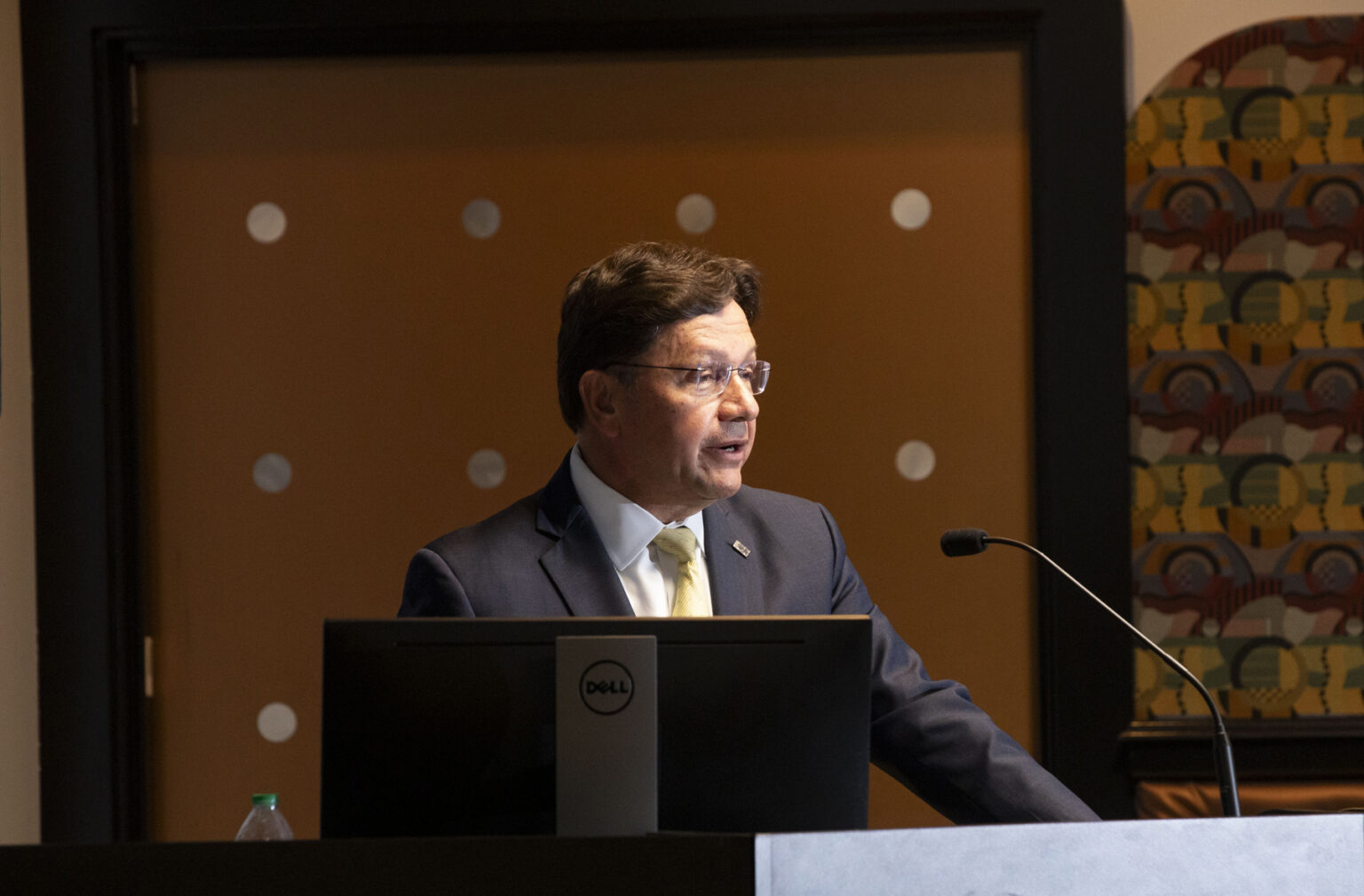
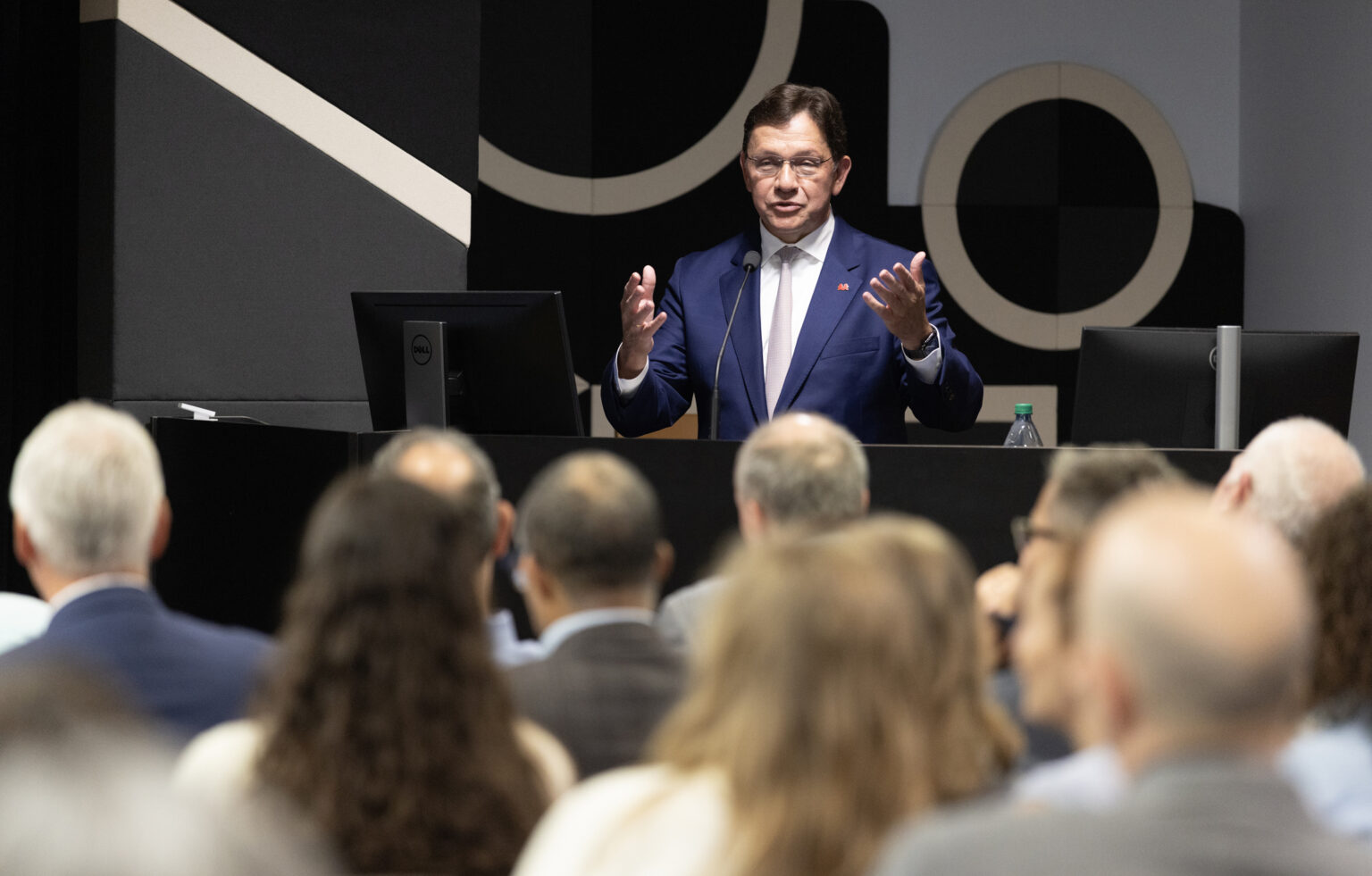
 Juan C. Salazar, MD, MPH, delivers his annual State of the Department address. (photo by Erin O. Smith)

While reflecting on a year of accomplishments during his second annual State of the Department address on Sept. 15, Juan C. Salazar, MD, MPH, Chair of the Vanderbilt Health Department of Pediatrics, focused on an even bigger question: What will the department achieve next?
Salazar, who completed his first year as chair in August, celebrated fiscal year 2026 achievements while emphasizing that they are a foundation for a broader journey of work ahead focused on a collective commitment to excellence in the care of children and families.
“The accomplishments I’ve shared with you today belong to all of you, not me,” said Salazar, System Pediatrician-in-Chief for Monroe Carell Jr. Children’s Hospital at Vanderbilt and the James C. Overall Professor. “But what excites me most is not what we have accomplished, it’s what we’re going to accomplish and what we can become together.”
The address highlighted the department’s continued growth and successes across several mission-critical priorities: people, clinical care, education, research and discovery, and community engagement and advocacy.
People remain the department’s greatest strength and are essential to delivering exceptional care, said Salazar, who began his address by recognizing dozens of the department’s faculty, staff and trainees for awards, national presentations and extracurricular activities that show clear dedication to advancing child health.
The department is now nearly 800 members strong, including faculty and staff clinicians. Additionally, there are more than 200 administrative and professional staff along with 434 trainees, including residents, fellows and interns.
Clinical care remains a cornerstone of the department’s mission. Pediatrics now serves approximately 1.1 million children through primary and specialty care clinics, hospital partnerships and outreach programs, with pediatric care teams delivering care during more than 400,000 patient visits last year.
“These numbers matter, but they’re not the story,” Salazar said. “They’re the evidence of what happens when talented people unite around a shared purpose. Every number represents people like you making a difference in the lives of children.”
Looking forward, the department, in conjunction with Monroe Carell leaders, is working to build the next generation of care and develop several institute-based models designed to expand access to coordinated care across specialties, including pediatric heart, neuroscience, fetal and neonatal care, cancer and blood disorders, mental and behavioral health, and genetics and precision medicine.
Among the year’s milestones was a recent transformative $40 million gift from entrepreneur, philanthropist and civic leader Tom Golisano supporting the pediatric heart program, which has seen growth in surgical volume, transplant activity and nationally recognized outcomes. In recognition of Mr. Golisano’s generosity, the hospital’s nationally ranked heart care and surgery program will be renamed the Golisano Pediatric Heart Institute.
“We’re committed to strengthening every service line and specialty, expanding access, advancing discovery and delivering world-class pediatric care,” Salazar said.
Celebrating the department’s research achievement as a national leader in discovery, he noted the hundreds of scholarly publications and presentations by both faculty and trainees. Additionally, the department surpassed $101 million in research expenditures and secured more than $40 million, direct and indirect, in National Institutes of Health funding during the year.
To further strengthen innovation, Vanderbilt is building a pediatric research institute that will connect scientific discovery with clinical priorities across major specialties. The initiative will support collaborative research, clinical trials and the development of the next generation of physician-scientists and investigators, he said.
“Research is how we transform today’s challenges into tomorrow’s solutions,” Salazar said.
Salazar emphasized that improving child health extends beyond hospital walls and is shaped by our impact in the community.
The Office of Community and Child Health expanded partnerships and initiatives addressing asthma, food insecurity, literacy, injury prevention and other areas of child health in the community. The department also continues to support community programs that connect young people with future careers in health care and strengthen pediatric care throughout Tennessee.
“Many who practice influence children’s health … So, if we want to improve child health, we must engage where children live, learn, play and grow.”
As he concluded, Salazar returned to the theme that defined the address, which was building off the past year’s momentum.
“I hope you agree that if we work together, we can build one of the nation’s great departments in pediatrics and children’s hospitals,” Salazar said. “More importantly, we can change what is possible for children and families across Tennessee, the Southeast and beyond.”
He closed with a message of optimism and shared accountability and responsibility.
“Our foundation is strong. Our ambition is greater. And I truly believe our best years are ahead of us.”