A team of hearing specialists at Vanderbilt Health analyzed thousands of data samples in the institution’s BioVU biobank to understand genetic susceptibility of sensorineural hearing loss, which is caused by damage to the inner ear. Their study, published Oct. 8 in JAMA Otolaryngology-Head & Neck Surgery, shows that pairing genetic data with audiometric data collected clinically helps better predict hearing loss.
The team, composed of investigators from clinical audiology, ear surgery and general otolaryngology, was led by co-first author Andie DeFreese, AuD, a clinical audiologist and PhD candidate in the Department of Hearing and Speech Sciences at Vanderbilt Health.
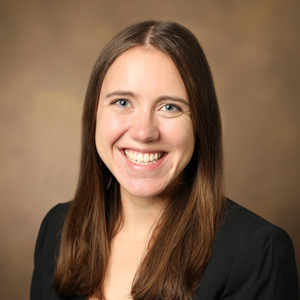
“The purpose of our study was to understand the genetic architecture of sensorineural hearing loss,” DeFreese said. “Long term, we want to be able to identify our patients with hearing loss before it ever emerges.”
As with any sensory condition that involves a patient’s subjective perception, understanding the specifics of a given case of hearing loss can present a challenge. While physiological measurements exist to characterize hearing loss, audiologists also benefit from attempting to understand the subtle details of a given patient’s experience.
Traditionally, diagnostic codes that identify medical conditions are used to describe a patient’s hearing loss, but these are used primarily for billing purposes and may not capture the nuance of an individual case, DeFreese said.
“Diagnostic codes are very common because that’s the data that’s available in large genetic biobanks that facilitate this research,” she added. “Using them leads to a kind of gray area in which we’re not able to accurately define who has hearing loss and who doesn’t.”
The researchers de-identified the information in their clinical audiometric database so it could be integrated with BioVU, Vanderbilt Health’s biobank of anonymous genetic samples, enabling access to the genetic information of consenting study participants.
“In pairing these resources, we can use a more precise phenotype for hearing loss instead of diagnostic codes that can be inaccurate,” DeFreese said. “With a sample size of 16,000, we were able to better discover genetic variants that are associated with hearing loss.
“This better prediction power tells us the importance of precision phenotyping not just for hearing loss but for all disciplines in medicine that take this risk prediction approach.”
The researchers applied polygenic risk scores developed from precise phenotypes — which they hypothesized would depict a more nuanced snapshot of a patient’s hearing loss — to a new population’s genetic data. They found that the risk scores developed from precise phenotypes were better predictive of individuals with hearing loss than risk scores developed from diagnostic codes.
DeFreese said the utility of precision phenotyping leads to important takeaways on both macro and micro scales.
“For health research, we learned that building biobanks that support precision phenotyping is important for discovery,” she said. “And for hearing loss, we learned that precision phenotyping improves risk prediction. This means that down the line, we may be able to develop similar tools that can be built into an electronic health record system or a consumer-based genetic test with which we could identify patients who may be at more or less risk for developing hearing loss.”
Further research, DeFreese said, would seek to build systems that could help determine not only whether a patient has hearing loss, but also what configuration or which frequencies are affected.
DeFreese said the nature of diagnostic codes — useful for some aspects of medicine but incomplete representations of data in others — means an institution like Vanderbilt Health is well positioned to evaluate research methodologies such as precise phenotyping that can complement more standard practices like diagnostic codes.
“The variability in how these different methodologies are used between specialties emphasizes the importance of bringing clinicians into the research team,” DeFreese said. “A place like Vanderbilt is uniquely equipped to investigate this type of topic because we have such a great intersection between research and clinical care.”
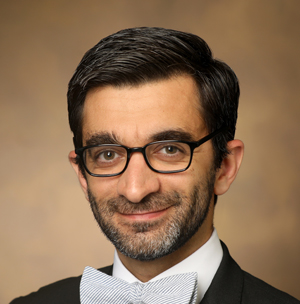
Taha Jan, MD, Assistant Professor of Otolaryngology-Head and Neck Surgery, said the work is especially important as opportunities for advancements in hearing health improve.
“We are very excited about this collaborative work led by Dr. DeFreese,” said Jan, corresponding author of the paper. “Genetics is becoming increasingly relevant for precision therapy, especially now that the Food and Drug Administration has approved its first gene therapy for genetic hearing loss. This work is an example of how our world-class clinicians and scientists at Vanderbilt Health are pushing the boundaries of precision medicine.”
Additional authors were Tanguy Rubat du Mérac, MSc, Quanhu Sheng, PhD, Associate Professor of Biostatistics, and Srishti Nayak, PhD, Assistant Professor of Otolaryngology-Head and Neck Surgery.
The research was funded by a Vanderbilt Lacy-Fischer Interdisciplinary Grant, an American Otological Society Fellowship Grant and by the National Institute on Deafness and Other Communication Disorders, part of the National Institutes of Health (grants R03DC021550, R21DC021276, R21DC023019, K08DC019683 and R21DC022058).