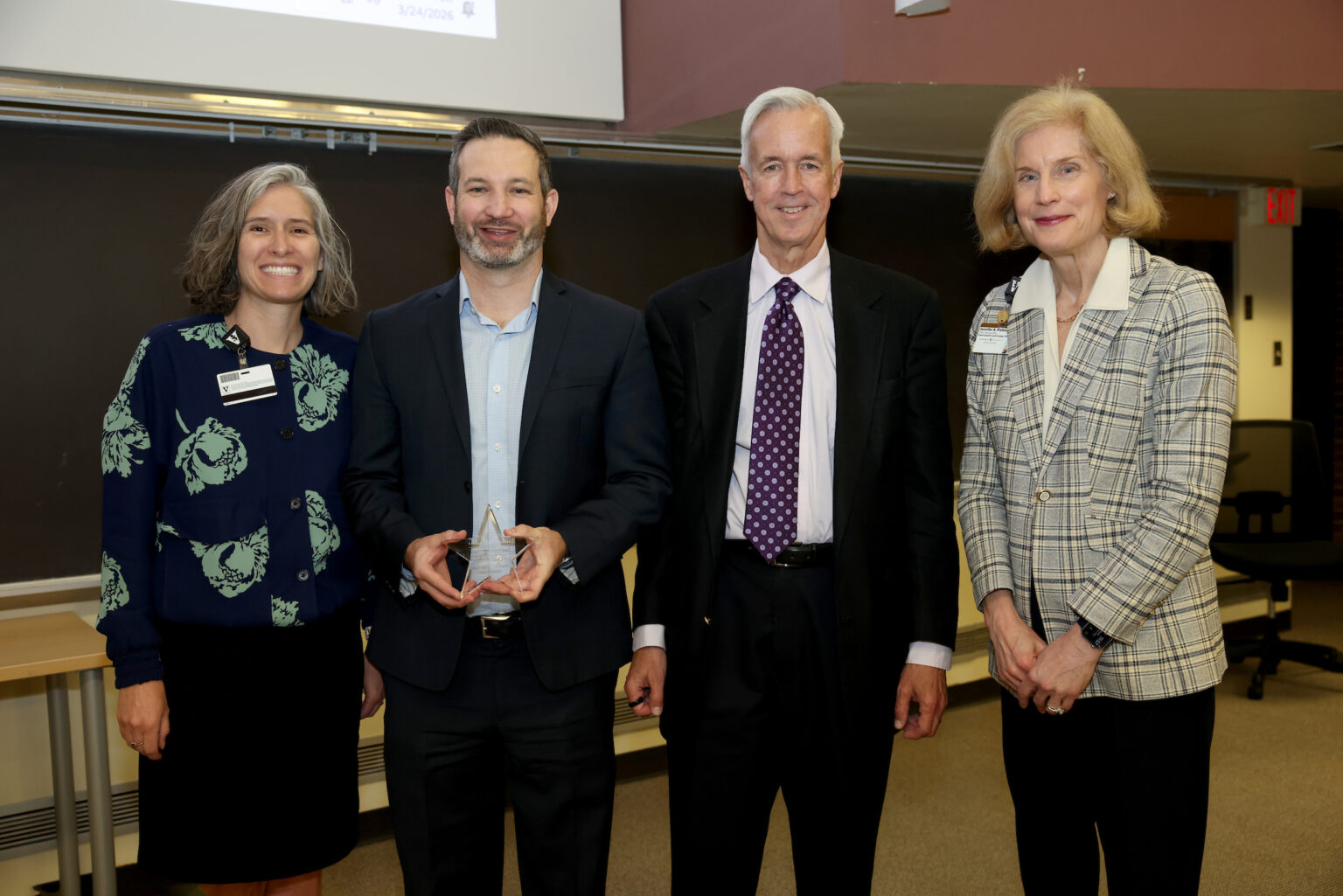
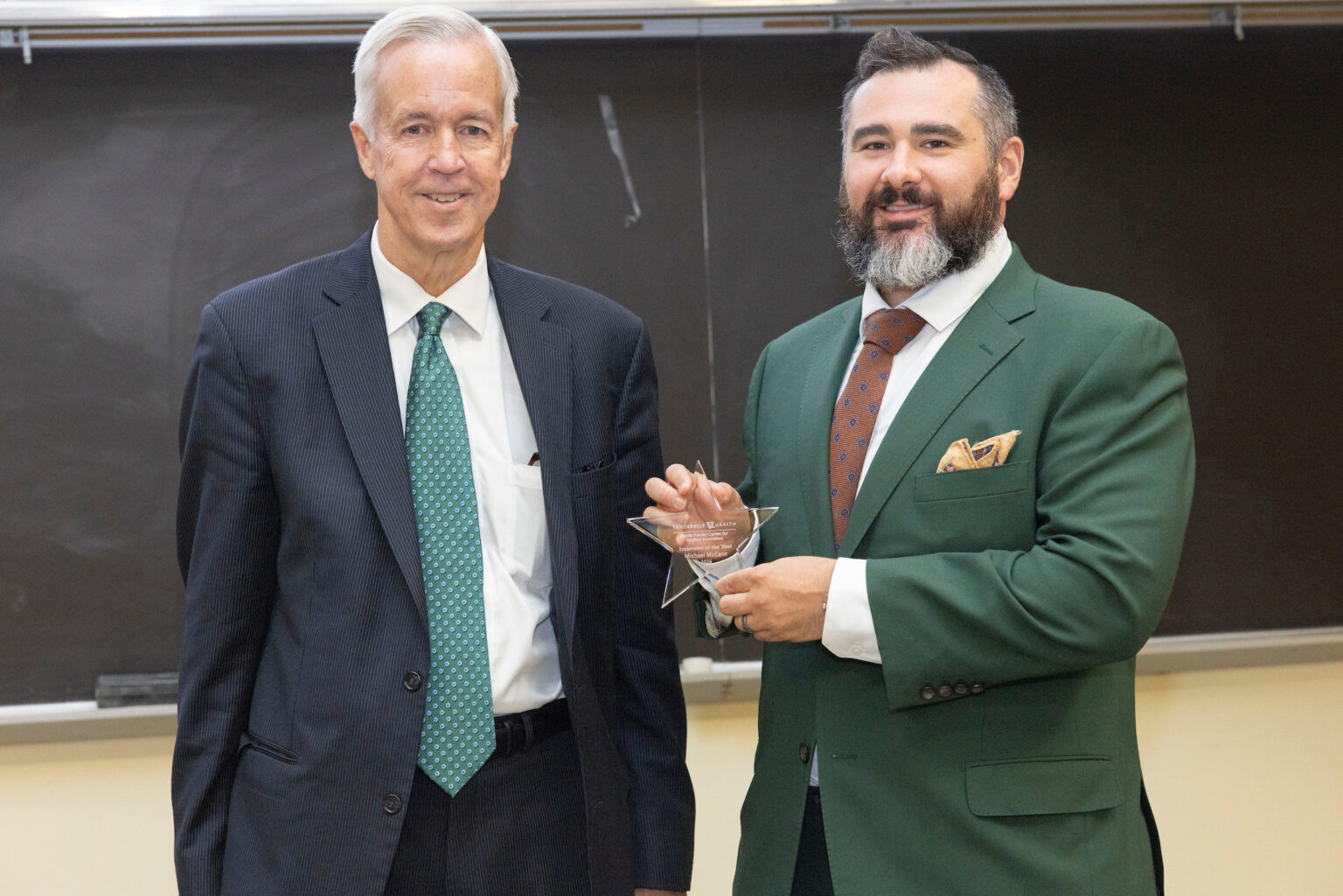
 From left, Kenneth Holroyd, MD, and Michael McCann, MD, MBA, at the Brock Family Center's 2026 Innovator of the Year lecture (photo by Susan Urmy)

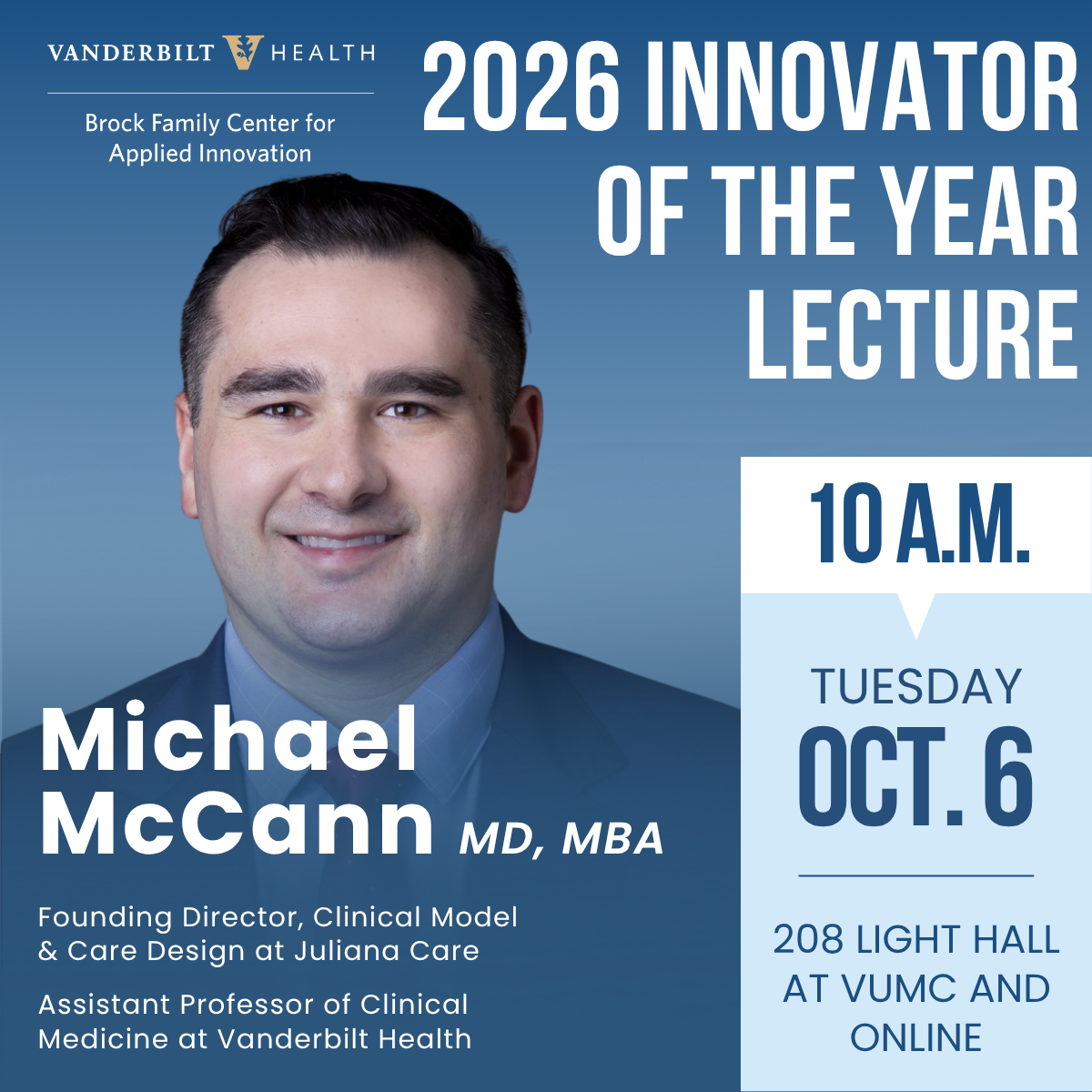
Michael McCann, MD, MBA, Assistant Professor of Clinical Medicine in the Division of General Internal Medicine and Public Health, is Vanderbilt Health’s Brock Family Center for Applied Innovation’s 2026 Innovator of the Year. He marked the honor with an Oct. 6 talk in Light Hall about how a hospital care model became a new company, Juliana.
McCann is Medical Director of the Vanderbilt Interdisciplinary Care Program (VICP), which launched within the Section of Hospital Medicine in 2017 as Vanderbilt Familiar Faces. The program serves adults who have multiple serious chronic conditions, often along with mental illness, substance use or unstable housing, and who are hospitalized repeatedly. Ordinarily, McCann said, these patients see a different physician, case manager and pharmacist with each hospital admission.
“The likelihood that a patient with this marked complex polychronic nature comes back to the hospital and sees the same team on the same unit is statistically improbable,” he said.
VICP reverses that. Enrolled patients are flagged in the medical record and admitted to the same unit. There they see the same physicians, advanced practitioners, nurses, case manager, social worker and pharmacist, and the team works together in one room on the unit. More than 1,500 patients have been enrolled.
“There’s no more passing-the-buck episodic care,” McCann said. “We do feel accountable for them.”
In fiscal year 2025, the team’s case mix-adjusted length of stay was 3.36 days, compared with 3.64 days for Hospital Medicine’s other direct-care teams (teams without trainee participation). An analysis of five years of health record data found that enrolled patients had a lower risk of recurrent hospitalization than eligible patients who weren’t enrolled (adjusted hazard ratio 0.77).
Vanderbilt Health Professional Solutions Group and the Brock Family Center helped McCann work with the venture studio Hashed Health as well as students at the Owen Graduate School of Management. Together they tested whether the model could work at other health systems. Juliana, led by CEO and co-founder Patrick Sorrentino, MHA, now offers the model to other hospitals. The company is named for St. Juliana Falconieri, patron saint of the chronically ill.
“Relationships across the spectrum have been the real capital in this process,” McCann said. “If you have a vision, you can’t do it alone.”
He also told the audience that “clinicians and academics and scientists can build without leaving their profession.” McCann has kept his full-time clinical role throughout.
McCann was introduced to the audience by Ken Holroyd, MD, MBA, Professor of Clinical Anesthesiology, Director of the Brock Family Center, and holder of the Brock Family Directorship for Applied Innovation. Vanderbilt Health’s interest in Juliana supports its nonprofit mission of patient care, research, and education. Any benefit to Vanderbilt Health from this relationship is directed toward that mission.