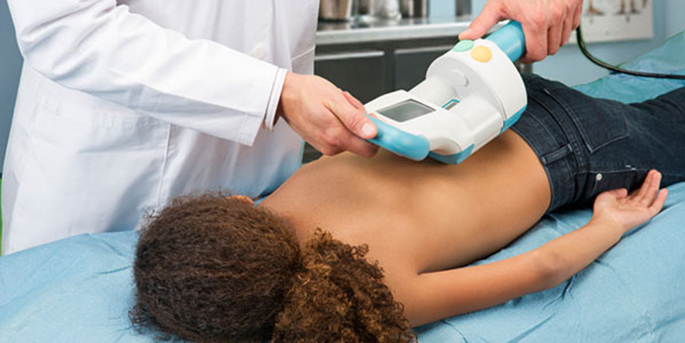
Joy Autin, like many patients who experience scoliosis, was diagnosed as a teenager. The condition, a deformity in which a person’s spine has an irregular curve, occurs most commonly during teenage years, and affects women roughly four times as often as men.
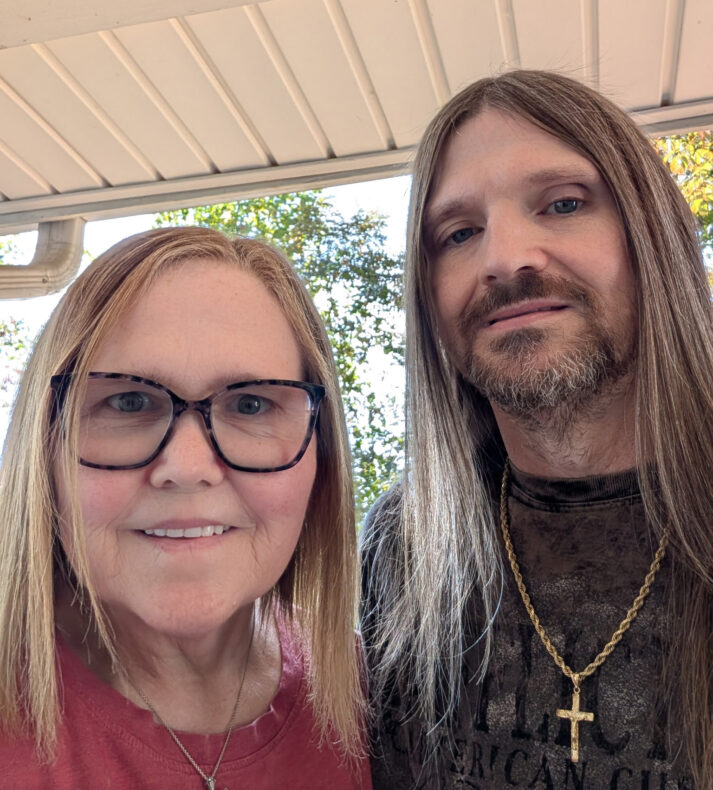
So when it wasn’t until Autin had reached her 40s that scoliosis reared its ugly head, she was surprised and frustrated by the progression of her condition.
“It got progressively worse to the point that I had to walk with a cane,” Autin said. “I hurt all the time. I lost about 5 inches in height. It was pretty bad.”
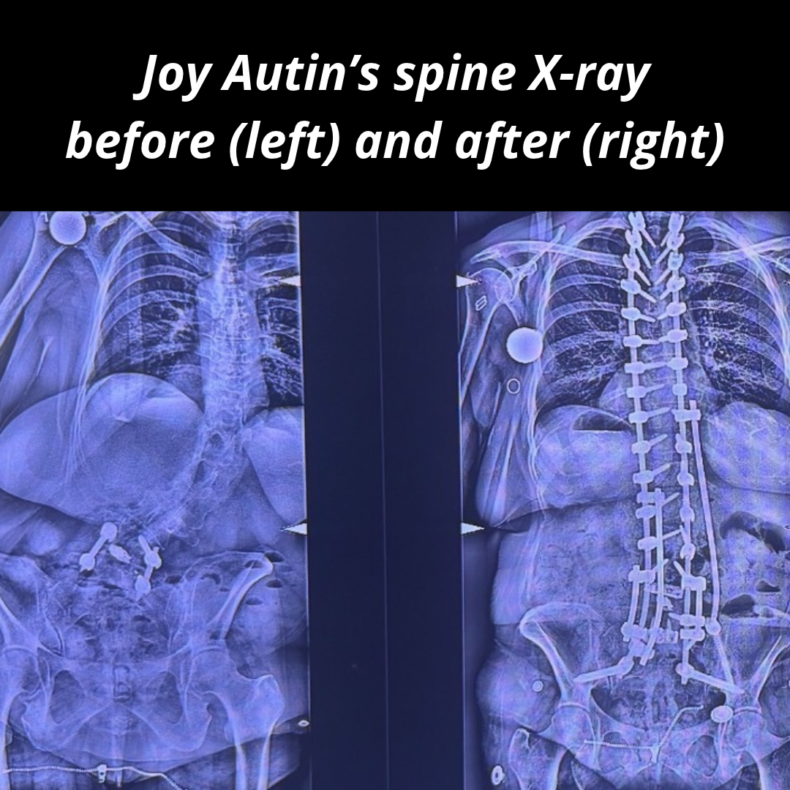
At one point, she leaned as far as 70 degrees to the right. Autin’s life was affected from dawn until dusk: Sleeping in bed was impossible, and even in a recliner it was difficult to get to sleep.
“I would fall asleep during the day, so I was unable to work,” she said, adding that eventually, she had to apply for disability benefits.
A glowing recommendation for a spinal surgeon calmed her nerves
Autin had previously undergone two different back surgeries for spinal degeneration, and the prospect of another procedure to correct this issue wasn’t very attractive. But hearing from a respected spine surgeon in Knoxville, Tennessee, that Scott Zuckerman, MD, Assistant Professor of Neurological Surgery at Vanderbilt Health, was “the best in the world” was enough for Autin to give him a chance.
“Nobody in Knoxville would touch me, but they referred me to Dr. Zuckerman,” said Autin.
Hearing “that’s who I would go to if I were in your position” from Autin’s referring physician made all the difference.
Regardless of the quality of the surgeon, the prospect of a high-risk surgery with a painful recovery is sure to cause some nerves. Autin needed a three-column osteotomy, which involves removing almost an entire vertebra to realign the spine, a procedure that carries high risk of complications, such as leg weakness.
“The key is spending a lot of time in clinic and being completely honest and transparent about what things are going to be like,” Zuckerman said. “I tell patients that the first six to eight weeks are going to be some of the most challenging times of your life. We try to be transparent about every step of the process, like how long they’ll be in the hospital and in rehab, so they have a good understanding of what they’re about to go through. Explaining the details of a major spinal reconstruction surgery takes time and honesty.”
Offsetting much of her fear about the surgery, though, Autin said, was the care and compassion she received from her Vanderbilt Health care team.
“The staff at Vanderbilt has to be the nicest and best staff I’ve ever come across in any hospital setting,” Autin said. “The appreciation I have for the staff and the surgeons runs deep. From the surgery to physical therapy, they were tremendous. I don’t think I would’ve fared this well had I been somewhere else, to be honest.”
For their part, the staff members involved in Autin’s care voiced a common sentiment: that it is an honor to be involved in the team effort that is each neurosurgical case.
“Each team member plays an important role in supporting recovery, from managing pain and optimizing medical care to helping patients safely get up and moving soon after surgery,” said Jacki Ford, PA-C. “Throughout her recovery, Joy showed incredible determination and resilience, continuing to make progress even when she was in pain. It is incredibly rewarding for our entire team to see her doing so well and continuing her recovery at home.”
Quality of life returns to normal
According to Zuckerman, the reduced quality of life because of severe scoliosis is comparable to other debilitating conditions.
“Living with a very severe spinal deformity is similar to blindness, having a limb amputated, end-stage diabetes or end-stage COPD,” he said. “To have a patient like Joy get her quality of life back is the reason we get into medicine.”
Autin’s results have been stellar. After a comparatively easy recovery, she reports very little pain.
“I’m standing up straight again, and after physical therapy, I’ve come off the walker and the cane,” she said.
Zuckerman gave Autin the credit for her recovery, saying all patients who undergo spine surgery work hard to reclaim their health.
“I tell patients that I work hard for eight or 10 hours, and then they work hard for a full year,” he said. “Joy has worked extremely hard with rehab, walking and exercising as much as possible to get the benefit. She’s done a phenomenal job with that, and that’s such a critical part of the recovery. Enormous credit goes to her fiancé as well, who has been by her side from day one.”
Christy Loyd, LPN, a member of the nursing staff who supported Autin before and after surgery, said that even after working in spine care for over 10 years, she remains amazed at the skill of the entire group of faculty and staff who apply their skills and passion for medicine to achieve positive patient outcomes.
“Being a part of a team like this is a privilege and an honor, especially when we see patients like Joy do so well after such a complex spine surgery,” said Loyd. “This truly takes a team effort from beginning to end. Dr. Zuckerman is a skilled neurosurgeon who makes sure patients have a good understanding of the surgical process and outcomes.”
Autin’s resolve stayed firm, and now she’s ready to take on the next important life step: tying the knot with her fiancé.
“We wanted to wait to have a wedding until I was able to walk down the aisle without a cane and stand up straight,” Autin said. “Now that I am, we can actually get things rolling in that direction.”
Autin said she’s hoping for a spring wedding. In the meantime, she’ll put her best foot forward knowing the care she received has put the worst behind her.
“I’m walking tall knowing that this has changed my life for the better.”