




Tiny-but-powerful antibody fragments called nanobodies are showing promise not only as diagnostic probes and therapeutic molecules but also as drug-delivery vehicles.
At Vanderbilt University, for example, biomedical engineer John Wilson, PhD, and his colleagues have developed a nanobody that has the potential to enhance cancer immunotherapy.
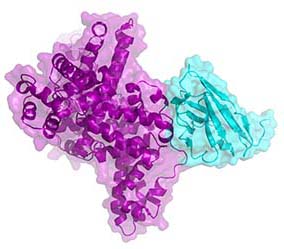
Wilson’s team used a nanobody recombinantly expressed from a previously described nanobody domain. This nanobody targets serum albumin, the most prevalent protein in blood, which tends to accumulate in tumors. They attached a STING agonist — a molecule that can stimulate an antitumor immune response — to the nanobody.
In a preclinical mouse model, this “albumin-hitchhiking” nanobody delivered its STING agonist payload directly to its target. This triggered an immune response that inhibited the growth of breast and melanoma tumor cells, the researchers reported last year in the journal Nature Biomedical Engineering.
“Some drugs can’t get to the right place and in the right dose without some kind of helper,” Wilson said. “Nanobodies could be the helper for those drugs.”
Wilson has been interested in how engineering can improve human health since his college days at Oregon State University. He earned his doctorate in Bioengineering from Georgia Tech and, as a postdoctoral fellow at the University of Washington, developed molecularly engineered materials to deliver vaccines and immunotherapeutics.
At Vanderbilt since 2014, Wilson is professor of Chemical and Biomolecular Engineering, Biomedical Engineering, and Pathology, Microbiology and Immunology, and co-leader of the Host-Tumor Interactions Research Program at the Vanderbilt-Ingram Cancer Center.
His Immunoengineering Laboratory designs novel, molecularly engineered materials to detect, treat or prevent disease. His work is guided by the principle that the immune system must dictate therapeutic design requirements.
“We’ve been working with STING agonists for a decade,” Wilson said. “They will activate the same sort of (innate immunity) pathways that a virus might activate.
“The challenge is to get them where they need to go, and in the right timing. STING agonists without a carrier aren’t very effective, but engineering drug-delivery systems for them offers a solution for making them safer and more effective.”
With Blaise Kimmel, PhD, a postdoctoral fellow in his lab who had experience with nanobodies, “we started brainstorming,” Wilson said.
Normally the kidneys clear nanobodies rapidly from the bloodstream because they’re tiny, about a tenth the size of antibodies. But when bound to albumin, they circulate longer. “That gives you more shots on goal for getting it to where you need it to go,” he said.
Their small size enables them to get into tumors more effectively than antibodies, and they’re cheaper and easier to make. More research is necessary, however, before the hitchhiking nanobody that packs a wallop is ready for clinical testing in humans.
“Albumin gets us part of the way there, but we need another tool to make it more selective for the tumor,” Wilson said.
In their study, the researchers did this by integrating a second nanobody domain targeting the immunosuppressive protein PD-L1, which is expressed at higher levels in tumors. This had the effect of increasing the accumulation of the STING agonist in tumors, while blocking PD-L1, thereby increasing the effectiveness of the antitumor immune response.
While the Food and Drug Administration has not yet approved nanobodies for clinical use, in 2022, a nanobody targeting the inflammatory cytokine tumor necrosis factor was approved in Japan for the treatment of rheumatoid arthritis.
Wilson believes nanobodies have great potential for delivering all kinds of drugs to their targets. The application to cancer immunotherapy, he said, “is just the tip of the iceberg.”
Kimmel, a former PhRMA Foundation Postdoctoral Fellow in Drug Delivery in the Wilson lab, is now assistant professor of Chemical and Biomolecular Engineering at Ohio State University.
The research was supported by the National Institutes of Health, National Science Foundation, Susan G. Komen, Departments of Defense and Veterans Affairs, Vanderbilt-Ingram Cancer Center, and Vanderbilt University School of Engineering.