Danyvid Olivares-Villagomez Archive — Page 1 of 1
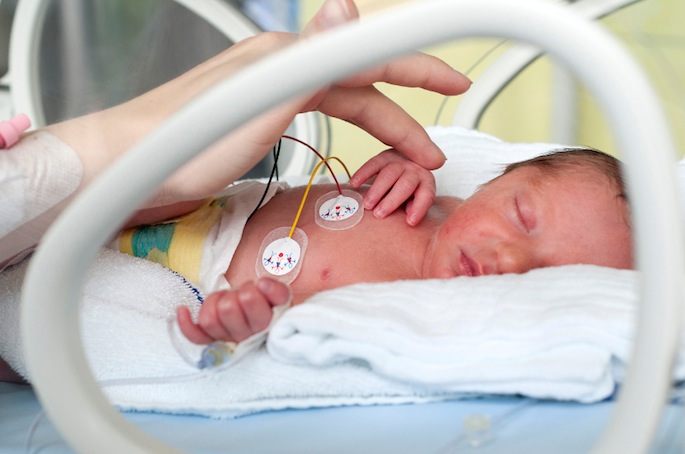
Newborn baby resting in a hospital incubator with monitoring electrodes attached to the chest, while an adult’s hand gently touches the baby’s head.
December 6, 2023

Pasteurization reduces bioactive component of breast milk

Pasteurization of breast milk affects the concentration of osteopontin, a bioactive protein with roles in intestinal, immunological and brain development — suggesting that osteopontin supplementation should be considered when donor milk is provided to preterm infants.

Illustration of a magnifying glass enlarging green, curved microbe-like shapes over a stylized red intestinal tract.
November 21, 2023

Commensal gut bacterium protects from severe intestinal infection

The commensal bacterium Turicibacter sanguinis could be used to protect against severe intestinal infections, Vanderbilt researchers discovered.

The study team includes, from left, Maribeth Nicholson, MD, MPH, Ben Spiller, PhD, Buddy Creech, MD, MPH, Borden Lacy, PhD, Eric Skaar, PhD, MPH, Isaac Thomsen, MD, MSCI, Ivelin Georgiev, PhD, and Danyvid Olivares-Villagomez, PhD.
March 30, 2023

NIH grant launches C. diff vaccine research initiative

Vanderbilt has received an NIH grant to launch the Vanderbilt Antibody and Antigen Discovery for Clostridioides difficile Vaccines, or VANDy-CdV.

3D histological illustration of a row of tall columnar epithelial cells, with elongated nuclei and a brush-like apical surface above a purple underlying layer.
July 30, 2019

Intestinal immune cell interactions

Understanding the roles of various immune cells that reside in the gut lining could shed light on inflammatory bowel diseases.

June 9, 2017

Flip side of gut protection

Vanderbilt investigators report that dysregulation of certain immune cells in the intestines may lead to inflammation and disease.

Cropped person in a beige shirt and blue jeans clutching their abdomen with both hands against a white background.
October 9, 2014

Immune cells that guard against ingested pathogens discovered

Vanderbilt investigators have discovered a new type of immune cell residing in the intestinal epithelium that may function as a first line of defense against ingested pathogens.