


Staphylococcus aureus Archive — Page 1 of 2


-
April 25, 2019
A new antibiotic’s mechanism of action
Vanderbilt investigators have characterized how a new first-in-class antibacterial drug works, which will guide the development of additional compounds that overcome antibacterial resistance. -
June 28, 2018
New staph virulence factor
Jun. 28, 2018—The new factor, an enzyme involved in host-pathogen interactions, may be a viable target for treating staph infections. -
March 15, 2018
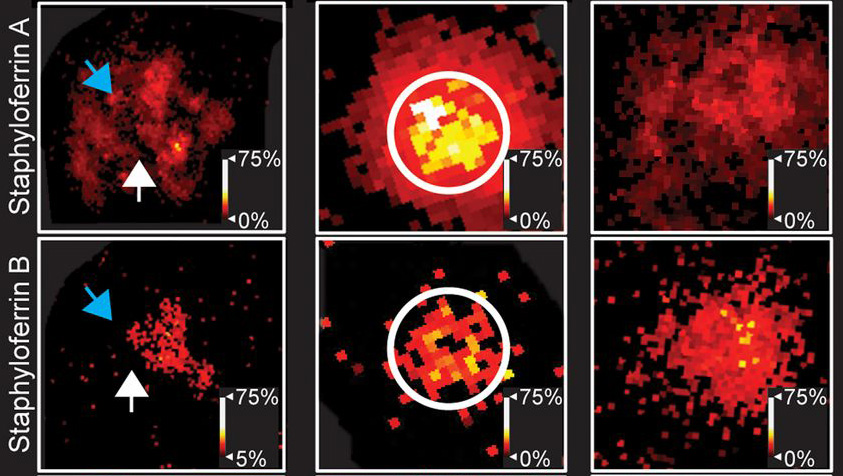
New imaging approach offers unprecedented views of staph infection
A new integrated imaging approach makes it possible to probe the molecules involved in invasive infections and can be broadly applied to any health or disease state. -
September 21, 2017
Excess dietary manganese increases risk of staph infection in heart
Too much dietary manganese — an essential trace mineral found in leafy green vegetables, fruits and nuts — promotes infection of the heart by the bacterium Staphylococcus aureus (“staph”). -
July 27, 2017
Investigators use light to kill microbial ‘vampires’
On July 24 Vanderbilt scientist Eric Skaar, Ph.D., MPH, summarized his group’s latest paper in a tweet: “If S. aureus is going to drink our blood like a vampire, let's kill it with sunlight.” -
July 13, 2017
New approach for staph-related skin abscesses explored
New multicenter research that includes Vanderbilt University Medical Center (VUMC) investigators, could change treatment approaches to simple skin abscesses, infections often caused by Staphylococcus aureus (staph) bacteria. -
November 3, 2016
VUMC investigators find pathogens work together to infect host
Pseudomonas aeruginosa and Staphylococcus aureus — two pathogens that frequently co-infect the lungs of patients with cystic fibrosis — appear to cooperate with each other, Vanderbilt investigators have discovered. When pseudomonas is starved for metal by the host, it shuts down the production of factors that would normally kill staph, promoting a co-infection.