


Department of Medicine Archive — Page 7 of 128





-
June 1, 2026
Vanderbilt Health study explores GLP-1 therapies to improve asthma outcomes in patients with obesity
The study is still recruiting participants. It will conclude in 2026 and provide insight for further investigations into the role GLP-1 agonists may offer in treating respiratory illnesses and overall immune responses. -
May 29, 2026
AI technique improves cancer gene discovery for breast and prostate cancer
The artificial intelligence model Enformer was retrained with tissue-specific datasets; this "transfer learning" approach outperformed the base model in identifying disease-associated genes. -
May 28, 2026
Oxford honors Russell Rothman with prestigious professorship
The one-year professorship is administered by the American Association of Rhodes Scholars and is awarded annually to a senior scholar “of the highest distinction” from the United States. -
May 27, 2026
Brain imaging study highlights ethnoracial differences in dementia
Although Black and Hispanic people are more apt to have dementia, they are significantly less apt than other racial and ethnic groups to show Alzheimer's pathology on brain scans. -
May 27, 2026
Raymond Harris receives William S. Middleton Award
The award is the highest honor for outstanding biomedical research from the Department of Veterans Affairs Office of Research and Development. -
May 27, 2026
Kelly Dooley to depart Vanderbilt Health to lead Department of Medicine at Brown
A national search will be conducted to identify Dooley’s successor as director of the Division of Infectious Diseases, and an interim director will be announced at a later date. -
May 20, 2026
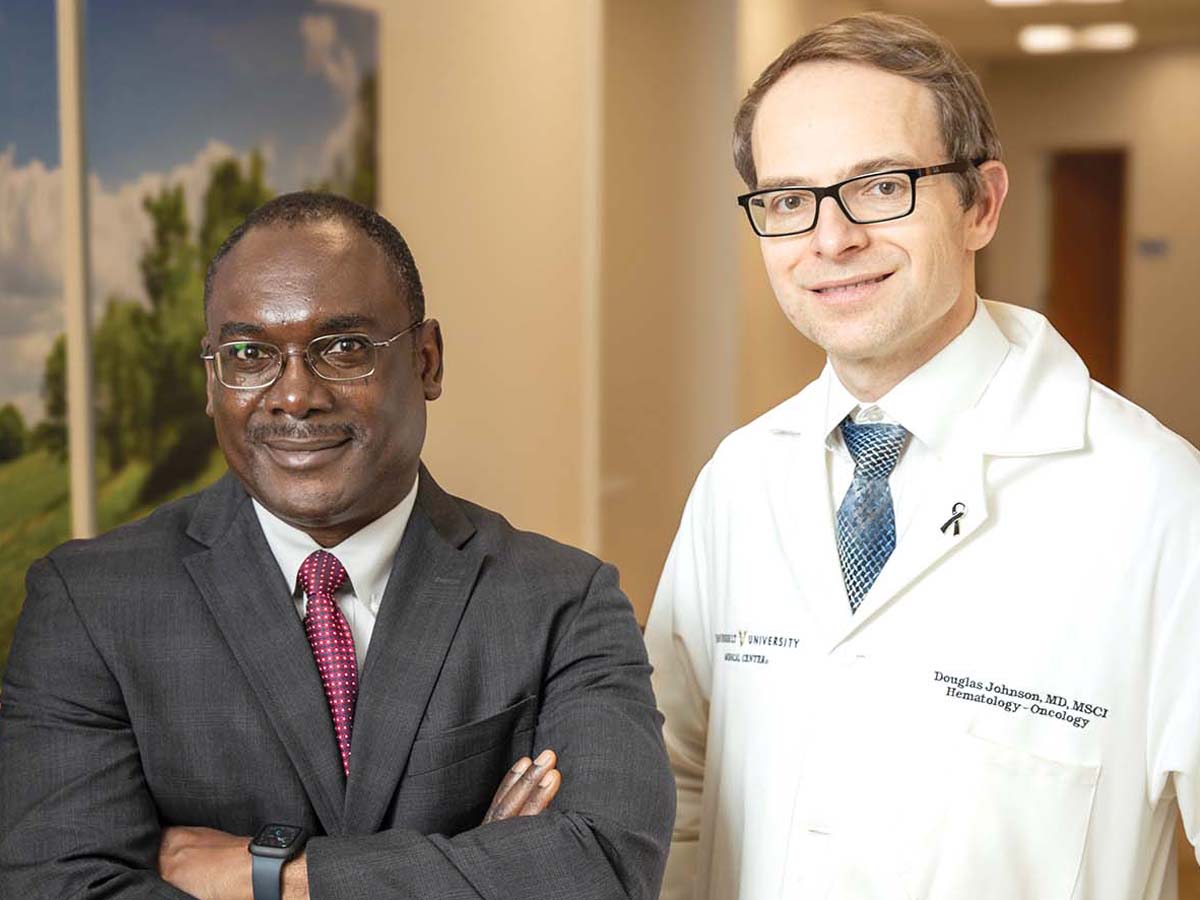
Richard Peek joins Kristen Ciombor as Co-Leader of Gastrointestinal Cancer Research Program
Ben Ho Park, MD, PhD, said the deep knowledge and experience of the pair will optimize and personalize the prevention, diagnosis and treatment of GI malignancies.