Department of Radiation Oncology Archive — Page 4 of 4

Close-up of a dictionary page showing the entries “can·cel·lous” and “can·cer,” with pronunciation and definition text partially visible.
June 19, 2014

HPV-positive head and neck cancer patients may receive lower radiation dose

A new study suggests that lowering the dose of radiation therapy for some head and neck cancer patients may improve outcomes and cause fewer long-term side effects.

White perforated plastic mesh mask held by gloved hands, with openings shaped to fit around a patient’s face and head.
April 24, 2014

Study to assess tremor after stereotactic radiosurgery

Tremor is the most common of all movement disorders and its involuntary nature can hinder an individual’s ability to dress or feed themselves, use a phone or computer, or engage in chores and hobbies.

Illustration of branching red blood vessels against a gray background.
December 18, 2013

Targeting tumor “supply lines”

A metabolic enzyme plays a crucial role in vascular development and may be a good target for cancer therapies.

Head-and-shoulders portrait of Eric Shinohara wearing glasses, a dark suit, white shirt, and patterned tie against a brown background.
November 21, 2013

Shinohara honored by radiation oncology group

Eric Shinohara, M.D., MSCI, assistant professor of Radiation Oncology, has been recognized by the Association for Residents in Radiation Oncology (ARRO) as one of the recipients of the 2013 ARRO Educator of the Year Award.

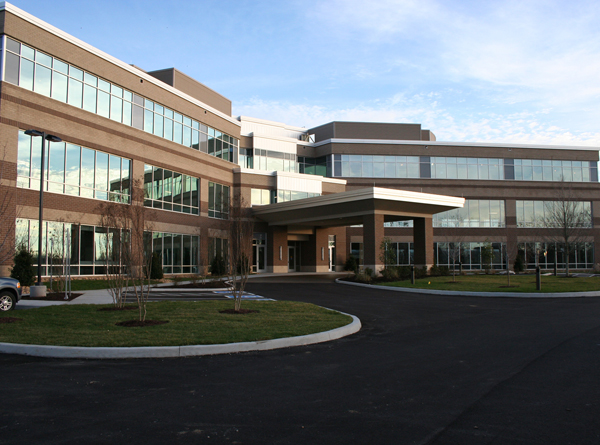
Modern multi-story medical building with brick and glass exterior, landscaped grounds, and a covered main entrance.
June 20, 2013

Maury Regional, VICC to open Spring Hill facility

Maury Regional Medical Center (MRMC) and Vanderbilt-Ingram Cancer Center (VICC) have joined forces to open a new radiation oncology treatment center for cancer patients in Spring Hill, Tenn.

Medical-style illustration of a translucent human figure with a glowing highlighted area in the brain.
February 4, 2013

Brain tumor TIP reveals new target

The protein TIP-1 appears to be a novel prognostic marker for glioblastoma and may be a good therapeutic target for disrupting tumor-driven blood vessel development.