Vanderbilt Music Cognition Lab

(iStock)

Studies find connection between impaired musical rhythm abilities and developmental speech-language disorders 

Evidence showed that deficiency in musical rhythm perception is a “modest but consistent risk factor for developmental speech, language and reading disorders.”

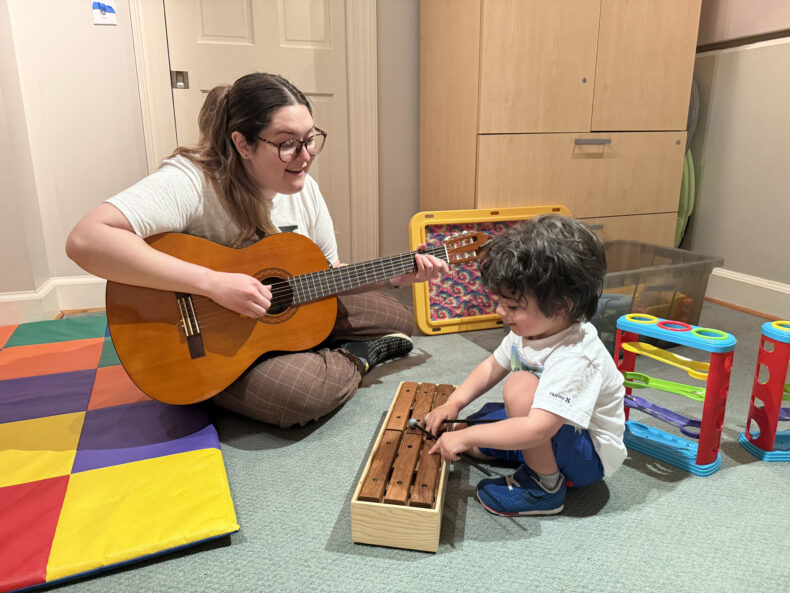
Patient Kai Chan works with Jess Knoble, MT-BC, at the Vanderbilt Music Cognition Lab.

Celebrating its 10th anniversary, the Vanderbilt Music Cognition Lab is a space for learning for everyone involved 

Researchers at Vanderbilt University Medical Center are on their way to finding out what science has to say about why music is important for health.

Vanderbilt Music Cognition Lab hosts second annual open house

Have you ever wondered what science has to say about why music is important for health? You can find out at the Vanderbilt Music Cognition Lab’s second annual open house on Tuesday, Aug. 15.

Study uses statistical and population-based methods to understand comorbidities of developmental language disorder

A recent Vanderbilt study is one of the first to use statistical and population-based methods to understand comorbidities associated with developmental language disorder at a population level.

Musical rhythms shown to improve language processing in children with Developmental Language Disorder

Musical rhythms can help children with speech and language processing difficulties in finding their voice by improving their capacity to repeat sentences they just heard, according to a study led by a Western Sydney University researcher and co-authored by Vanderbilt University Medical Center.

Silas LaCagnin gazes at his mother, Ansley LaCagnin, while she sings to him.

Study finds sensitivity to musical rhythm supports social development in infants

A new study shows engaging infants with a song provides a ready-made means for supporting social development and interaction.

1 2