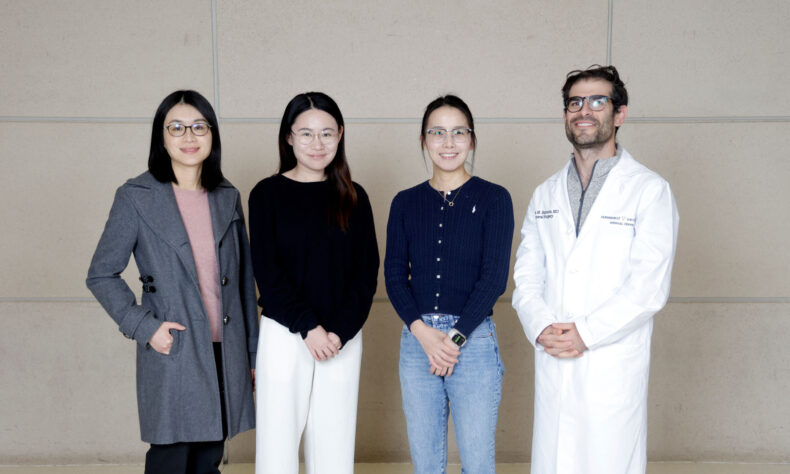


A $1 million grant from Eli Lilly and Company will fund a two-year Vanderbilt University Medical Center project to understand and address gaps in obesity care.
The study will analyze electronic health records (EHRs), survey patients and clinicians, and use artificial intelligence to identify why many patients discontinue obesity treatment. The team will then proceed to develop and implement strategies to keep patients engaged in long-term care.

“Obesity is a chronic, relapsing condition that requires ongoing management, yet too often it’s treated episodically because of barriers like delayed medication access,” said You Chen, PhD, associate professor of Biomedical Informatics and the project’s principal investigator for informatics and technology. “We’re combining data-driven insights, stakeholder input and multi-agent AI to understand where continuity breaks down and to design evidence-based interventions that keep patients engaged.”
The research will focus on VUMC patients meeting obesity criteria who receive medical or surgical care. In the first year, the team will analyze EHR data to identify patterns distinguishing continuous from discontinuous follow-up and will survey patients and clinicians to capture real-world barriers.
Findings will feed a multi-agent AI system — physician, nurse, dietitian agents — that will generate and prioritize ideas for consideration by panels of clinicians, informaticians and patient representatives. In the project’s second year, the team will design and implement a patient-facing mobile app to improve care. The app will be piloted in VUMC obesity clinics.
“By helping patients view and interpret their own data, complete previsit tasks, and communicate more effectively with care teams, the app will aim to strengthen shared decision-making and sustain engagement over time,” Chen said.

The project’s clinical leader is Gitanjali Srivastava, MD, professor of Medicine in the Division of Diabetes, Endocrinology and Metabolism.
“Medicine has evolved, and we need to adapt to new technological advances while catering to patient needs,” Srivastava said. “It’s about designing practical tools and processes that fit naturally into patients’ lives and clinicians’ workflows, ultimately supporting healthier weight management over time.”
Chen said the project aims to lend itself to adoption by other health systems. The project leaders believe the human-AI collaborative methodology developed here could extend beyond obesity care, offering a reproducible framework for addressing continuity challenges in other chronic conditions requiring long-term management.