



Jennifer Gaddy, PhD, associate professor of Medicine in the Division of Infectious Diseases, has been elected to fellowship in the American Academy of Microbiology (AAM).
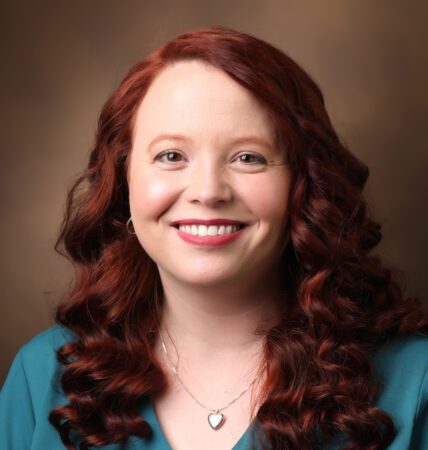
Gaddy is among 10 current Vanderbilt faculty members who are AAM fellows. The academy, an honorific leadership group within the American Society for Microbiology, elects fellows annually through a highly selective, peer-review process based on their records of scientific achievement and original contributions to the field. Over the last 50 years, more than 2,600 distinguished scientists have been elected to its ranks.
Gaddy, who also holds an appointment in the Department of Pathology, Microbiology and Immunology, is a leading researcher in bacterial pathogenesis, innate immunity and reproductive immunology. Her laboratory focuses on how the host responds to infection of the reproductive tract, with particular emphasis on the perinatal pathogen group B streptococcus. Her work has shown that group B streptococcus can hijack placental macrophage cells as a kind of Trojan horse, ascending the gravid reproductive tract and crossing the placenta to infect the developing fetus. She also investigates the antimicrobial and anti-biofilm properties of molecules found in human breast milk, including oligosaccharides and lactoferrin. She has authored more than 125 peer-reviewed manuscripts and is currently funded by the National Institutes of Health, the Department of Veterans Affairs, the March of Dimes, and the Burroughs Wellcome Fund.
In addition to her research program, Gaddy serves as co-director of the Women’s Reproductive Health Research Center and director of the Pre3 Initiative (Preventing adverse Pregnancy outcomes and Prematurity). She joined the Vanderbilt faculty in 2013.
She is one of 63 scientists worldwide elected to the AAM Class of 2026.
Other AAM fellows currently on the Vanderbilt faculty are Christopher Aiken, PhD, Timothy Cover, MD, James Crowe, MD, Mark Denison, MD, Jacek Hawiger, MD, PhD, Romney Humphries, PhD, Borden Lacy, PhD, Antonis Rokas, PhD, and Louise Rollins-Smith, PhD.


